Monuments
Palácio Foz (Lisbon)
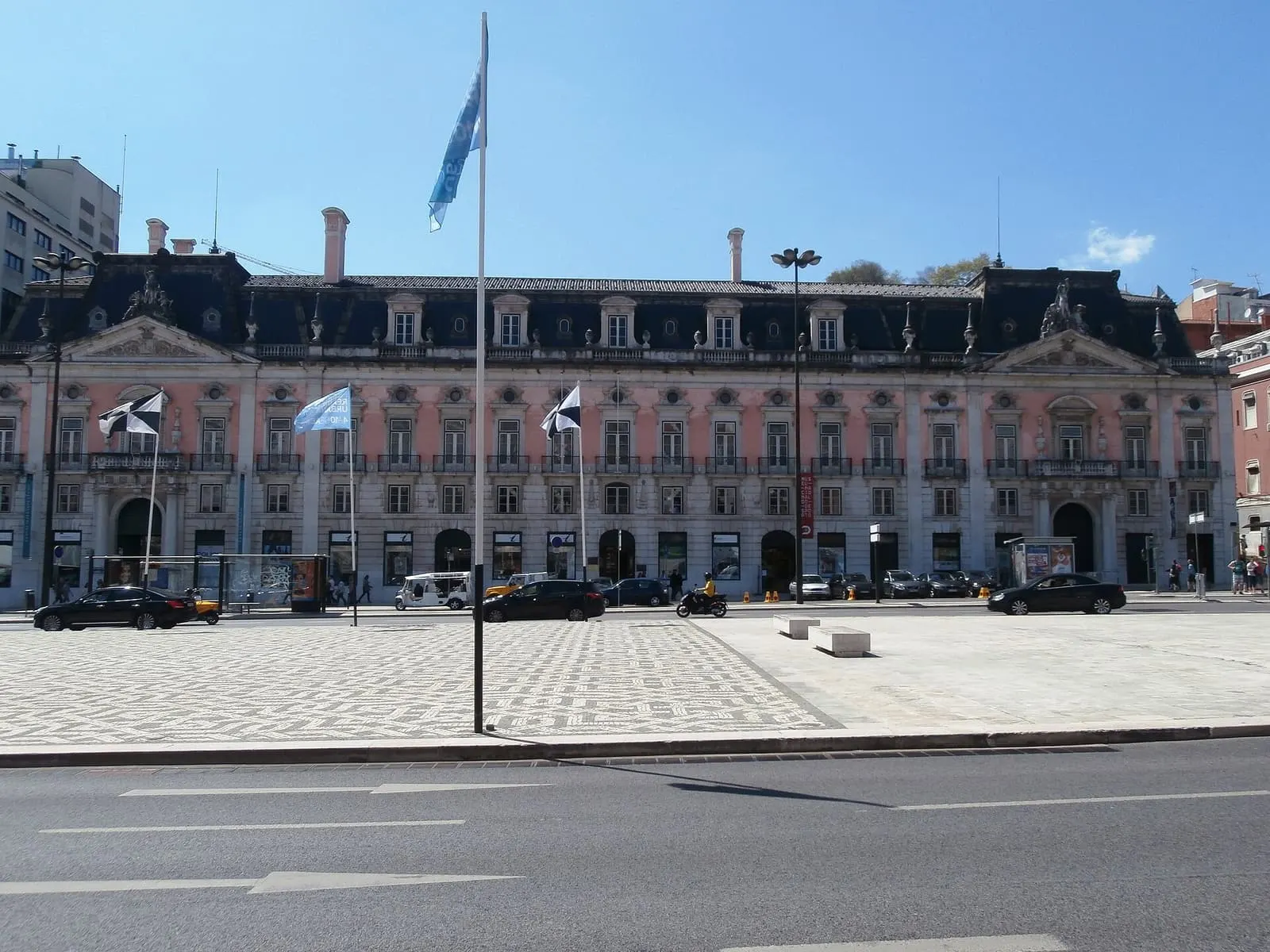
Palácio Foz, formerly Palácio Castelo Melhor, on Praça dos Restauradores in Lisbon: a neoclassical aristocratic residence with eclectic and luxurious interiors.
- Location
- Lisboa, Lisboa
- Built
- 1777–1858
- Style
- Neoclássico
Palácio Foz, originally known as Palácio Castelo Melhor, is a 19th-century aristocratic residence located on the western side of Praça dos Restauradores in the heart of Lisbon. With its imposing neoclassical façade and interiors of remarkable decorative richness, it stands as one of the best-preserved examples of urban palatial architecture in the capital. It has been classified as a Property of Public Interest since 1971.
History
The origins of the palace date back to the early 18th century, when the Counts of Castelo Melhor acquired land on the then outskirts of the city, where a 16th-century chapel stood. The building that developed here was severely damaged by the 1755 earthquake, like much of Lisbon, paving the way for successive reconstruction campaigns.
The current configuration largely results from works commissioned from 1792 onwards by the 2nd Marquis of Castelo Melhor, under the direction of architect Francisco Xavier Fabri, a central figure in Portuguese neoclassicism. A new phase, initiated in 1845 by order of the 4th Marquis, extended the works until 1858 and established the classical, balanced language that still defines the ensemble today.
In 1889, the building was purchased by Tristão Guedes Correia de Queirós, 1st Marquis of Foz, a financier and businessman linked to major projects in Lisbon during the Regeneration period. It was he who gave the palace its current name and who enriched the interiors, hiring architect José António Gaspar for grand decorative campaigns.
Architecture and Interiors
The main façade, organized with classical sobriety, is articulated across several floors punctuated by regular windows and crowned by sculptural elements. The contrast between this restrained exterior and the exuberance of the interior spaces is one of the palace’s most striking features.
Inside, highlights include halls clad in marble, mirrors, gilded stucco, paintings, and elaborate ceilings, in an eclectic decorative program combining Baroque, Rococo, and neoclassical references. The grand staircase, ballrooms, and state rooms reflect the luxury of Lisbon’s elite in the late 19th century, comparable to other noble residences in the city documented in the panorama of Portuguese urban palaces.
Uses and Significance
After the financial decline of the Marquis of Foz, the building served various functions, including restaurants and a cinema in the early 20th century. In 1940, it was acquired by the state to house the Secretariado da Propaganda Nacional, led by António Ferro, and the palace played a significant role in the cultural policies of the Estado Novo.
Today, Palácio Foz houses public services and cultural and informational institutions, remaining a space for visits and events. Its location, facing Palácio de São Bento as an institutional landmark of the city, and its integration into Lisbon’s monumental fabric make it a privileged witness to aristocratic Lisbon and the memory of Portuguese royal palaces and noble residences.
Frequently asked questions
- Where is Palácio Foz located?
- It is situated on the western side of Praça dos Restauradores, near Baixa, in the center of Lisbon.
- Why is it called Palácio Foz?
- It owes its name to Tristão Guedes Correia de Queirós, 1st Marquis of Foz, who acquired it in 1889. Previously, it was known as Palácio Castelo Melhor.
- Can Palácio Foz be visited?
- The building houses public services and hosts visits and cultural initiatives, although access to the interiors depends on the programming and ongoing rehabilitation works.
Sources
Keep exploring
Heritage nearby
More places to discover from here. Approximate straight-line distances, within 50 km.