Themes
Portuguese Baroque Painting
Portuguese Baroque painting of the 17th and 18th centuries, from André Reinoso and Josefa de Óbidos to Vieira Lusitano and Domingos Sequeira, in Portugal.
- Built
- séculos XVII–XVIII
- Style
- Barroco
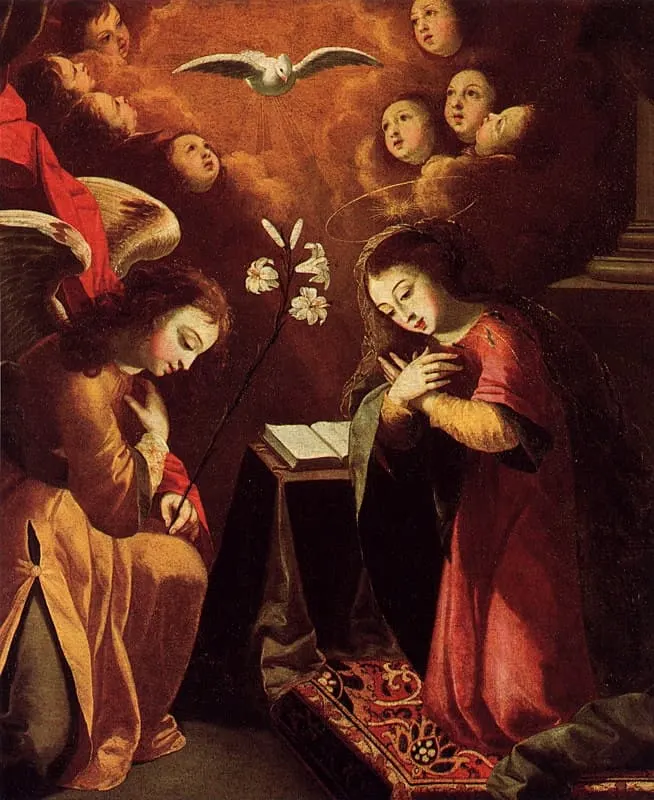
Portuguese Baroque painting spans approximately two centuries—from the early 17th century to the first decades of the 19th century—during which the art of the brush accompanied the major transformations of Portuguese society: the Restoration of Independence in 1640, the Brazilian gold that funded the Joanine commissions, and, finally, the opening to Neoclassical taste. More restrained and later than its Italian or Flemish counterparts, Baroque painting in Portugal flourished primarily in the service of the Counter-Reformation Church and the Crown, marked by a strong devotional intent.
The Founders of 17th-Century Naturalism
The arrival of the Baroque was first felt through the naturalism and tenebrism of Caravaggesque influence, transmitted by neighboring Sevillian painting. André Reinoso (active c. 1610–1641), considered the first Portuguese Baroque painter, left behind the celebrated cycle of the life of Saint Francis Xavier in the Church of São Roque in Lisbon, revealing mastery of pathos and chiaroscuro beyond convention. Domingos Vieira, o Escuro, distinguished himself as a portraitist of remarkable psychological intensity, bringing faces to life against densely dark backgrounds. This transitional generation broke with the Mannerism inherited from the 16th century and paved the way for oil-on-canvas painting, then a technical novelty inspired by Italy.
In a court without major royal collections, it was the religious orders, brotherhoods, and confraternities that sustained the demand for painting, dictating sacred themes and an aesthetic of emotional impact.
The Latter Half of the 17th Century: Bento Coelho and Josefa de Óbidos
Bento Coelho da Silveira (1617–1708), appointed royal painter to D. Pedro II in 1678, was the most sought-after artist of his time. A fa presto painter, with broad brushstrokes and vast output, he filled churches and convents with scenes from the life of Christ and the Virgin, hagiographies, and royal portraits. Alongside him shone Josefa de Óbidos, a singular figure of the period: born in Seville around 1630 and established in Óbidos, she signed around 150 works, combining religious themes with still lifes of sweets, flowers, and lambs, a genre in which she achieved an unmistakable lyricism. Her art exemplifies the intersection of devotion and a taste for sensory detail that characterizes Iberian Baroque.
The 18th Century: From Joanine Splendor to the Neoclassical Threshold
With the reign of D. João V, Brazilian gold funded a monumental and cosmopolitan Baroque. Painting abandoned tenebrism, brightened its palette, and adopted broad, dynamic compositions, in dialogue with gilded woodcarving and illusionistic ceiling perspectives that define Joanine Baroque. The Portuguese Academy in Rome, founded by D. João V, brought artists into direct contact with European masters: Inácio de Oliveira Bernardes participated in the vast decorative campaigns of the Palace of Mafra, an integral part of Baroque architecture in Portugal. Vieira Lusitano (1699–1783), court painter and engraver, embodied the transition to Rococo, while Domingos António de Sequeira (1768–1837), in the service of Prince Regent D. João, led national painting to the threshold of Neoclassicism and Romanticism.
Compared to the sober restraint of Portuguese Renaissance painting, the Baroque brought theatricality, emotion, and an expansive sense of space. Much of this legacy can be admired today at the National Museum of Ancient Art in Lisbon, which houses the most important collection of 17th- and 18th-century Portuguese painting, as well as in countless churches and convents across the country, where the canvases remain in the altarpieces for which they were conceived.
Frequently asked questions
- Who was Josefa de Óbidos?
- Josefa de Ayala Figueira (c. 1630–1684), born in Seville and settled in Óbidos from childhood, was one of the most prolific painters of the Portuguese Baroque, with around 150 attributed works, including sacred themes and still lifes.
- Who were the main Baroque painters in Portugal?
- Among the leading figures were André Reinoso and Domingos Vieira, o Escuro, in the early 17th century; Bento Coelho da Silveira and Josefa de Óbidos in the latter half of the century; and Vieira Lusitano, Inácio de Oliveira Bernardes, and Domingos Sequeira in the 18th century.
- What distinguishes Baroque painting from Renaissance painting in Portugal?
- Compared to the balance and clarity of the Renaissance, Baroque art emphasizes dramatic contrasts of light and shadow, movement, emotional expression, and the persuasive power of art in the service of the Counter-Reformation.