Monuments
Quinta da Regaleira
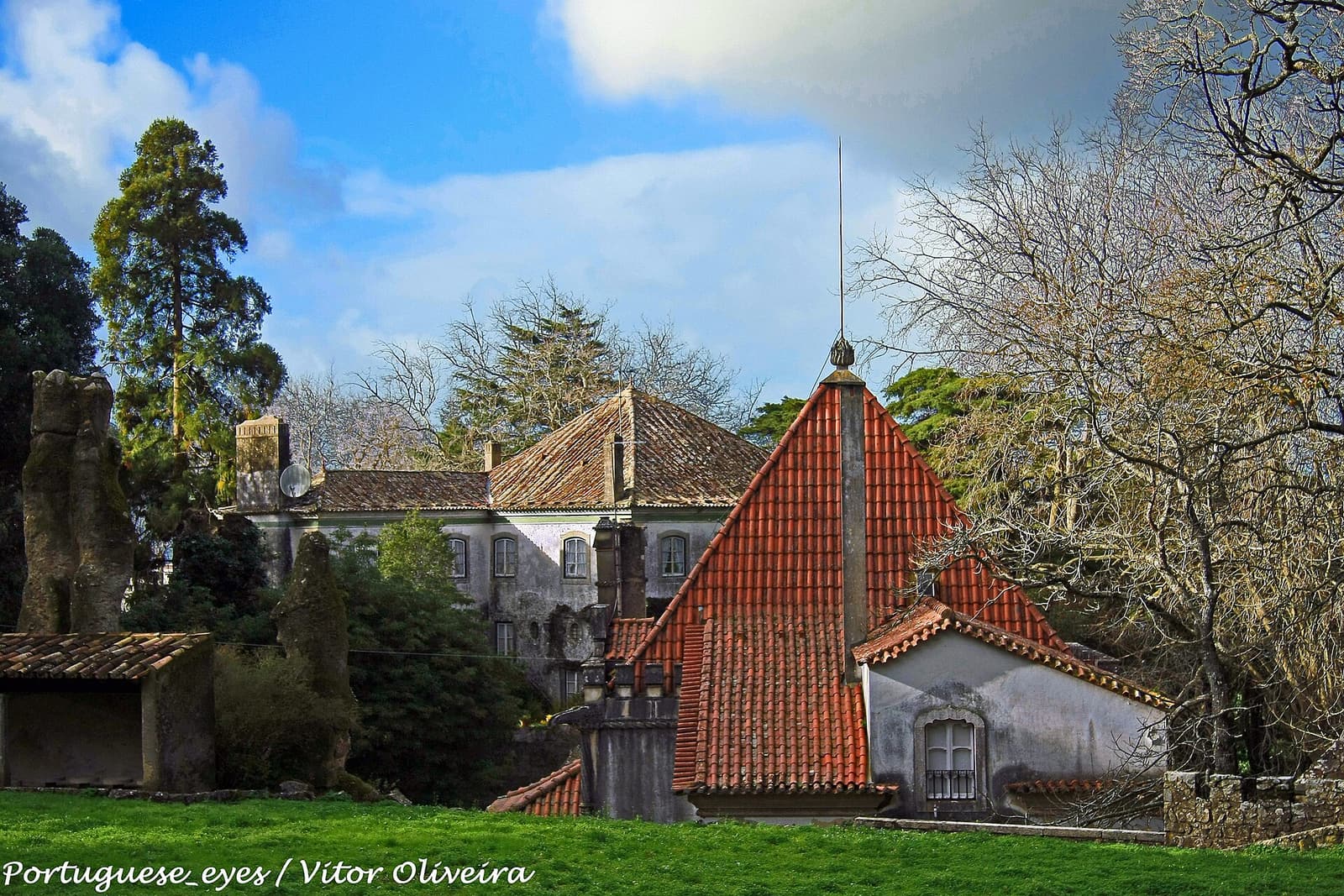
Quinta da Regaleira in Sintra is an initiatory palace and garden designed by Luigi Manini for Carvalho Monteiro, renowned for its Initiation Well.
- Location
- Sintra, Lisboa
- Built
- 1904–1910
- Style
- Revivalista (neomanuelino, neogótico e neorrenascentista)
Quinta da Regaleira rises on the slopes of the Sintra Mountains, a short distance from the historic center of the town. More than a summer residence, it is a total work of art: a complex where palace, chapel, lakes, grottoes, and towers intertwine in a dense symbolic program, filled with references to alchemy, Freemasonry, the Templars, and the Rosicrucians. Designed at the turn of the 20th century, it stands out in the landscape of Sintra for its initiatory uniqueness, setting it apart from the other palaces of the mountains.
The Dream of Carvalho Monteiro
The land was purchased in 1892 by António Augusto de Carvalho Monteiro (1848–1920), a cultured man of vast fortune, passionate about Camões, national history, and esotericism. To materialize his vision, he hired Italian set designer and architect Luigi Manini (1848–1936), trained in Milan’s lyrical theater, whose scenic mastery is reflected in the theatricality of the ensemble. The main construction took place mostly between 1904 and 1910, involving sculptors, stonemasons, and tile masters who executed the lavish decoration.
At Regaleira, every path, grotto, and tower was conceived as a stage in a symbolic journey—the visitor does not merely stroll through a garden but traverses a path of trials and rebirth.
The palace, with its revivalist profile and strong Neo-Manueline accents, displays pinnacles, gargoyles, and stone lacework that dialogue with the Portuguese architectural tradition of the early 16th century, echoing the language that made the Jerónimos Monastery famous. The chapel, dedicated to the Holy Trinity, repeats this decorative exuberance and integrates into the symbolic fabric of the complex.
The Initiation Well
The most famous element of the estate is the Initiation Well, an inverted tower carved into the rock, descended via a spiral staircase. It is organized into nine landings—often interpreted as referencing the nine circles of Dante’s inferno—and culminates at the bottom with a compass rose superimposed on a cross of the Order of Christ, in marble. The well never served to collect water: it was designed to evoke, in a theatrical manner, the cycle of death and rebirth characteristic of initiation rites.
From the bottom of the well extends a network of tunnels and underground galleries leading to other points in the garden, such as the Labyrinth Grotto and the Waterfall Lake. This hidden circulation reinforces the initiatory journey’s character, where descent into darkness precedes emergence into light.
Classification and Visits
After Carvalho Monteiro’s death, the property changed hands several times, even belonging to a foreign company in the 1980s. In 1997, it was acquired by the Sintra Municipal Council and opened to the public the following year under the management of the Cultursintra Foundation. The complex has been classified as a Property of Public Interest since 2002 and is part of the Cultural Landscape of Sintra, inscribed on the World Heritage list by UNESCO in 1995.
Visitors to Regaleira will find it just minutes from the Sintra National Palace and the romantic Monserrate Palace, forming with them one of the richest heritage itineraries in the country. The combination of revivalist architecture, symbolic garden, and mountain setting makes Quinta da Regaleira one of the most unique and enigmatic places in Portuguese heritage.
Frequently asked questions
- Who commissioned the construction of Quinta da Regaleira?
- It was commissioned by António Augusto de Carvalho Monteiro, a wealthy landowner and collector, who purchased the land in 1892 and entrusted the project to Italian set designer Luigi Manini.
- What is the Initiation Well?
- It is an inverted tower carved into the rock, featuring a spiral staircase with nine landings. It was not used for water collection but for symbolic rituals of death and spiritual rebirth.
- Is Quinta da Regaleira a World Heritage Site?
- It forms part of the Cultural Landscape of Sintra, inscribed by UNESCO in 1995. Individually, it has been classified as a Property of Public Interest since 2002.
Sources
Keep exploring
Heritage nearby
More places to discover from here. Approximate straight-line distances, within 50 km.