Monuments
Pena National Palace
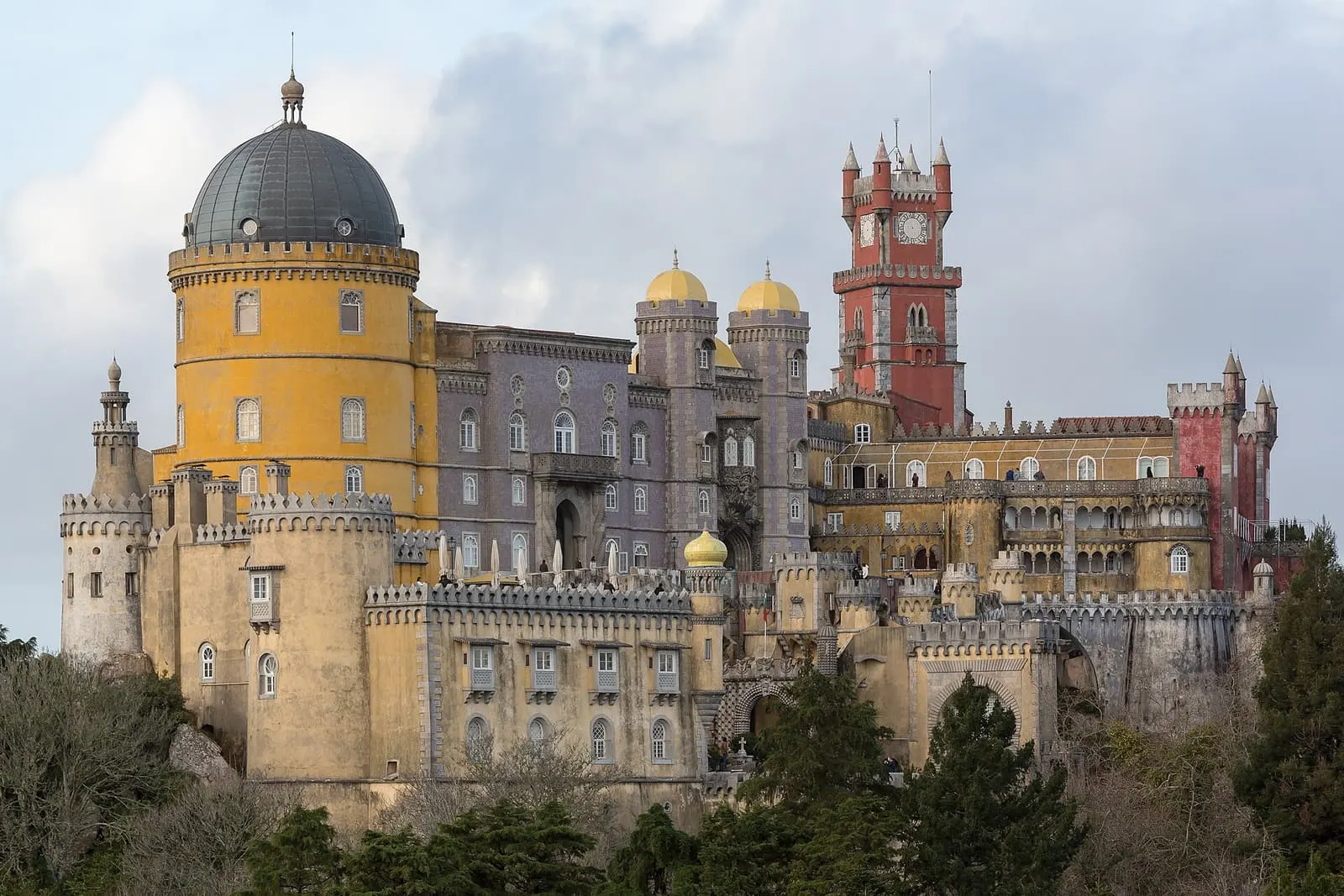
Pena National Palace in Sintra: the romantic palace of King Ferdinand II atop the mountain range, the greatest icon of 19th-century Portuguese revivalism.
- Location
- Sintra, Lisboa
- Built
- 1842–1854
- Style
- Revivalismo romântico (neogótico, neomanuelino, neoislâmico e neorrenascentista)
Perched at the highest point of the Sintra mountains, the Pena National Palace is Portugal’s most emblematic Romantic monument and one of Europe’s first major achievements of architectural revivalism. Its unmistakable silhouette — crenellated towers, domes, terraces and walls painted in vivid red and yellow — dominates the wooded landscape of Sintra and has become a national symbol.
From Hieronymite monastery to romantic palace
The site’s origins trace back to a medieval chapel dedicated to Our Lady of Pena. In 1503, King Manuel I ordered the construction of a monastery here, donated to the Order of Saint Jerome, which maintained a small community for over two centuries. The 1755 earthquake and subsequent dissolution of religious orders in 1834 left the building in ruins.
In 1838, Ferdinand II of Saxe-Coburg and Gotha, husband of Queen Maria II, acquired the ruined monastery and surrounding lands. Enchanted by the mountain scenery and German culture, he commissioned German engineer and mineralogist Baron Wilhelm Ludwig von Eschwege to transform the ruins into a summer palace. Construction occurred mainly between 1842 and 1854, integrating the preserved Manueline cloister of the old monastery into an entirely new complex.
At Pena Palace, the ruin wasn’t erased but absorbed: the old monastery became a wing of the palace, and the site’s history became part of the romantic staging itself.
A synthesis of styles
Pena’s architecture rejects stylistic unity and celebrates eclecticism. Eschwege and Ferdinand II combined Neo-Gothic, Neo-Manueline, Neo-Islamic and Neo-Renaissance references, freely quoting national heritage and imagined Oriental motifs. The red wing corresponds to the restored convent; the yellow wing to the “New Palace”. Details like the Triton portal, Moorish-inspired vaults and azulejo tiles cover surfaces with programmatic decorative profusion.
The color scheme, restored in late 20th-century renovations, was essential to the original conception: vibrant tones make the palace stand out against the mountain greenery and enhance its theatrical, stage-like character.
The park and legacy
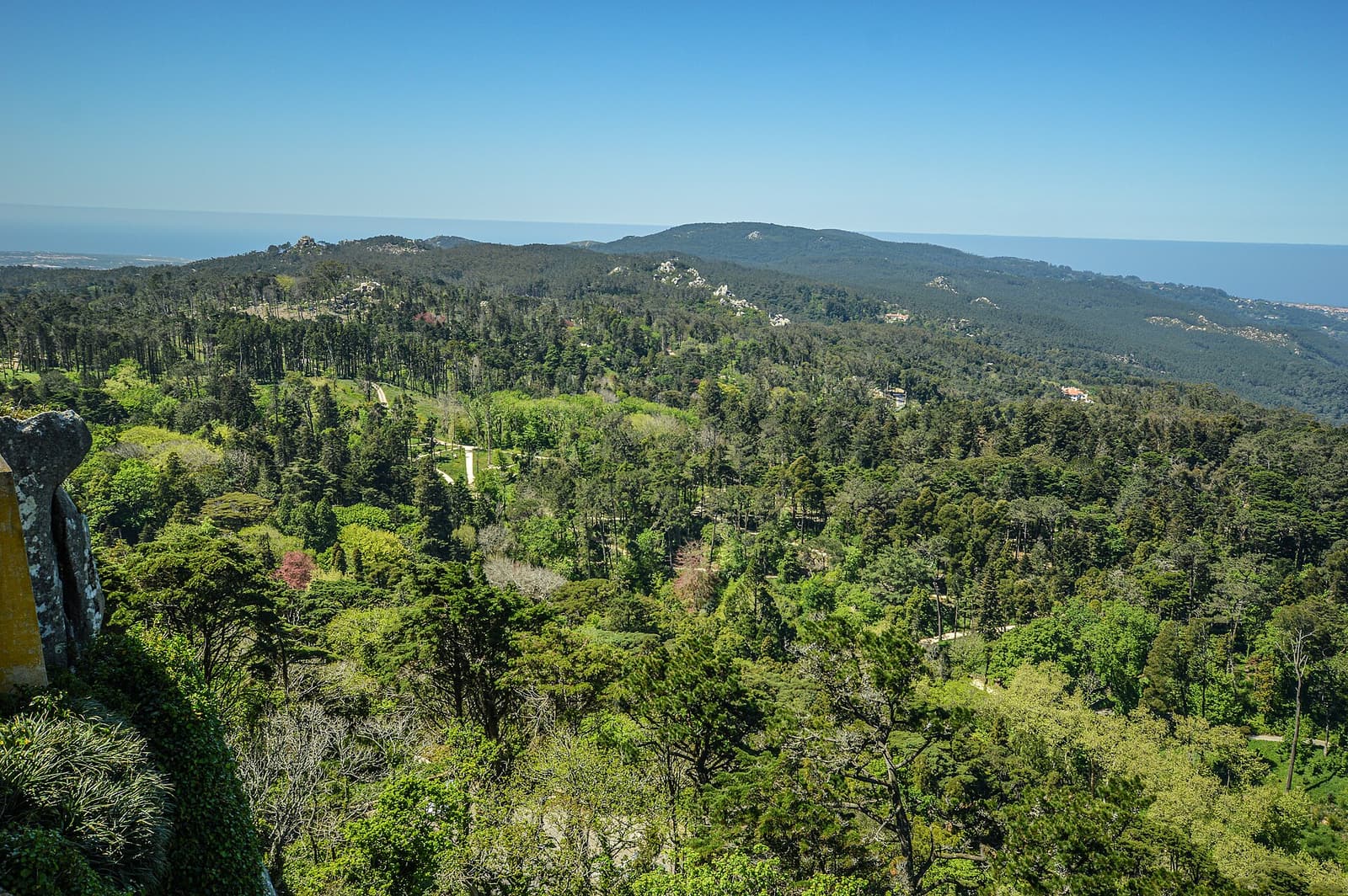
Surrounding the palace, Ferdinand II designed an extensive romantic park spanning about 200 hectares, planted with exotic species from around the world and organized according to English landscape garden principles. Winding paths, lakes, hidden corners and viewpoints create a setting designed for contemplative strolls.
After Ferdinand II’s death in 1885, the palace was eventually acquired by the state. With the establishment of the Republic in 1910, it was classified as a National Monument and converted into a museum. Today it forms part of Sintra’s Cultural Landscape, inscribed on UNESCO’s World Heritage list since 1995.
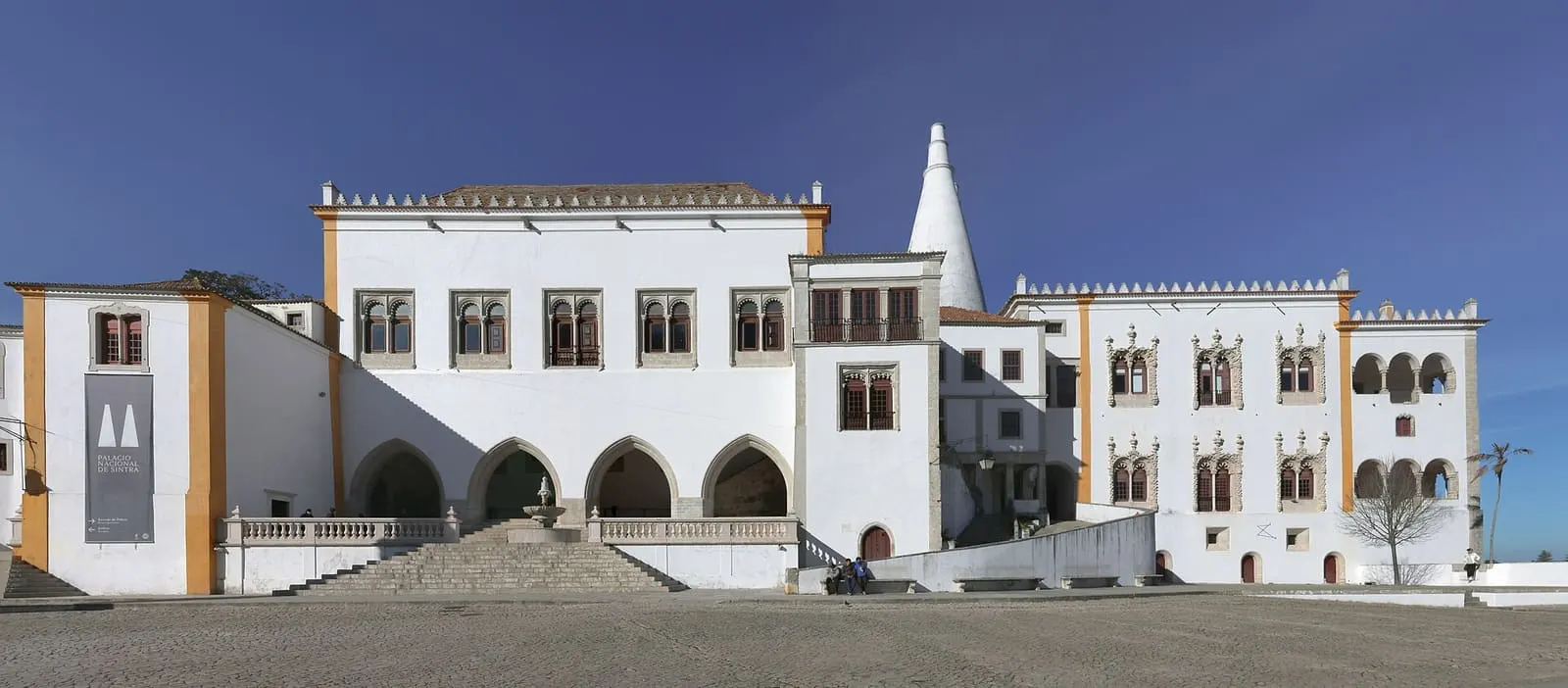
Pena dialogues with other landmarks of Sintra’s romanticism like Monserrate Palace and Quinta da Regaleira, while contrasting with the neighboring Sintra National Palace, a royal residence with medieval roots. Together, these monuments make Sintra one of Portugal’s most concentrated areas of palatial heritage.
Frequently asked questions
- Who commissioned the construction of Pena Palace?
- King consort Ferdinand II of Saxe-Coburg and Gotha, who acquired the former Hieronymite monastery in 1838 and oversaw construction between 1842 and 1854, with designs by Baron Wilhelm von Eschwege.
- What architectural style does Pena Palace have?
- It is a revivalist synthesis of Romanticism, combining Neo-Gothic, Neo-Manueline, Neo-Islamic and Neo-Renaissance elements, with exotic references inspired by 19th-century imagination.
- Is Pena Palace a World Heritage Site?
- Yes, it forms part of the Cultural Landscape of Sintra, designated by UNESCO in 1995. The palace itself has been a National Monument since 1910.
Sources
Keep exploring
Heritage nearby
More places to discover from here. Approximate straight-line distances, within 50 km.