Monuments
Monserrate Palace
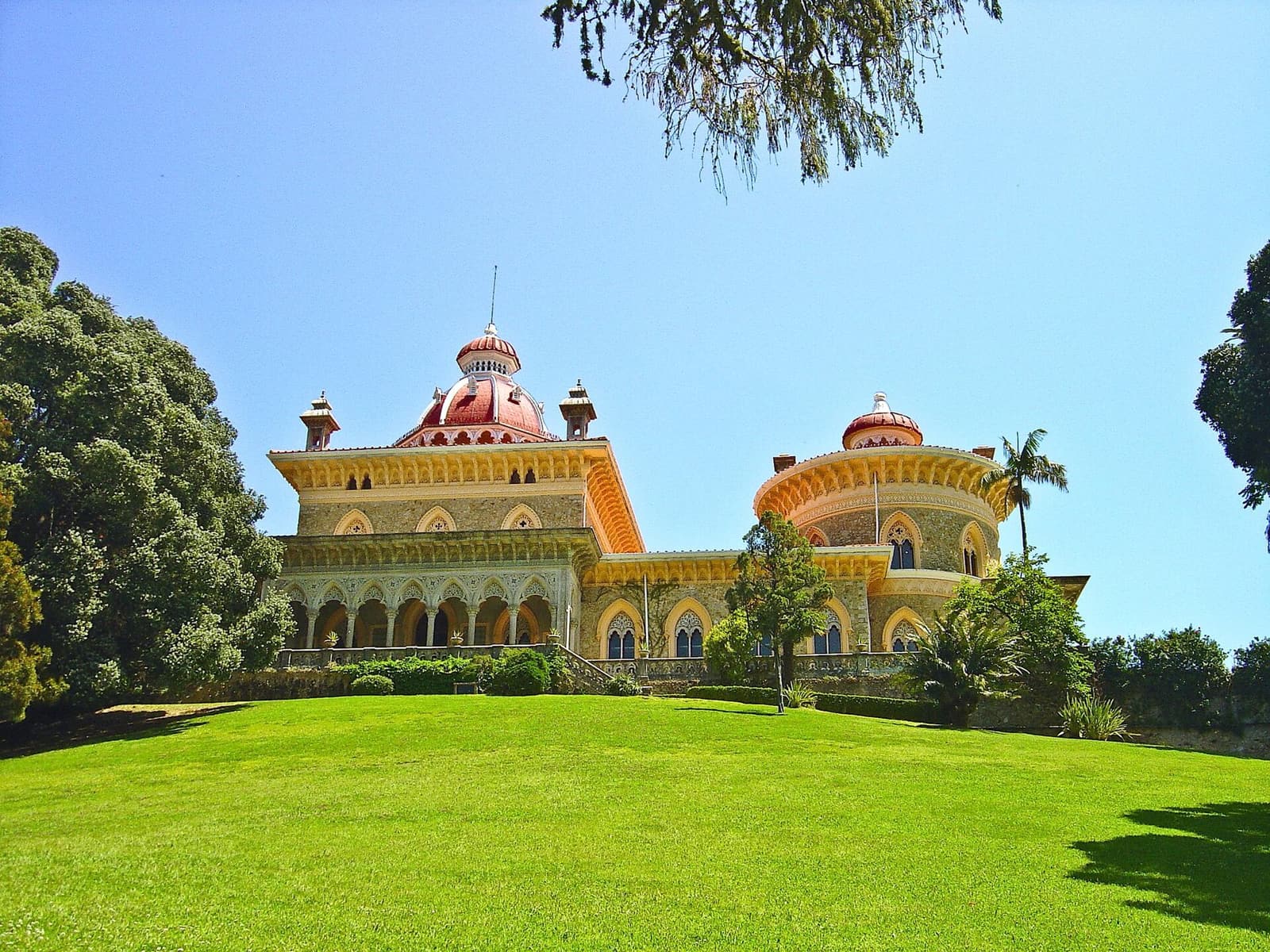
The Monserrate Palace in Sintra is the romantic and orientalist masterpiece of Francis Cook, surrounded by a celebrated botanical park.
- Location
- Sintra, Lisboa
- Built
- 1858–1865
- Style
- Eclético orientalizante (gótico, indiano e mourisco)
The Monserrate Palace is one of the most unique creations of Romanticism in Portugal. Built on the slopes of the Sintra mountains, west of the town, it combines Gothic, Indian, and Moorish references in a single façade, enveloped by an extensive botanical park that makes the ensemble one of the most celebrated gardens in Europe. The property is part of the Cultural Landscape of Sintra, designated by UNESCO in 1995, and has been classified as a Property of Public Interest since 1978.
From a ruined chapel to Francis Cook’s dream
The site has a long history of occupation. At least since the 16th century, there was a chapel dedicated to Our Lady of Monserrate here. In the late 18th century, merchant Gerard de Visme built a neo-Gothic residence here, later rented by the English writer William Beckford, who designed gardens and an artificial waterfall. When Lord Byron visited in 1809, the house was already in decline—an episode the poet would evoke in Childe Harold’s Pilgrimage, contributing to the literary aura of the place.
The decisive transformation came in 1856, when the textile magnate Francis Cook acquired the estate. He commissioned the English architect James Thomas Knowles to design an entirely new palace, built over the previous structures between 1858 and 1865. Cook consolidated dozens of neighboring properties, employed hundreds of workers, and founded schools for their children; in recognition, King Luís I granted him the title of Viscount of Monserrate.
An unparalleled architecture
At Monserrate, the stone seems to bend like lace: the filigreed masonry of the central atrium, with its octagonal dome and pink marble columns, is among the most delicate stonework in Portugal.
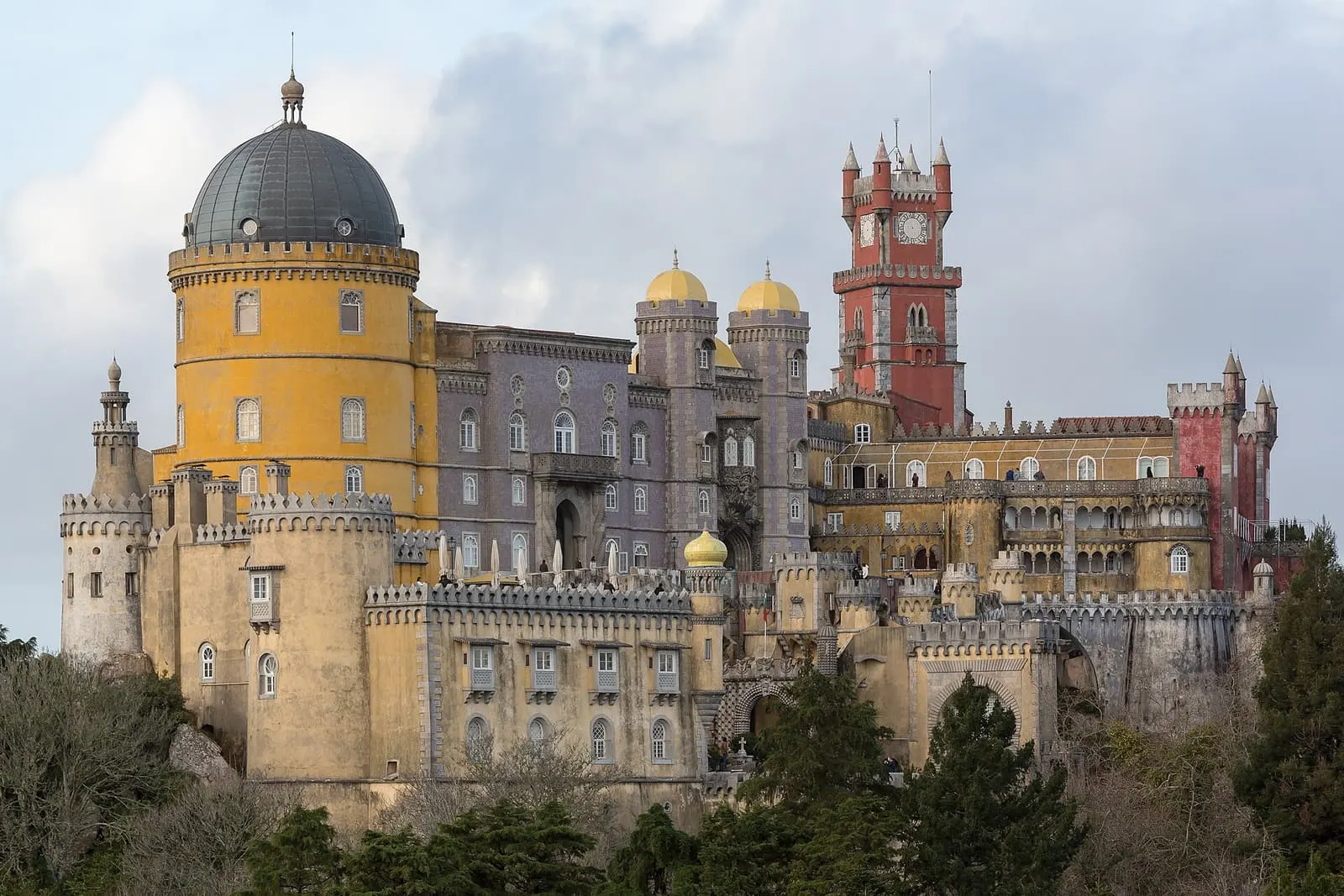
The palace is organized around a longitudinal gallery connecting three wings, dominated by towers and domes. The interior decoration, richly carved, draws inspiration from vegetal and geometric motifs of Eastern origin, engaging in an erudite dialogue with Indo-Islamic architecture that fascinated British Romantic taste. This Orientalism aligns Monserrate with other contemporary commissions in the Sintra mountains, such as the exuberant Pena National Palace, with which it shares the 19th-century scenographic spirit.
The botanical park
More than a building, Monserrate is a landscape ensemble. Cook designed approximately 33 hectares of gardens, leveraging the humid microclimate of the mountains to acclimate species brought from across the British Empire and other latitudes. The winding paths traverse contrasting environments: the Fern Valley, with tree ferns and araucarias; a Mexican setting of agaves and palm trees; and a Japanese-inspired garden with camellias, azaleas, and bamboos. The artificial waterfall and romantic ruins from Beckford’s time still remain, along with a restored historic rose garden.
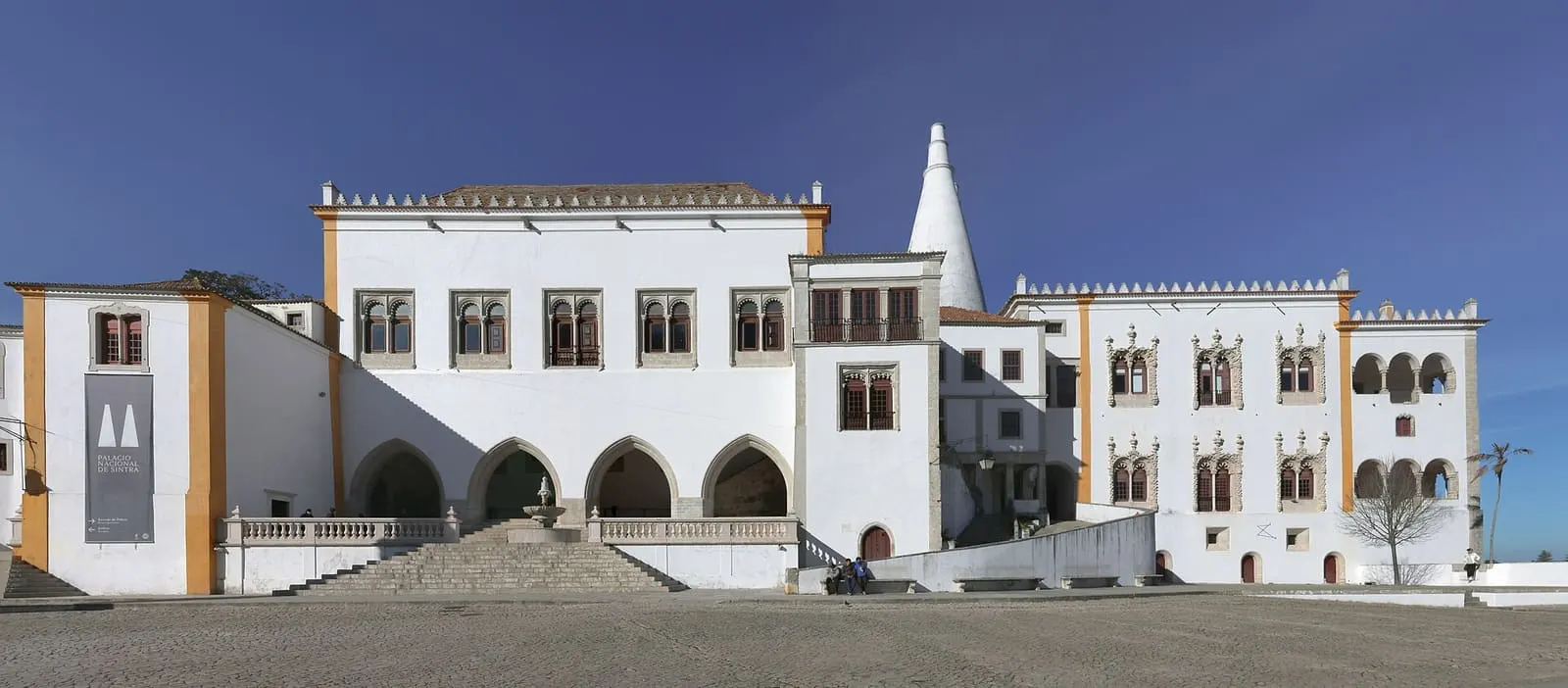
After its acquisition by the Portuguese state in 1949, the ensemble suffered decades of neglect. Management by the company Parques de Sintra, beginning in 2000, enabled a profound restoration, with the palace reopening in 2010. Today, Monserrate is part of a Romantic itinerary in the Sintra mountains that also includes the Quinta da Regaleira and the medieval Sintra National Palace, all encompassed by the UNESCO-recognized cultural landscape.
Frequently asked questions
- Who commissioned the construction of Monserrate Palace?
- It was the English textile magnate Francis Cook, who acquired the estate in 1856 and commissioned the current palace from architect James Thomas Knowles. Cook was granted the title of Viscount of Monserrate by King Luís I of Portugal.
- Is the park worth visiting in addition to the palace?
- Yes. The Monserrate Park is one of the most remarkable romantic gardens in Europe, covering approximately 33 hectares with botanical collections from around the world, arranged in themed environments such as the Mexican and Japanese gardens.
Sources
Keep exploring
Heritage nearby
More places to discover from here. Approximate straight-line distances, within 50 km.