Monuments
Mafra National Palace
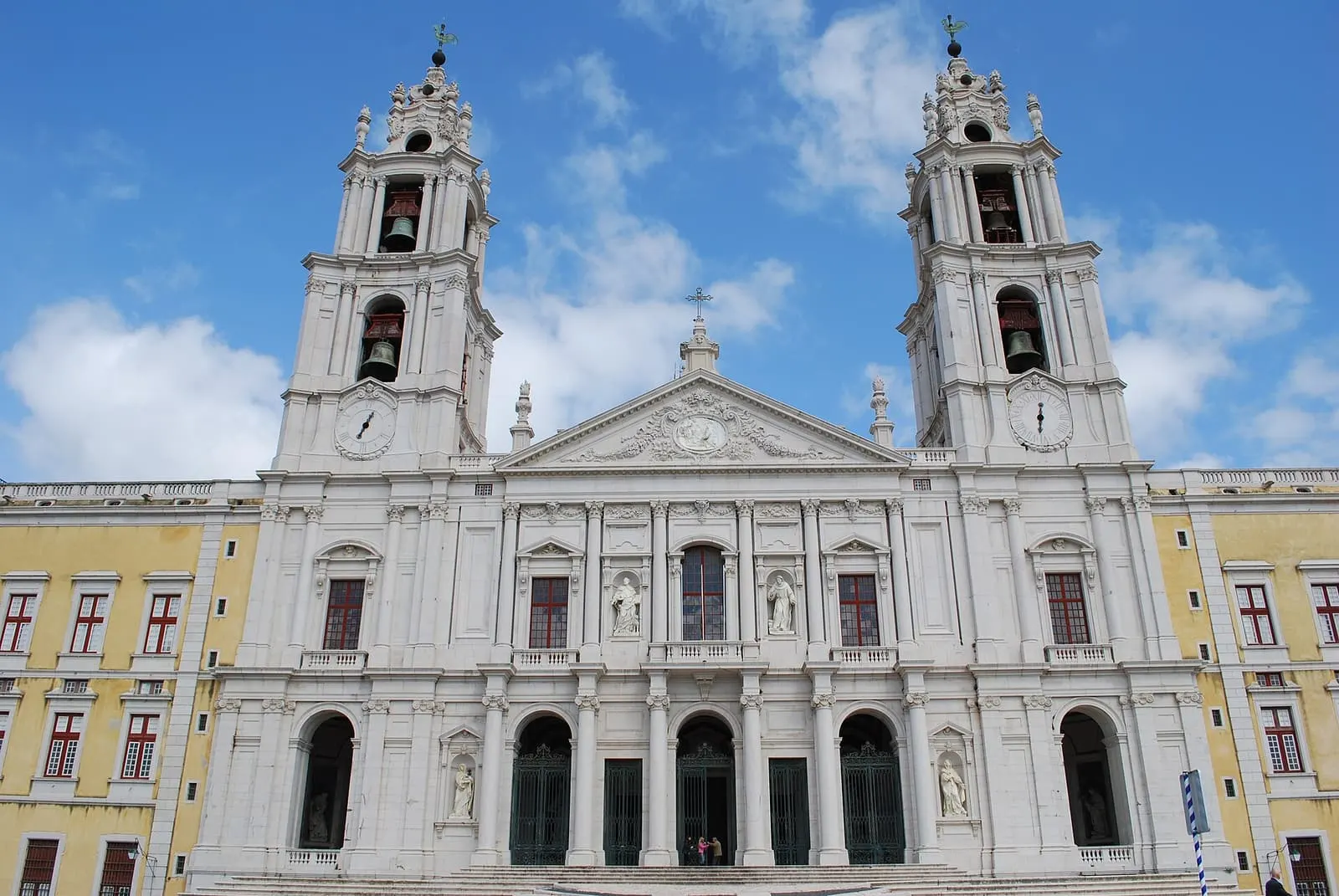
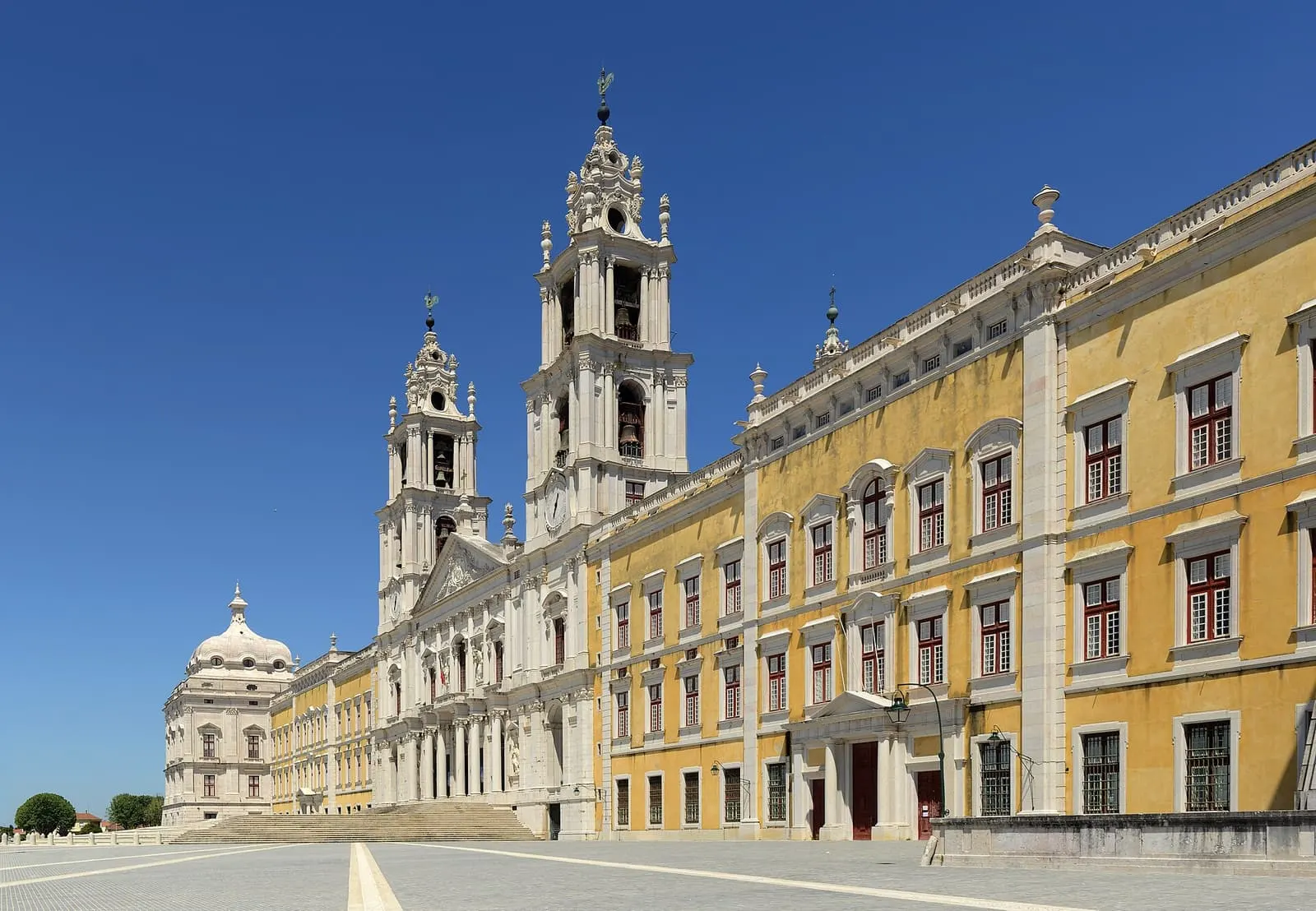
The Mafra National Palace, a colossal Joanine Baroque complex commissioned by King João V, comprising a basilica, convent, and library in Mafra.
- Location
- Mafra, Lisboa
- Built
- 1717–1755
- Style
- Barroco joanino
The Mafra National Palace is the most monumental architectural ensemble of Portuguese Baroque, erected in the town of Mafra, Lisbon District, approximately 28 kilometers northwest of the capital. Combining a royal palace, basilica, convent, library, Jardim do Cerco, and the vast hunting grounds of Tapada into a single structure, it embodies King João V’s unparalleled vision of monarchy and statehood for posterity. Its scale is staggering: around 1,200 rooms, over 4,700 doors and windows, 156 staircases, and 29 courtyards and atriums.
Origins and Construction
The building resulted from a vow: King João V, hoping for an heir, promised to build a Franciscan convent if one was born. Construction began in 1717 under the direction of architect João Frederico Ludovice (Johann Friedrich Ludwig), trained in the Roman Baroque tradition. Funded by Brazilian gold, the project mobilized tens of thousands of workers, turning Mafra into a vast royal construction site. The basilica was solemnly consecrated in 1730, and the complex was largely completed by the monarch’s death in 1750.
Mafra is less a palace with a church than a manifesto in stone: in it, King João V condensed gold, faith, and absolute power into a single, calculated dynastic statement.
The project was immortalized in literature through Memorial do Convento by José Saramago, which intertwined the colossal effort of construction with the story of Baltasar and Blimunda. Today, the monument is part of the Royal Building of Mafra, inscribed on UNESCO’s World Heritage List in 2019, and has been classified as a National Monument since 1910.
The Basilica and the Library
At the center of the main façade, flanked by two bell towers, stands the basilica, designed in the style of Roman churches, clad in national marbles and adorned with 58 Carrara statues. Notable are its six historic organs, designed to play in unison, and the two carillons totaling 92 bells — among the largest surviving 18th-century examples worldwide.
On the noble floor, the library unfolds in a cross-shaped hall approximately 88 meters long, housing around 36,000 leather-bound volumes, organized hierarchically from sacred texts to secular works. It is one of Europe’s most beautiful conventual libraries and still hosts a colony of bats that protect the books from insects.
Significance and Context
Mafra is neither just a palace nor just a convent: it is the synthesis of both, reflecting the dual royal and religious vocation of the Joanine project. The sculpture workshop established there — the Mafra School of Sculpture — trained a generation of artists pivotal to Portuguese Baroque. As a royal residence, it dialogues with other royal palaces in the Lisbon region, such as the more Rococo-style Queluz National Palace and the unfinished Ajuda National Palace. Among Portuguese royal palaces, Mafra stands out for its monumentality and totalizing ambition.
Today, the building houses a museum, serves as a parish church in the basilica, and part of its premises is allocated to the Army, extending into the 21st century the life of one of Europe’s most extraordinary Baroque monuments.
Frequently asked questions
- Who ordered the construction of the Mafra National Palace?
- It was King João V, fulfilling a vow, who ordered its construction starting in 1717, with the German architect João Frederico Ludovice overseeing the project.
- Is the Mafra Palace a UNESCO World Heritage Site?
- Yes. The Royal Building of Mafra — palace, basilica, convent, Jardim do Cerco, and Tapada — was inscribed on the World Heritage List in 2019.
- What makes the Mafra basilica unique?
- It features six historic organs designed to play together and two carillons with 92 bells, among the largest surviving 18th-century examples in the world.
Sources
Keep exploring
Heritage nearby
More places to discover from here. Approximate straight-line distances, within 50 km.