Monuments
Convent of Mafra
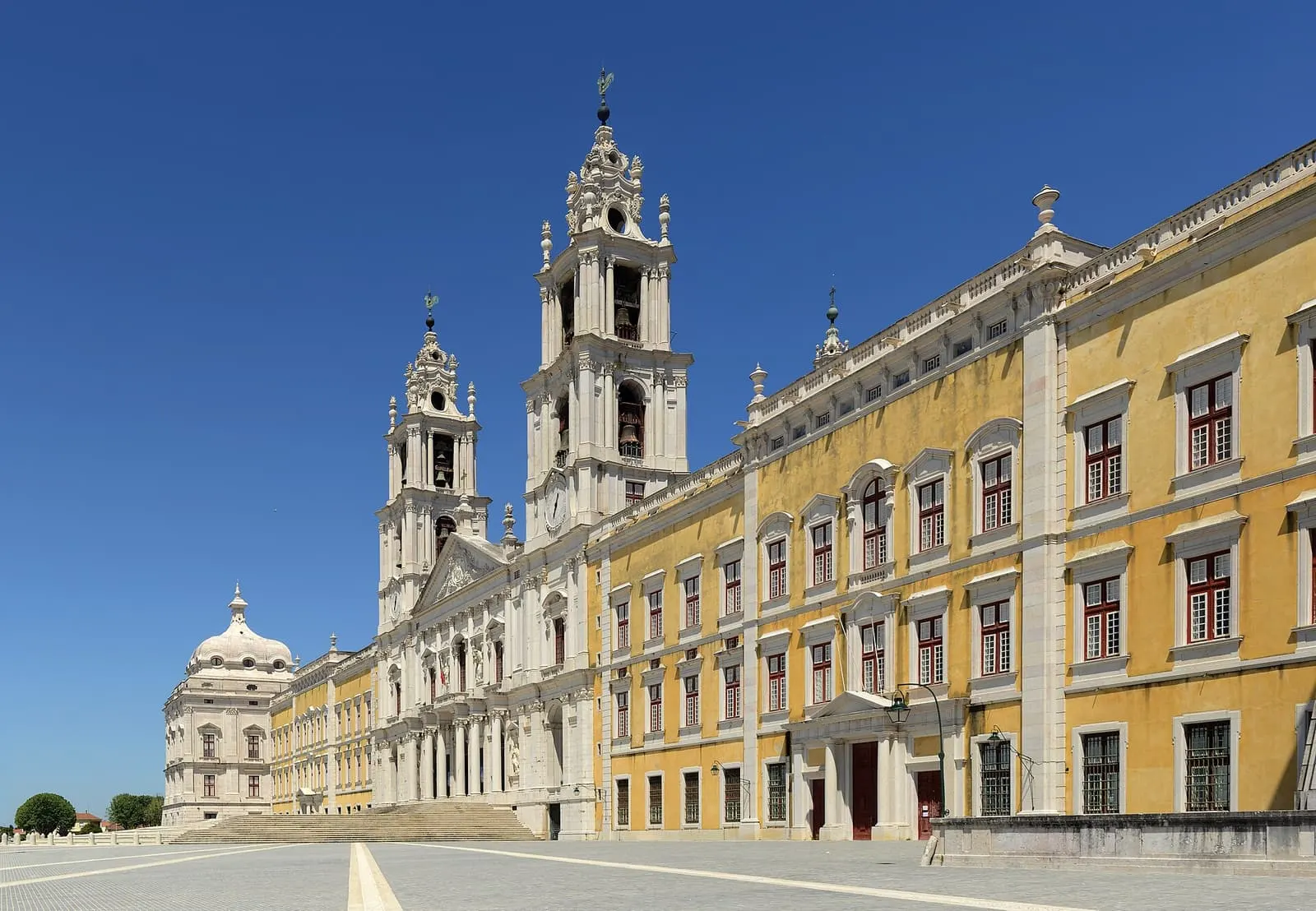
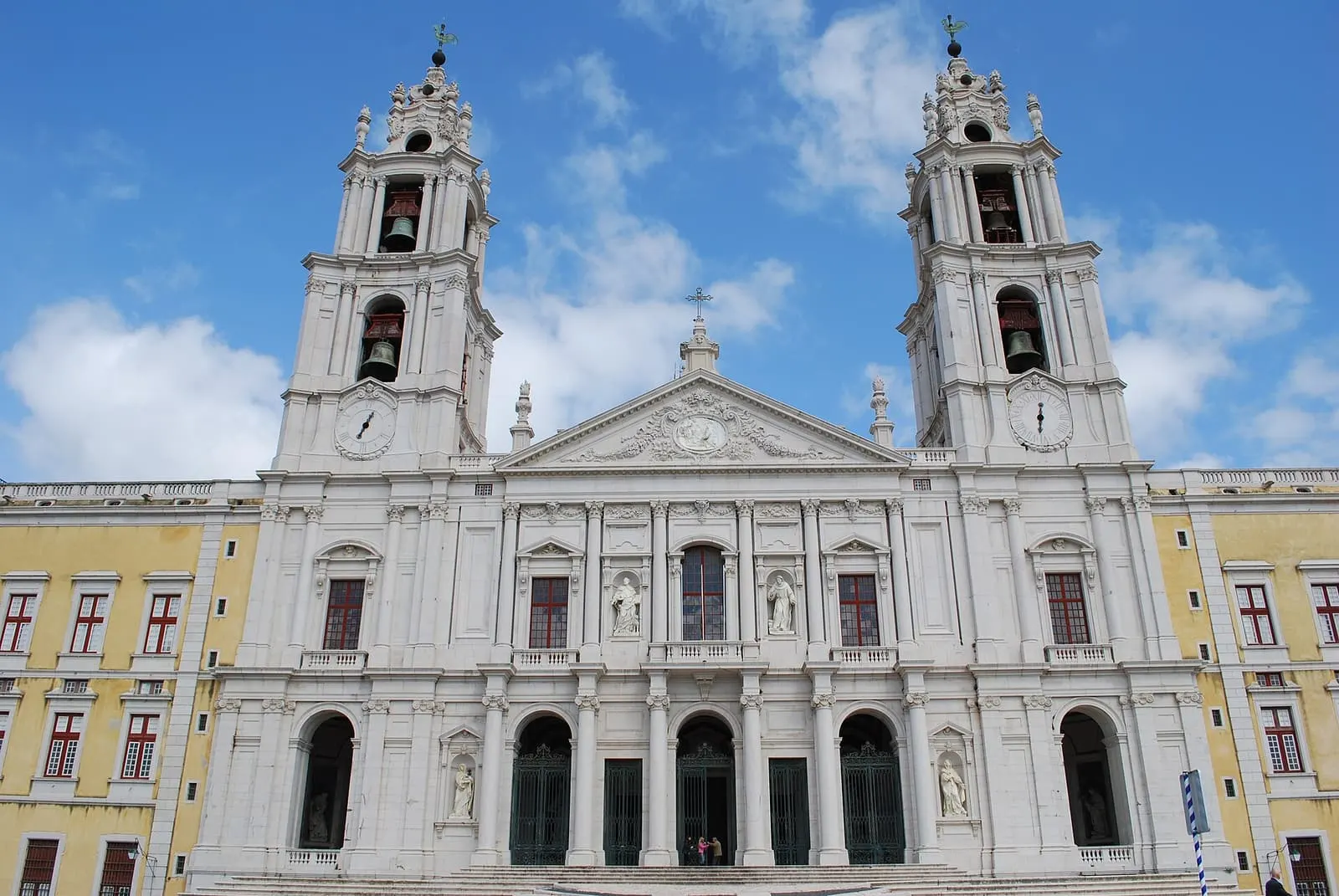
The Franciscan convent of Mafra, part of the monumental Joanine Baroque ensemble of King João V, with its basilica and famous library, in Mafra, district of Lisbon.
- Location
- Mafra, Lisboa
- Built
- 1717–1744
- Style
- Barroco joanino
The Convent of Mafra is the religious component of the imposing monumental ensemble raised by King João V in the town of Mafra, in the district of Lisbon. Usually presented together with the basilica and the royal palace, the Franciscan convent constitutes, in its own right, one of the largest monastic establishments ever built in Portugal and the most eloquent testimony to the opulence of the Joanine reign, financed by the gold of Brazil.
Origin of a royal vow
The history of the building begins with a vow. King João V, still without offspring from his marriage to Maria Anna of Austria, promised to have a convent built should an heir be born to him. The birth of the Infanta Maria Bárbara, in 1711, sealed the promise. Construction began on 17 November 1717, over a small hermitage of the friars of Santo António de Arrábida, to the design of the architect João Frederico Ludovice, trained in the Roman and Germanic Baroque tradition.
The initial, modest programme was progressively enlarged as the monarch’s ambition and the availability of resources grew. What began as a convent for a dozen friars became a colossal Baroque complex that mobilised, at the periods of greatest intensity, tens of thousands of workers. The main building campaign proceeded almost without interruption between 1717 and 1744.
The Franciscan convent
Although the monumental façade and the towers evoke above all the palatial aspect, the religious heart of the building is the convent, entrusted to the Order of Friars Minor. The Franciscan community only settled in fully in 1771, occupying dormitories, an infirmary, an apothecary, a refectory and cloisters distributed across a network of corridors that ranks among the most extensive in the country.
In the silence of its cells and the grandeur of its library, Mafra brings together the two poles of the Portuguese Baroque: the austerity of Franciscan life and the boundless splendour of a king.
The most celebrated piece of this conventual aspect is the library, with some 30,000 volumes arranged in a gallery with a marble floor and shelving in fine woods. A frequently cited curiosity: a colony of bats protects the books from insects, in a balance that has been maintained for generations. The convent was suppressed in 1834, with the abolition of the religious orders in Portugal.
Integration into the Royal Building of Mafra
The convent cannot be understood in isolation. It is part of the Royal Building of Mafra, classified as a UNESCO World Heritage Site in 2019, an ensemble that also encompasses the palace, the basilica, the Jardim do Cerco and the Tapada hunting park. The palatial aspect is today presented to the public as the National Palace of Mafra, managed as a museum.
By its scale and the way it fuses religious function with royal residence, Mafra holds a singular place among the great Portuguese convents and monasteries, engaging with earlier traditions but without direct parallel. Its inscription reinforces the body of national assets recognised as World Heritage, of which it is one of the latest and most monumental examples.
Significance and visit
In addition to the library, notable features include the basilica of centralised plan, the two carillons — among the largest of the eighteenth century in the world — and the remarkable collection of Italian Baroque sculpture. The town of Mafra grew up around this work, which still today dominates the landscape and the local economy. To visit the convent is to walk the intimate reverse side of a royal stage set: behind the gilded stone and the marble, the daily life of a Franciscan community that lived, for more than half a century, within the largest monument in the kingdom.
Frequently asked questions
- Is the Convent of Mafra still inhabited by friars?
- No. The Franciscan community occupied the convent between 1771 and the suppression of the religious orders in 1834. Today the space forms part of the monumental complex open to visitors, and part of the premises was for a long time used for military purposes.
- What is the difference between the convent, the basilica and the palace of Mafra?
- They are components of the same monumental building. The convent housed the religious community, the basilica is the central temple of the façade, and the royal palace occupied above all the wings and towers intended for the Royal Family.
- Who ordered the convent to be built, and why?
- King João V, in fulfilment of a vow made to obtain an heir. Construction began in 1717, to a design by the architect João Frederico Ludovice.
Sources
Keep exploring
Heritage nearby
More places to discover from here. Approximate straight-line distances, within 50 km.