Archaeology
Ribeira de Piscos
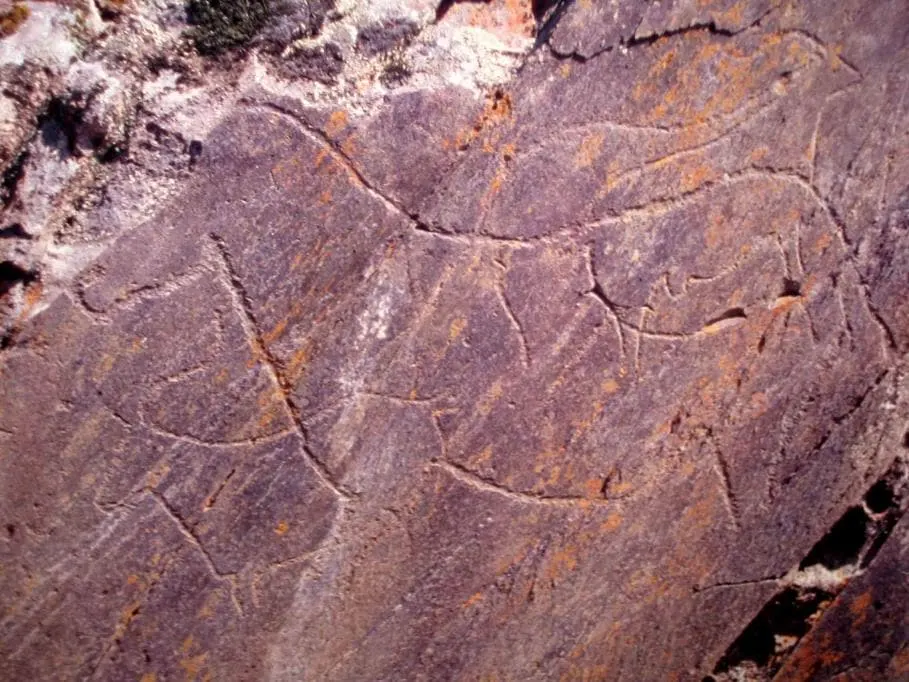
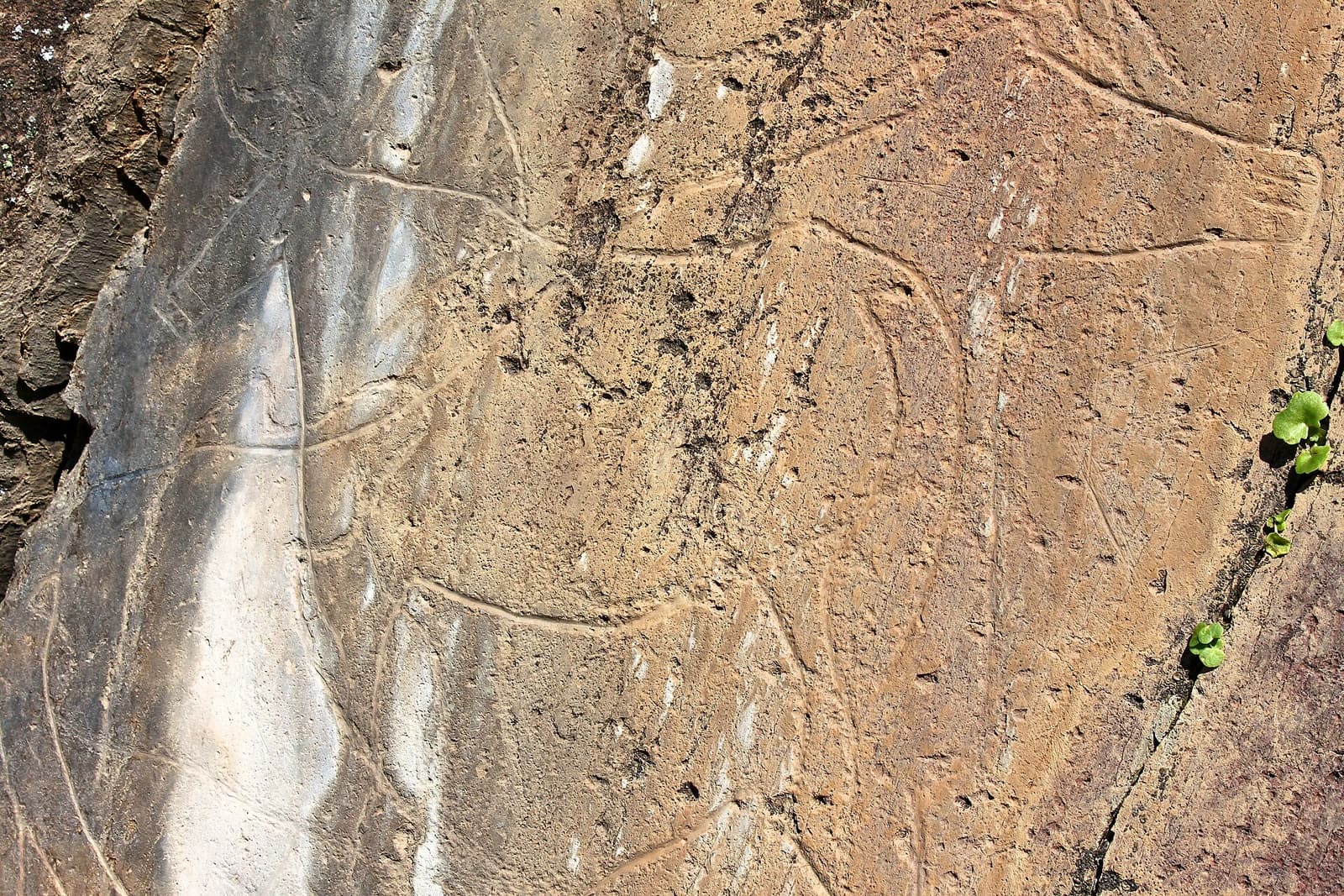
Rock art complex at Ribeira de Piscos in the Côa Valley (Foz Côa), renowned for the overlapping horses of Rocha 1 and the Piscos Man.
- Location
- Muxagata, Vila Nova de Foz Côa, Guarda
- Built
- c. 30 000–12 000 BP
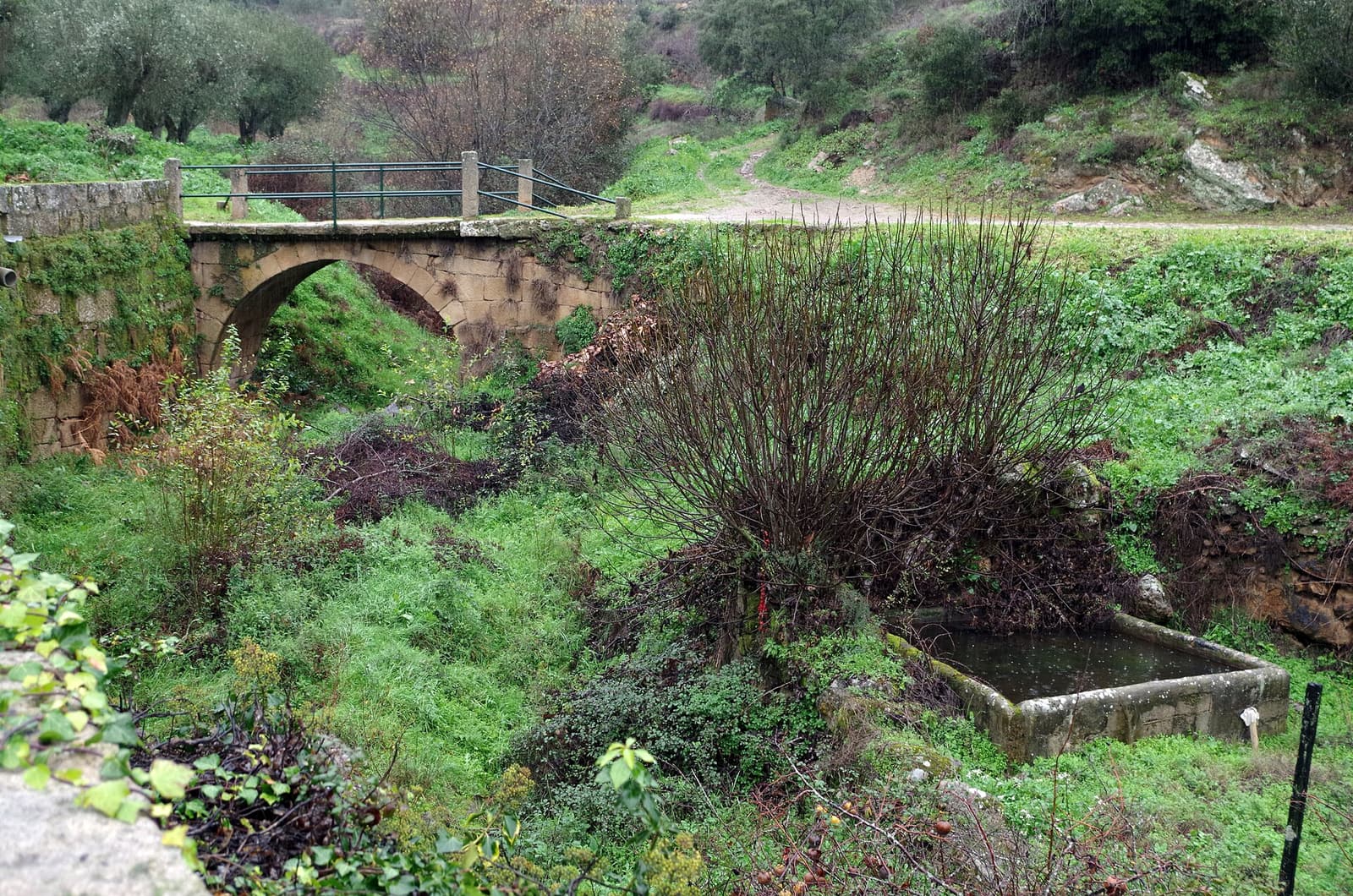
Ribeira de Piscos is one of the most emblematic complexes of Paleolithic rock art in the Côa Valley. It extends around the mouth of a small tributary stream on the left bank of the Côa River, in the parish of Muxagata, municipality of Vila Nova de Foz Côa. Here, 42 engraved rocks have been identified, 27 of which bear Paleolithic representations, making this site one of the densest and most expressive ensembles within the archaeological heritage of the Côa Valley.
The Intertwined Horses of Rocha 1
The image that made this complex famous lies at the base of the valley, near the stream bed: two horses depicted with overlapping heads, in a composition demonstrating remarkable graphic mastery. The deliberate overlapping of heads—far from being accidental accumulation of engravings—appears intentional and lends the scene an unusually narrative character within the context of Côa rock art. It is one of the most reproduced compositions in all of Paleolithic open-air art, dating from an early phase of the Gravettian-Solutrean cycle, approximately 30,000 to 25,000 years before present.
The power of Rocha 1 lies not only in the quality of its lines but in the idea of relationship between two animals—an aspect that elevates the engraving to a true scene rather than mere juxtaposition of figures.
The Piscos Man
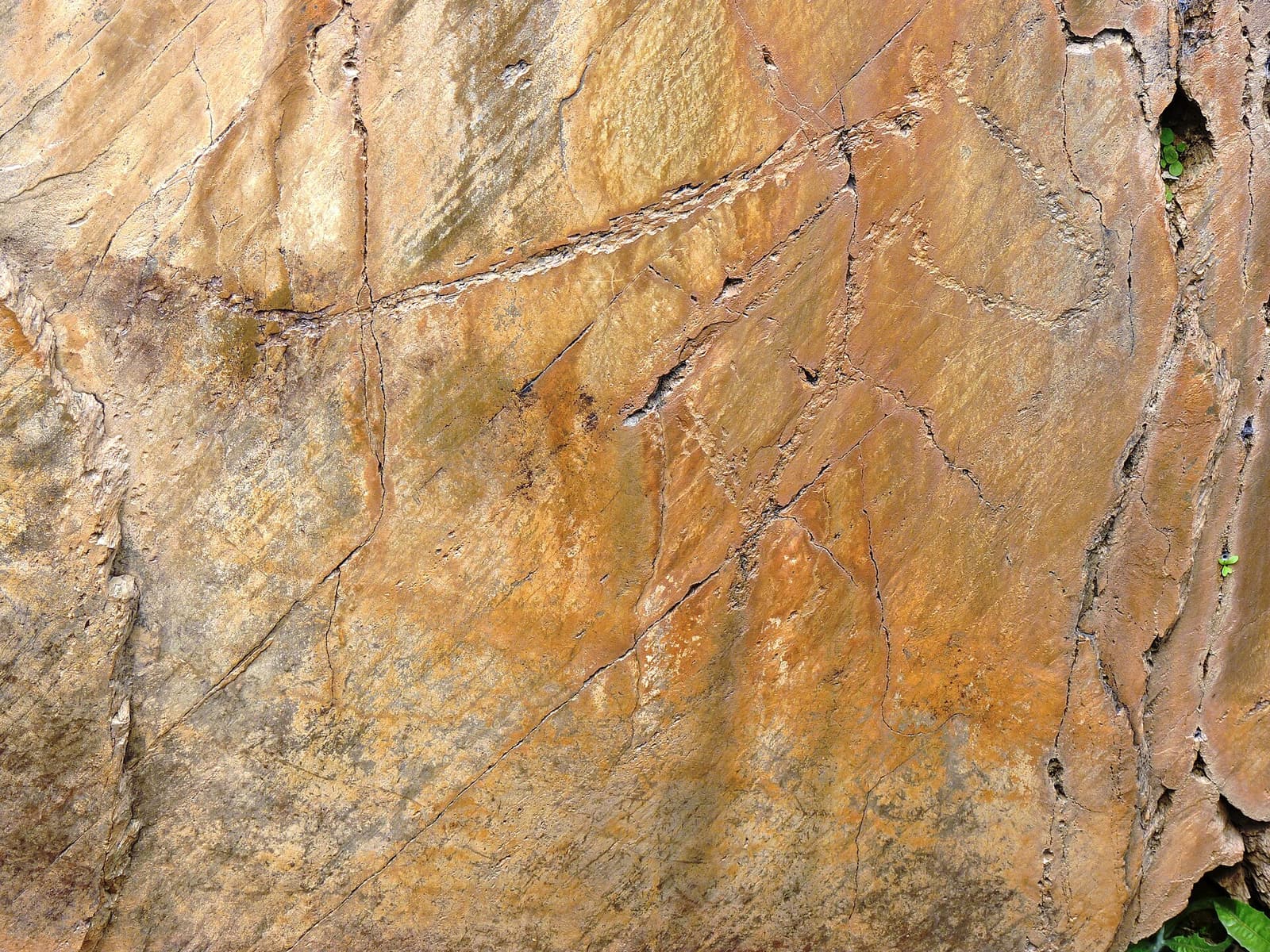
While large herbivores—horses, aurochs, ibex, and deer—dominate Côa’s bestiary, human figures are exceptionally rare. Ribeira de Piscos preserves one such exception: the so-called Piscos Man, engraved on Rocha 2 and superimposed over a striated-technique aurochs. This is one of the very few Paleolithic anthropomorphic figures known in Portugal that follows the representational canons attributable to this period. These human figures appear only on rocks engraved between approximately 18,000 and 14,000 years before present, and even then exceptionally—on just two rocks at this site and two others at the nearby Fariseu complex.
Technique, Chronology, and Context
The engravings combine various techniques—pecking, fine incision, and abrasion—reflecting a long diachronic execution. Côa’s art was produced over an extensive timeframe, between approximately 30,000 and 12,000 years before present, with later post-Paleolithic reoccupation of the valley evidenced by a more recent painted panel. This continuity helps explain why the ensemble is considered an open-air sanctuary.
Ribeira de Piscos forms part of the site inscribed as UNESCO World Heritage in 1998—the Prehistoric Rock Art Sites of the Côa Valley, extended in 2010 to include Siega Verde in Spain. It belongs to a network of visitable complexes including Penascosa and Canada do Inferno, essential starting points for understanding the significance of Paleolithic open-air art in the Iberian Peninsula, of which the isolated panel at Mazouco on the Douro constitutes one of the earliest recognized testimonies.
Frequently asked questions
- What makes Ribeira de Piscos a unique site within the Côa Valley?
- It features two exceptionally rare motifs in Paleolithic context: the two horses with intertwined heads on Rocha 1 and the so-called Piscos Man, one of the very few known human figures in Côa.
- Where is Ribeira de Piscos located and how can it be visited?
- It is situated in the parish of Muxagata, municipality of Vila Nova de Foz Côa, on the left bank of the stream near its confluence with the Côa River. Guided visits require prior booking through the Côa Museum.
Sources
Keep exploring
Heritage nearby
More places to discover from here. Approximate straight-line distances, within 50 km.