Periods & Styles
Rock Art of the Côa Valley and the Paleolithic
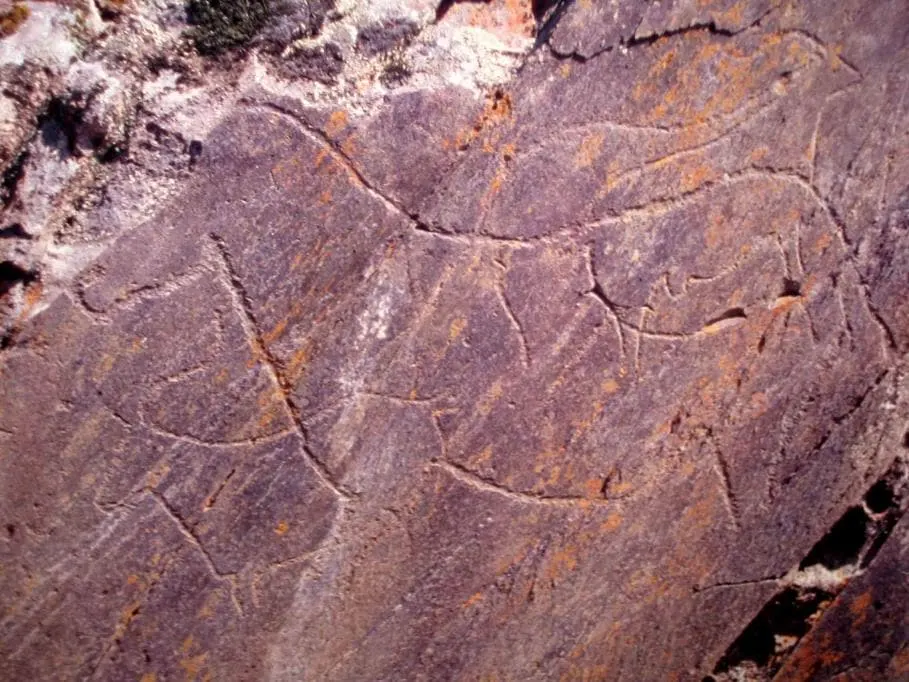
Paleolithic open-air rock engravings in the Côa Valley, Vila Nova de Foz Côa, classified by UNESCO in 1998 as World Heritage.
- Location
- Vila Nova de Foz Côa, Guarda
- Built
- c. 22 000–10 000 a.C.
The rock engravings of the Côa Valley form the most extensive known collection of Paleolithic open-air art on the planet. Scattered across the schist slopes flanking the Côa River, a tributary of the Douro, in the municipality of Vila Nova de Foz Côa (Guarda district), these figures engraved on rock document an artistic tradition that spanned millennia, from the Upper Paleolithic to more recent times. Their discovery and preservation in the late 20th century constitute one of the most remarkable episodes in European archaeology.
A Discovery on the Brink of Destruction
The presence of engravings in the Côa was recognized in 1992 during environmental impact studies linked to the construction of a dam intended to submerge the valley. As the extent and antiquity of the panels, especially in the Canada do Inferno cluster, became apparent, an intense national and international controversy erupted. The issue pitted hydroelectric development against the safeguarding of an exceptional archaeological record. In November 1995, the Government decided to definitively suspend the project, an act encapsulated in the popular slogan “the engravings cannot swim.”
The Côa was saved not because it was beautiful, but because it was legible: each horse, auroch, or ibex engraved on the schist is a document about the thoughts of hunter-gatherers at the end of the last glaciation.
The Paleolithic Engraved in Stone
The vast majority of the figures date from the Upper Paleolithic, spanning a temporal arc approximately between 22,000 and 10,000 BCE, covering phases such as the Gravettian, Solutrean, and Magdalenian. Animals dominate the repertoire: horses, aurochs (wild bovids), deer, and ibexes, executed through pecking, fine incision, and abrasion. This is a central chapter of Iberian Paleolithic rock art, rare for being engraved in daylight, rather than inside caves as in Lascaux or Altamira.
The continuity of human occupation made the valley a palimpsest: over the Paleolithic figures, later manifestations from the Bronze Age, Iron Age, and even historical periods were superimposed, placing the Côa within a broader panorama of prehistoric art in Portugal.
World Heritage and Archaeological Park
Classified as a National Monument in 1997, the site was inscribed on the UNESCO World Heritage List in 1998, under reference 866 and criteria (i) and (iii). In 2010, the classification was extended to include the Spanish site of Siega Verde, in the province of Salamanca, forming a transboundary property that underscores the unity of this artistic tradition along the Côa and Águeda rivers.
Today, the management and interpretation of the territory fall to the archaeological park and museum based in Vila Nova de Foz Côa, which organize visits to clusters such as Penascosa, Ribeira de Piscos, and Canada do Inferno. The experience is completed with knowledge of the Côa Valley as a cultural landscape, where archaeology, the river, and the Douro vineyards intertwine in one of the most unique places in prehistoric Europe.
Frequently asked questions
- When was the rock art of the Côa Valley discovered?
- The engravings were identified in 1992 during archaeological studies associated with the construction of a dam on the Côa River, with their importance recognized in 1994-1995.
- Why is the Côa Valley so important?
- It constitutes the largest known collection of Paleolithic open-air rock art, with thousands of figures engraved on schist over more than twenty thousand years.
- Is the Côa Valley a UNESCO World Heritage Site?
- Yes. It was inscribed in 1998 (reference 866) and, in 2010, the classification was extended to include the Spanish site of Siega Verde.