Archaeology
Roman Villa of Rabaçal
Explore Rabaçal’s Roman villa, octagonal courtyard and seasonal mosaics near Penela. Discover its history, national protection and arrange a guided visit.
- Location
- Rabaçal, Penela / Condeixa-a-Nova, Coimbra
- Built
- 4th century AD
- Style
- Late Roman architecture
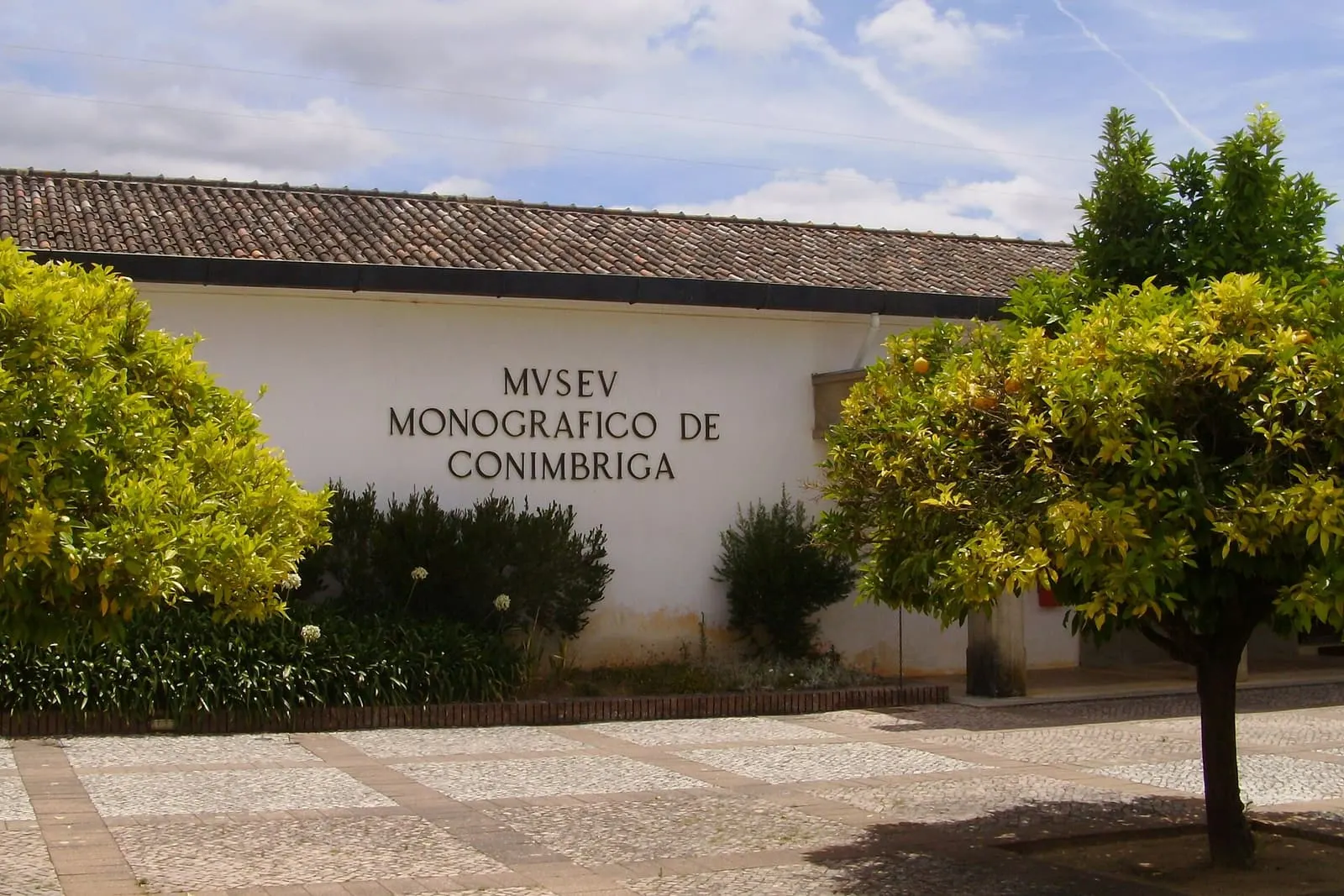
The Roman villa of Rabaçal, near Penela, reveals a fourth-century country residence through its plan and mosaics. About 12 km south of Conímbriga, it lay within the territory of that Roman town. A visit connects two complementary places: the archaeological remains and the museum in the village of Rabaçal.
Reading the house through its courtyard
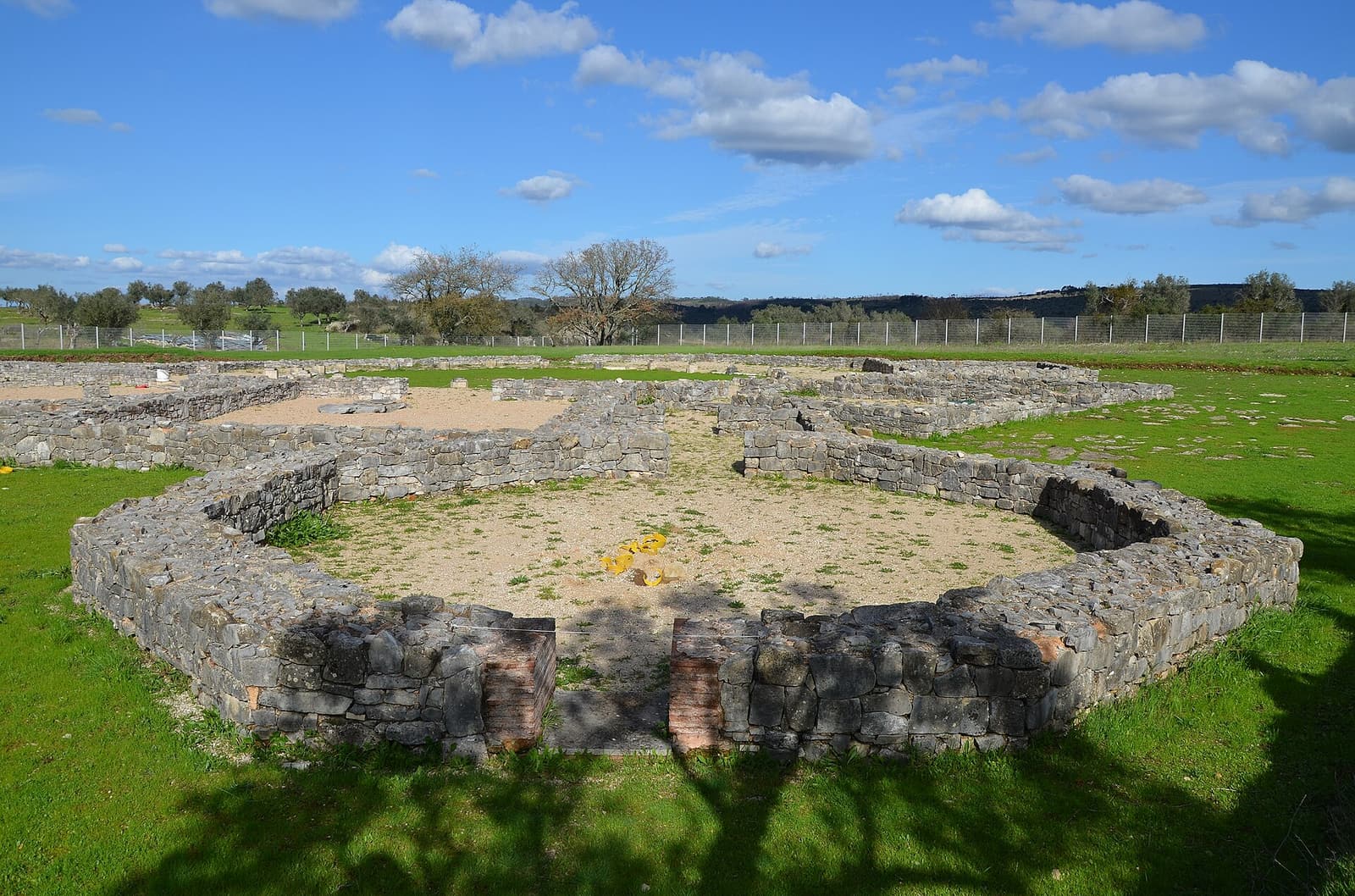
The peristyle, a courtyard enclosed by a portico, has eight sides. The residence’s rooms extend around it: the entrance to the south, service connections to the north and the principal reception rooms to the west. Following this arrangement helps explain how the house framed the landscape and separated reception spaces from working areas.
The complex also included baths and agricultural buildings. These structures belonged to a rural estate, but the extent of its associated land has not been established. The excavated buildings should not be mistaken for the boundaries of the entire property.
Mosaics and archaeological research
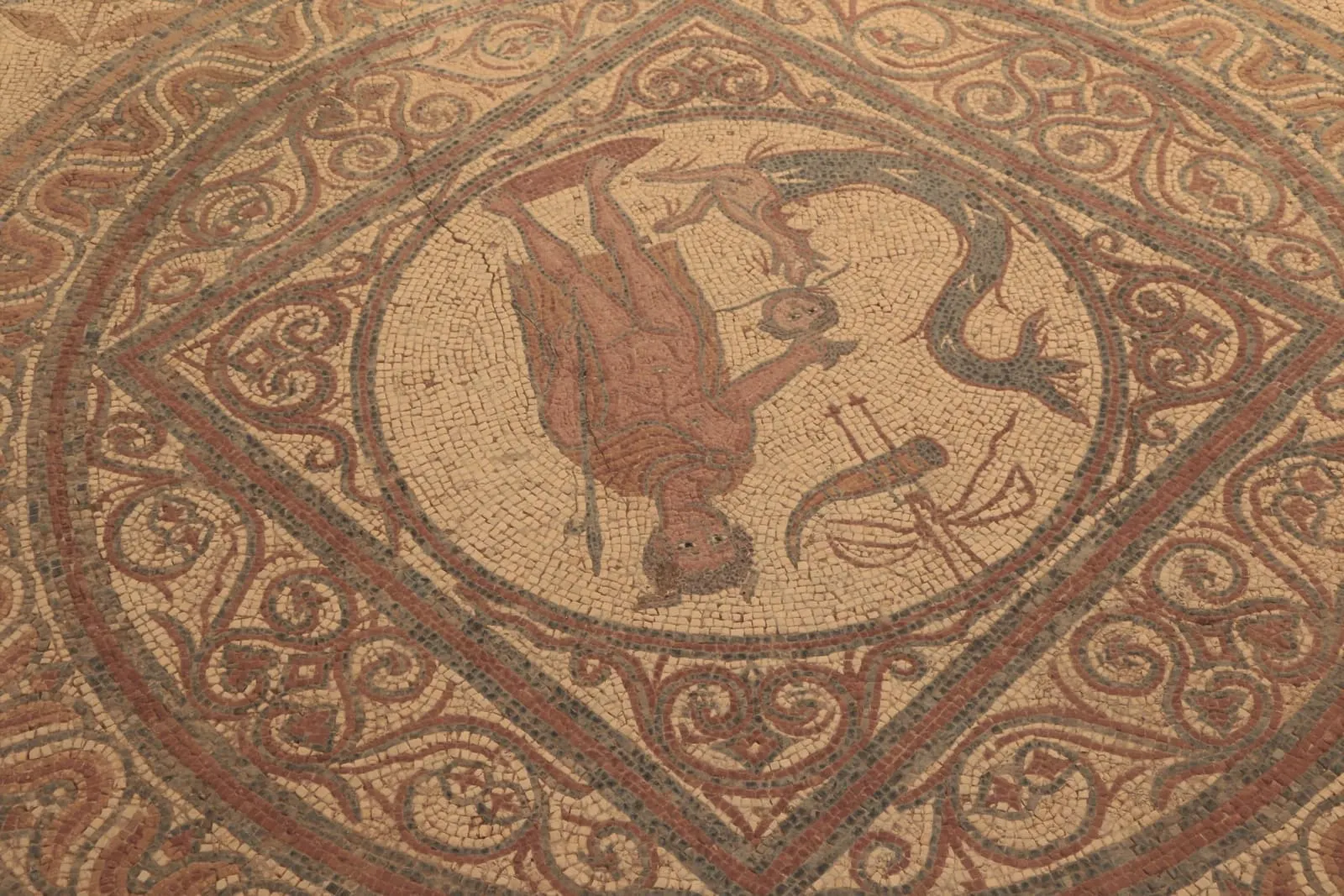
Identified subjects include the seasons, a quadriga and a seated female figure, alongside geometric and plant designs. There is more to notice than the individual figures: the position of panels in corridors and rooms helps explain circulation through the house and the importance of different spaces.
The first archaeological soundings took place in 1984, following field observations in 1979. Coins and floors form part of the evidence used to investigate the residence’s chronology. The museum connects finds recovered during excavation with the structures remaining on site.
One protected site, two municipalities
The 2013 designation as a site of public interest was revised in 2021. Decree 12/2021 classified the villa as a site of national interest with the designation National Monument, encompassing land in both Penela and Condeixa-a-Nova. The administrative boundary does not divide it into two archaeological sites.
Planning a visit
Municipal visitor information, checked on 2 October 2026, requires advance arrangements through the museum on Rua da Igreja. A museum staff member accompanies visits to the archaeological site. Confirm availability with the museum on +351 239 561 856 or [email protected].
Combine Rabaçal with Conímbriga to compare rural housing with a Roman town. For examples in other regions, use the guide to Lusitanian villas; the villa of Pisões is in Beja, in the Alentejo.
Photograph by Carole Raddato, 16 February 2014. CC BY-SA 2.0.
Frequently asked questions
- Where is the Roman villa of Rabaçal?
- The site is near Rabaçal in Coimbra district. Its legally protected area spans the municipalities of Penela and Condeixa-a-Nova; visits are arranged through the museum on Rua da Igreja in Rabaçal.
- Do I need to book a visit?
- Yes. Municipal information checked on 2 October 2026 requires advance arrangements through the museum and an accompanying staff member for visits to the archaeological site. Confirm availability before travelling.
- What makes the villa distinctive?
- An octagonal colonnaded courtyard organises the fourth-century residence. Its figurative mosaics include the seasons, a quadriga and a seated female figure.
- What is its heritage designation?
- The site was classified as a site of public interest in 2013 and reclassified as a site of national interest, designated a National Monument, under Decree 12/2021 of 7 June.
Sources
- Villa Romana do Rabaçal — Património Cultural, I.P. (73035)
- Decreto n.º 12/2021 — Diário da República, 7 de junho de 2021, pp. 41–43
- Villa Romana do Rabaçal — Visite Penela / Município de Penela
- Villa Romana do Rabaçal — Espaço-Museu / Câmara Municipal de Penela
- Campanhas arqueológicas — Espaço-Museu / Câmara Municipal de Penela
Keep exploring
Heritage nearby
More places to discover from here. Approximate straight-line distances, within 50 km.
.jpg)