Intangible Heritage
Bombos and Zés Pereiras
The bombos and Zés Pereiras groups of Entre-Douro-e-Minho: percussion, bagpipes, and the sound that announces pilgrimages and popular festivals in Northern Portugal.
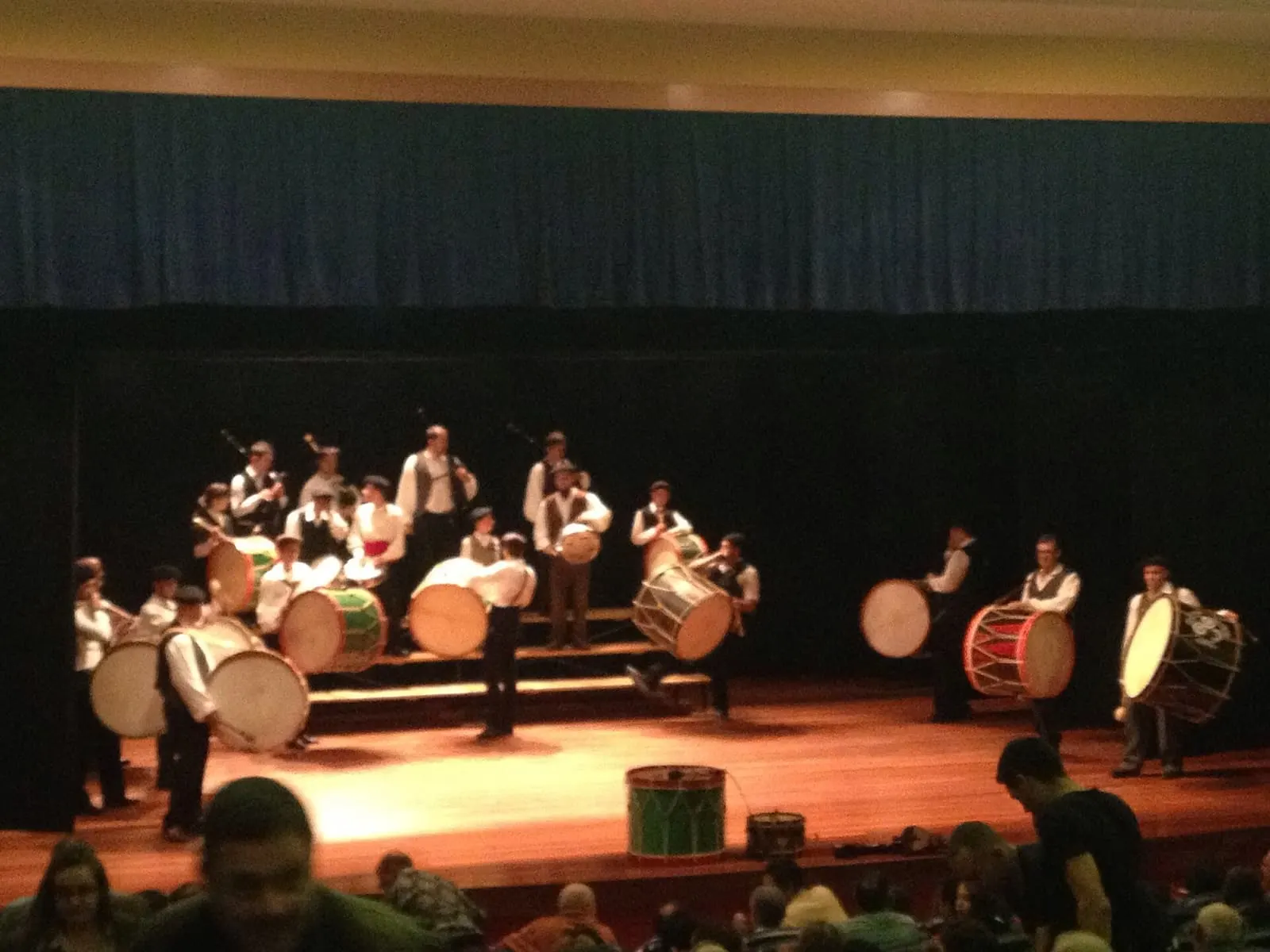
Few sounds identify a popular festival in Northern Portugal as immediately as the booming of bombos. Vibrant, martial, and hypnotic, it announces from afar the approach of a pilgrimage, marks the pace of processions, and sets the rhythm for the festivities. The ensembles that produce it are known, in much of Entre-Douro-e-Minho, as Zés Pereiras — groups of percussionists, traditionally men, who parade playing bombos and snare drums, often accompanied by bagpipes.
The ensemble and its instruments
The sonic foundation rests on percussion: the bombo, a large double-headed drum played with a padded stick, the snare drum, and the timbalões. Onto this pulsation are grafted melodic aerophones — the bagpipes (of Galician model or inspired by it) and the fifes. More recently, the concertina, an instrument of great expression in Minho folk music, has been integrated into these ensembles, bringing them closer to other manifestations of Minho folk music and the use of the concertina.
The repertoire is not, in essence, melodic but rhythmic: it is the bombo that leads, with coded beats signaling the arrival, the passage of the float, or the moment for fireworks. The groups may perform alone or accompany gigantones and cabeçudos, large cardboard figures that join the processions.
The essence of Zés Pereiras is not in a score, but in a function: to announce, summon, and gather. The bombo is, above all, an instrument of community communication.
Role in pilgrimages and festivals
The bombos groups fulfill a ceremonial and social role that goes far beyond entertainment. They mark the rites of passage and religious rituals of the Portuguese northwest, leading processions, escorting floats, and signaling the other moments of the festival. Their presence is almost obligatory at the great pilgrimages of Minho, such as the Pilgrimage of Our Lady of Agony, in Viana do Castelo, and is widespread in countless parish festivals throughout the Northern region. It is an eminently local manifestation: each parish has, or once had, its own group, often with long continuity — some ensembles boast several decades of uninterrupted activity.
Name, origin, and diffusion
The designation “Zé Pereira” is subject to debate. The most widely circulated version attributes it to the Portuguese shoemaker José Nogueira de Azevedo Paredes who, during the Rio de Janeiro Carnival of 1846, supposedly took to the streets with a bombo leading a group of revelers — his name becoming “Zé Pereira” in the heat of the revelry. Several authors, however, consider this narrative primarily as a founding myth: the existence of a Carnival revelry called Zé Pereira in 19th-century Portugal points to a strong earlier Iberian root, taken to Brazil by Portuguese emigration, where it developed its own career in the Rio Carnival.
In Portugal, the tradition has remained vigorous as a living and functional practice, linked to the festive and religious calendar. Today, it is part of the realm of Portuguese intangible cultural heritage, having been the subject of in-depth ethnomusicological study, with surveys among players, festival organizers, and the artisans who build bombos and bagpipes. These craftsmen are, moreover, an inseparable part of the tradition: without the transmission of the know-how to make and tune the instruments, and without the informal schools where the younger ones learn to play, the sound that announces the festival would not reach the next generation.
Frequently asked questions
- What is a Zés Pereiras group?
- It is an ensemble of bombos and snare drum players, sometimes accompanied by bagpipes, that parades enlivening pilgrimages, processions, and popular festivals, especially in Entre-Douro-e-Minho.
- What instruments make up a bombos group?
- Typically bombos (large stick drums), snare drums, and timbalões. The melodic component may include bagpipes, fifes, and, more recently, the concertina, very popular in Minho.
- Where does the name 'Zé Pereira' come from?
- The origin is debated. A popular version links it to the Portuguese shoemaker José Nogueira de Azevedo Paredes, during the Rio de Janeiro Carnival of 1846, but the Zé Pereira revelry already existed in Portugal, pointing to earlier Iberian roots.