Monuments
Belém Tower
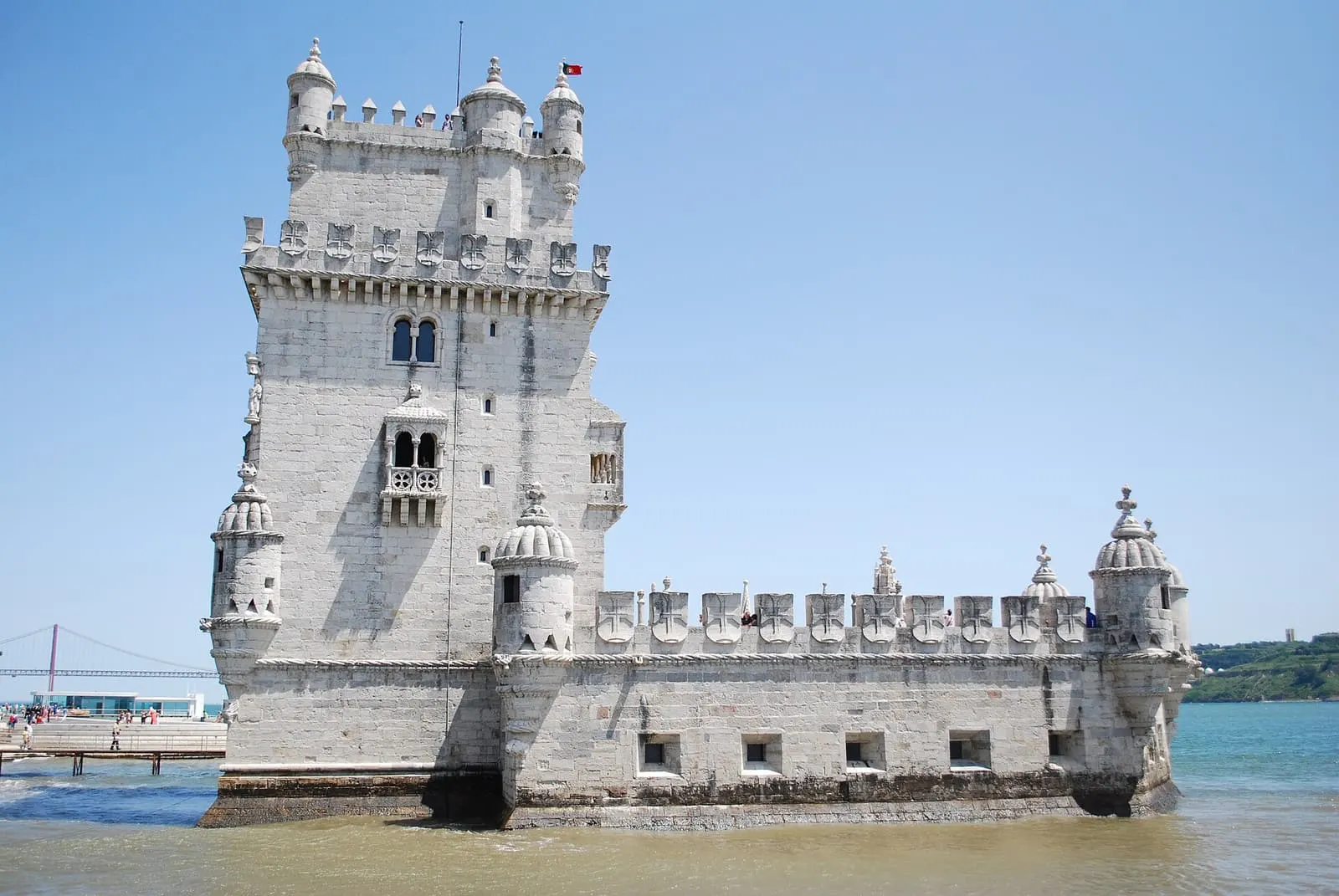
Belém Tower in Lisbon is Francisco de Arruda's Manueline bulwark tower at the mouth of the Tagus, an icon of expansion and a World Heritage Site since 1983.
- Location
- Lisboa, Lisboa
- Built
- 1514–1520
- Style
- Manuelino
- UNESCO
- World Heritage · since 1983
Standing on the right bank of the Tagus in Lisbon, Belém Tower is one of Portugal’s most recognizable landmarks and an enduring symbol of maritime expansion. Commissioned by King Manuel I and built between 1514 and 1520, it combines the robustness of an artillery fortress with the decorative exuberance of Manueline style, achieving a rare balance between military function and ornamental language.
A fortress at the Tagus estuary
The tower originated from strategic necessity: defending the entrance to Lisbon’s harbor, then capital of a burgeoning empire. The project was entrusted to Francisco de Arruda, an architect familiar with North African fortifications, explaining the Moorish-inspired elements in the bastions and watchtowers. The structure formed part of a broader defensive system, coordinated with positions in Cascais and Caparica, designed to cross artillery fire over ships approaching the estuary.
The complex consists of two distinct sections. The bastion, with its polygonal plan facing the river, housed sixteen cannon ports in a vaulted casemate, representing one of Portugal’s earliest examples of artillery-adapted fortification. Above it rises the tower proper, four stories high, crowned by crenellated terraces and a Renaissance-style loggia overlooking the Tagus.
More than just a defense, Belém Tower was conceived as a ceremonial gateway to the kingdom — the first and last image travelers and embassies would take from Lisbon.
Decorative and symbolic program
Manueline decoration covers the entire structure: rope-like moldings encircling the building, armillary spheres, the cross of the Order of Christ, and abundant naturalistic motifs. Among the most unique elements is the rhinoceros-shaped gargoyle, referencing the animal sent from India in 1515, a rare sculptural testimony to the exotic imagery brought to Europe by maritime exploration. The omnipresent iconography of the Order of Christ reflects the same ideological program seen at Convento de Cristo in Tomar and the nearby Jerónimos Monastery.
Over the centuries, the tower served diverse functions. As its military importance waned with the coastline’s advance, it became a lighthouse, customs post, and telegraph station. During the Philippine Dynasty and later periods, it served as a political prison, with dungeons installed in the bastion. Nineteenth-century restoration campaigns, in full Romantic taste, restored its monumental character as we know it today.
Recognition and classification
Designated a National Monument in 1907, Belém Tower was inscribed on the UNESCO World Heritage List in 1983, together with the Jerónimos Monastery, under criteria recognizing the exceptional universal value of Manueline architecture and its testimony to the Age of Discoveries. Alongside other fortifications like São Jorge Castle and the ensemble of Portuguese castles, the tower forms part of the country’s defensive memory, but stands out for embodying in lioz limestone the ambition and aesthetics of a unique moment in Portuguese history. Its silhouette over the water has become, over time, an image inseparable from Lisbon’s very identity.
Frequently asked questions
- When was Belém Tower built?
- The tower was erected between 1514 and 1520 on the initiative of King Manuel I, designed and supervised by Francisco de Arruda.
- Why is Belém Tower a World Heritage Site?
- It was inscribed on the UNESCO list in 1983, together with the Jerónimos Monastery, as an exceptional testimony to Manueline architecture and Portuguese maritime expansion.
- What was the original function of Belém Tower?
- It was conceived as an artillery fortress and customs checkpoint, forming part of the defensive system protecting the entrance to the Tagus estuary.
Sources
Keep exploring
Heritage nearby
More places to discover from here. Approximate straight-line distances, within 50 km.