Monuments
Feira Castle
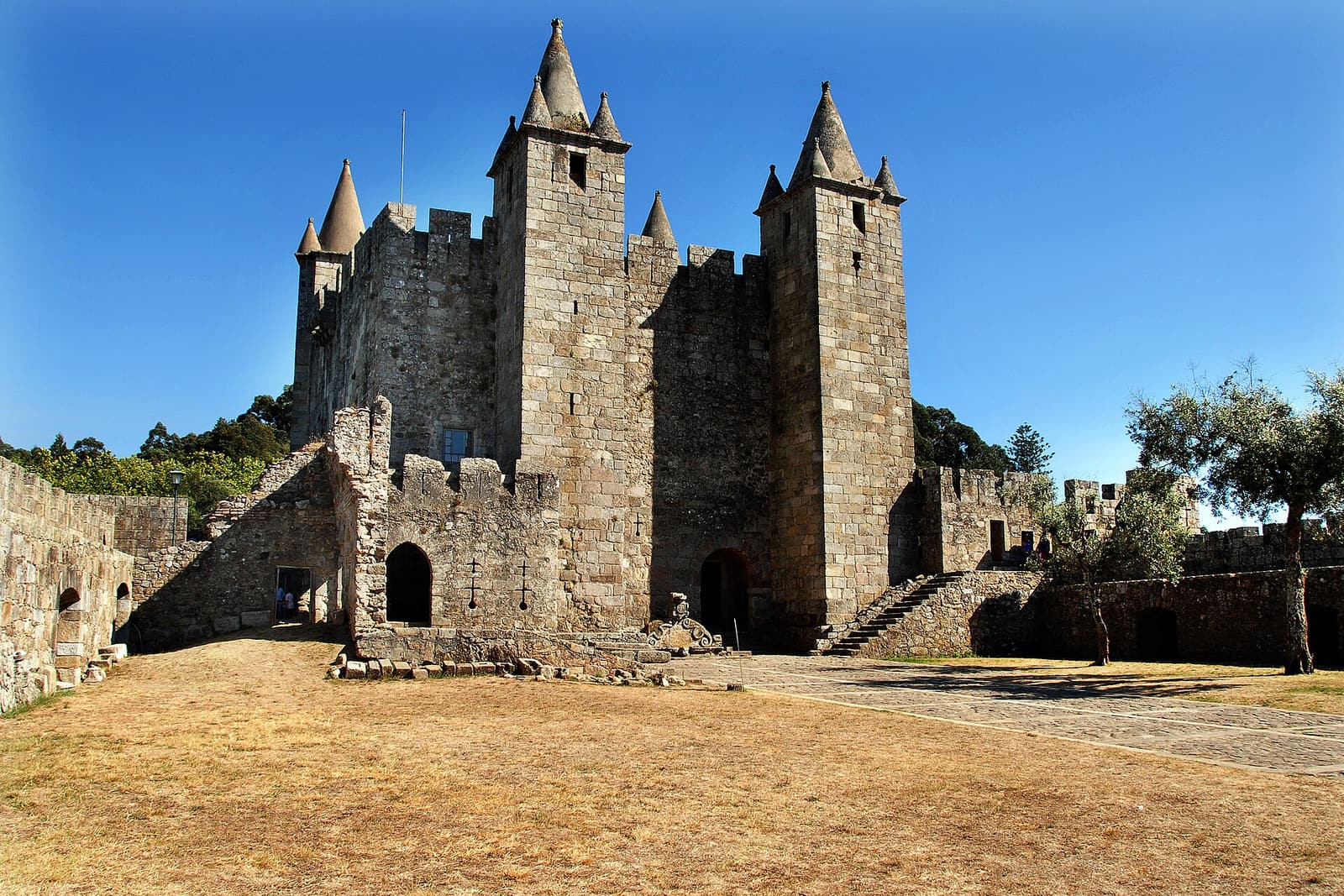
Feira Castle, in Santa Maria da Feira (Aveiro): a medieval fortress crowned by four conical turrets, a National Monument since 1910.
- Location
- Santa Maria da Feira, Aveiro
- Built
- séculos XI–XVI
- Style
- Gótico e Manuelino
The Feira Castle, also known as the Castle of Santa Maria da Feira, is one of the most recognisable fortresses in Portugal. Set atop a wooded hill that dominates the historic core of Santa Maria da Feira, in the district of Aveiro, it stands out for its unmistakable silhouette: four turrets crowned by conical spires that project their stony mass against the sky. This singular image, closer to romantic fantasy than to the usual austerity of military architecture, has made it one of the identity symbols of the northern region and one of the most photographed monuments of the former Entre Douro e Vouga.
From medieval origins to the present fortress
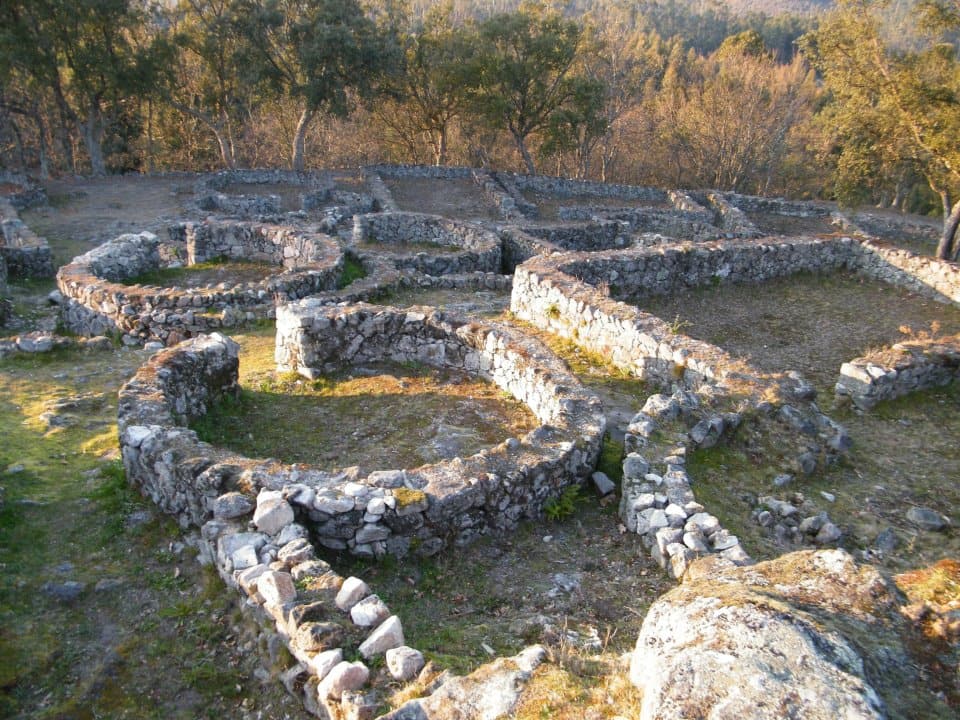
The hill on which the castle stands has been occupied since remote times, in a territory whose defensive memory reaches back to the region’s hillfort populations, attested by the nearby Castro de Romariz. The first reliable documentary reference to the fortification appears in the Chronica Gothorum, which records the campaign of Bermudo III of León in the lands of Santa Maria around 1045. From this earliest period date the lower core of the keep and the primitive enclosure that protected the citadel, then the seat of a vast administrative division known as the Terra de Santa Maria.
The fortress admired today is, however, above all the fruit of much later building campaigns. Throughout the fifteenth and sixteenth centuries, under the patronage of the lords of the Terra da Feira — the Pereira family, future counts of Feira —, the castle was profoundly remodelled. These interventions already belong to the transition from Gothic military architecture to solutions in the Manueline and Joanine taste, and it was in them that the imposing keep, the citadel, and the characteristic pyramidal spires took shape.
The originality of Feira Castle lies less in its defensive effectiveness than in its plastic expression: the conical turrets convey a will to seigneurial affirmation, in which the castle is as much a weapon as an emblem of prestige.
Architecture and notable features
The complex describes a roughly oval plan, adapted to the relief of the hill and oriented north–south. The southern part concentrates the most monumental elements: the keep and the fifteenth-century citadel, arranged over several floors, with a cistern, a noble hall fitted with fireplaces, and residential quarters. Access is gained through a barbican and through square towers that frame the entrance, in a device already designed for defence by means of firearms.
Within the enclosure still rises the chapel of Nossa Senhora da Encarnação, of polygonal plan, which documents the simultaneously military and devotional vocation of the space. The ashlar stone, worked with precision in the cornices and finishes, contrasts with the more rustic masonry of the curtain walls, revealing the different building phases superimposed over almost five centuries.
Classification and memory
Classified as a National Monument in 1910, Feira Castle benefited in the twentieth century from an extensive restoration campaign conducted by the Directorate-General for National Buildings and Monuments, which consolidated the structures and fixed the image we know today. Together with other fortresses belonging to the set of castles of Portugal, it now assumes a full cultural function, hosting visits, historical re-enactments, and events that link the monument to the life of the community.
More than a contemplative ruin, Feira Castle remains a living landmark of the urban landscape, an essential stop on any itinerary through the monuments of Portugal and a high point of the local identity of Santa Maria da Feira.
Frequently asked questions
- Where is Feira Castle?
- It rises on a hill in the centre of Santa Maria da Feira, in the district of Aveiro, dominating the town and the surrounding valley.
- Why does Feira Castle have conical turrets?
- The four pyramidal spires that crown the keep and the citadel are the result of fifteenth- and sixteenth-century works, giving it the singular silhouette that sets it apart from other Portuguese castles.
- When was it classified as a National Monument?
- Feira Castle was classified as a National Monument in 1910, forming part of the country's first great list of protected monuments.
Sources
Keep exploring
Heritage nearby
More places to discover from here. Approximate straight-line distances, within 50 km.