Places
Santa Maria da Feira
Santa Maria da Feira, in the district of Aveiro: the medieval castle, the Convento dos Lóios and the largest historical re-enactment in the Iberian Peninsula.

- Location
- Santa Maria da Feira, Aveiro
Santa Maria da Feira is a town and municipality in the district of Aveiro, in northern Portugal, part of the Porto Metropolitan Area. Spreading over more than two hundred square kilometres and encompassing dozens of parishes, the municipality inherited the name and the memory of the former Terra de Santa Maria, a vast medieval district that for centuries organised the territory between the Douro and the Vouga. It is in this historical depth, rather than in its urban scale, that the heritage interest of Feira lies.
From the Terra de Santa Maria to the municipality
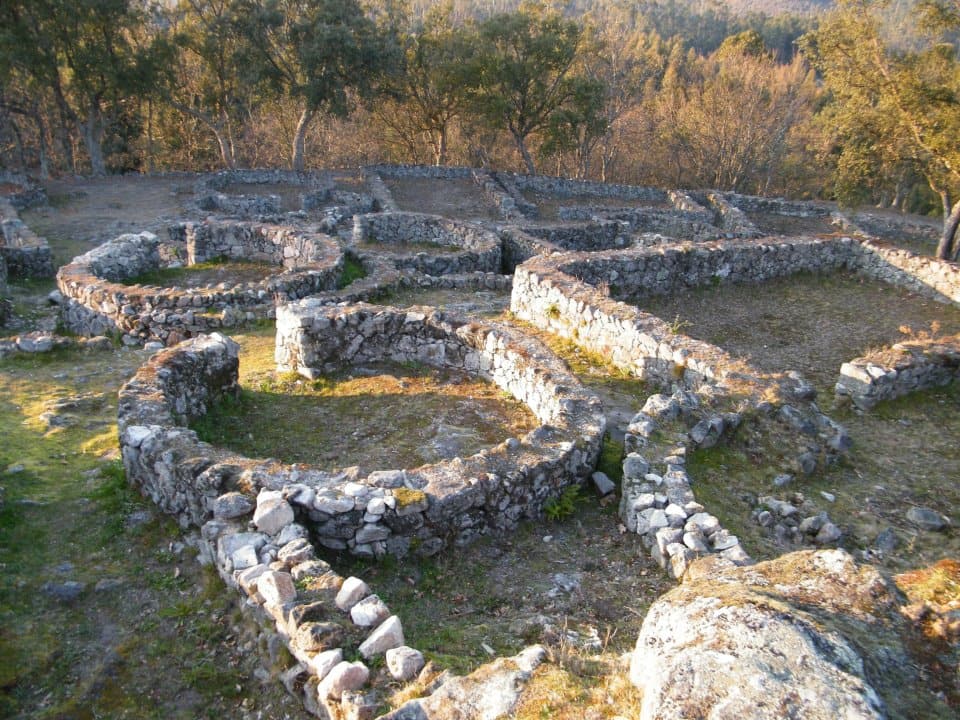
Settlement of the region is ancient: tumuli from the 4th–5th millennium BC and pre-Roman and Romanised hillforts dot the surrounding hills, attesting to a continuous occupation long predating the foundation of Portugal. The place name feira (fair) is first documented in a charter of 1117, signed by Queen Teresa, mother of Afonso Henriques — a sign that a market of regional importance was held here from early on. The confirmation of that privilege through a fair charter granted by João I in 1407, and the elevation to the seat of a municipality under Afonso V in 1472, consolidated the place as the administrative and commercial centre of the Terra de Santa Maria.
The town’s name was born from a market: the “fair” that gave meaning to the territory ended up naming an entire municipality and its principal medieval institution.
The castle, emblem of the town
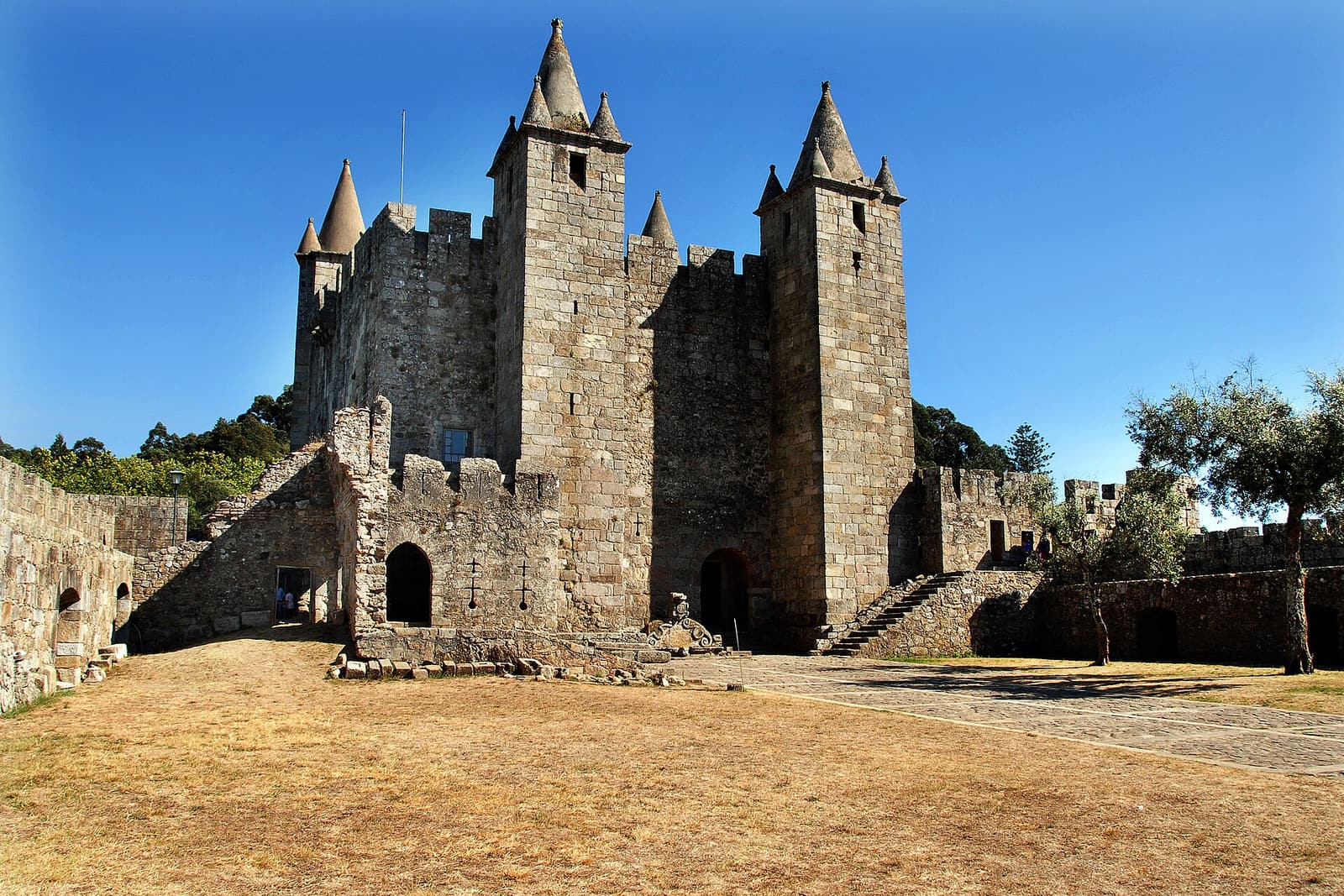
Crowning a rise above the historic centre, the Castle of Santa Maria da Feira is the monument that best defines the urban landscape. Its first reliable mention dates back to the 11th century — the Chronica Gothorum associates the site with the victory of Bermudo III of León over Muslim forces around 1045 — but the appearance we admire today results above all from the campaigns of the 15th and 16th centuries, promoted by the Pereira family, counts of Feira. The imposing keep, flanked by turrets topped with pyramidal cupolas, gives it an almost fantastical profile, rare among Portuguese castles, combining Gothic and Manueline idioms. Listed as a National Monument in 1910, it is considered one of the most complete examples of medieval military architecture in the country.
Those interested in the defensive architecture of the North can contrast Feira with the Romanesque and medieval sites covered by the Romanesque Route of the Sousa, Douro and Tâmega valleys, with which it shares the same chronological horizon.
Convents and religious memory
Alongside the fortress, the Convento dos Lóios marks the religious history of the town. Built from the 16th century onwards on the initiative of D. Manuel Pereira, third count of Feira, for the canons regular of Saint Eloi (the Lóios), the building was later adapted and today houses museum and cultural functions, with a cloister that has become an events venue. Throughout the municipal territory, villages such as Lóbão still preserve chapels, churches and manor houses that document the density of rural settlement of the former Terra de Santa Maria.
A journey into the past
Since 1996, Santa Maria da Feira has gained international prominence with the Viagem Medieval em Terra de Santa Maria, a historical re-enactment that turns the town centre and the castle into a Middle Ages setting during the summer. Regarded as the largest of its kind in the Iberian Peninsula, it occupies dozens of hectares and mobilises thousands of participants, offering a living — if stylised — reading of the past that the town’s monuments evoke. About half an hour away, the neighbouring city of Aveiro, with its lagoon and its moliceiro boats, and the Monastery of Arouca to the east, complete a heritage itinerary of remarkable diversity in the region.
Frequently asked questions
- Where is Santa Maria da Feira?
- Santa Maria da Feira is a town and municipality in the district of Aveiro, part of the Porto Metropolitan Area, in northern Portugal, a few kilometres south of the mouth of the Douro.
- What is the Viagem Medieval em Terra de Santa Maria?
- It is an annual historical re-enactment that takes over the town centre and the castle from late July to early August. Held since 1996, it is considered the largest of its kind in the Iberian Peninsula.
- What is the most emblematic monument of Santa Maria da Feira?
- The Castle of Santa Maria da Feira, with its silhouette of towers crowned by pyramidal cupolas, is the town's emblem and one of the most complete examples of Portuguese medieval military architecture.
Sources
Keep exploring
Heritage nearby
More places to discover from here. Approximate straight-line distances, within 50 km.