Monuments
Portel Castle
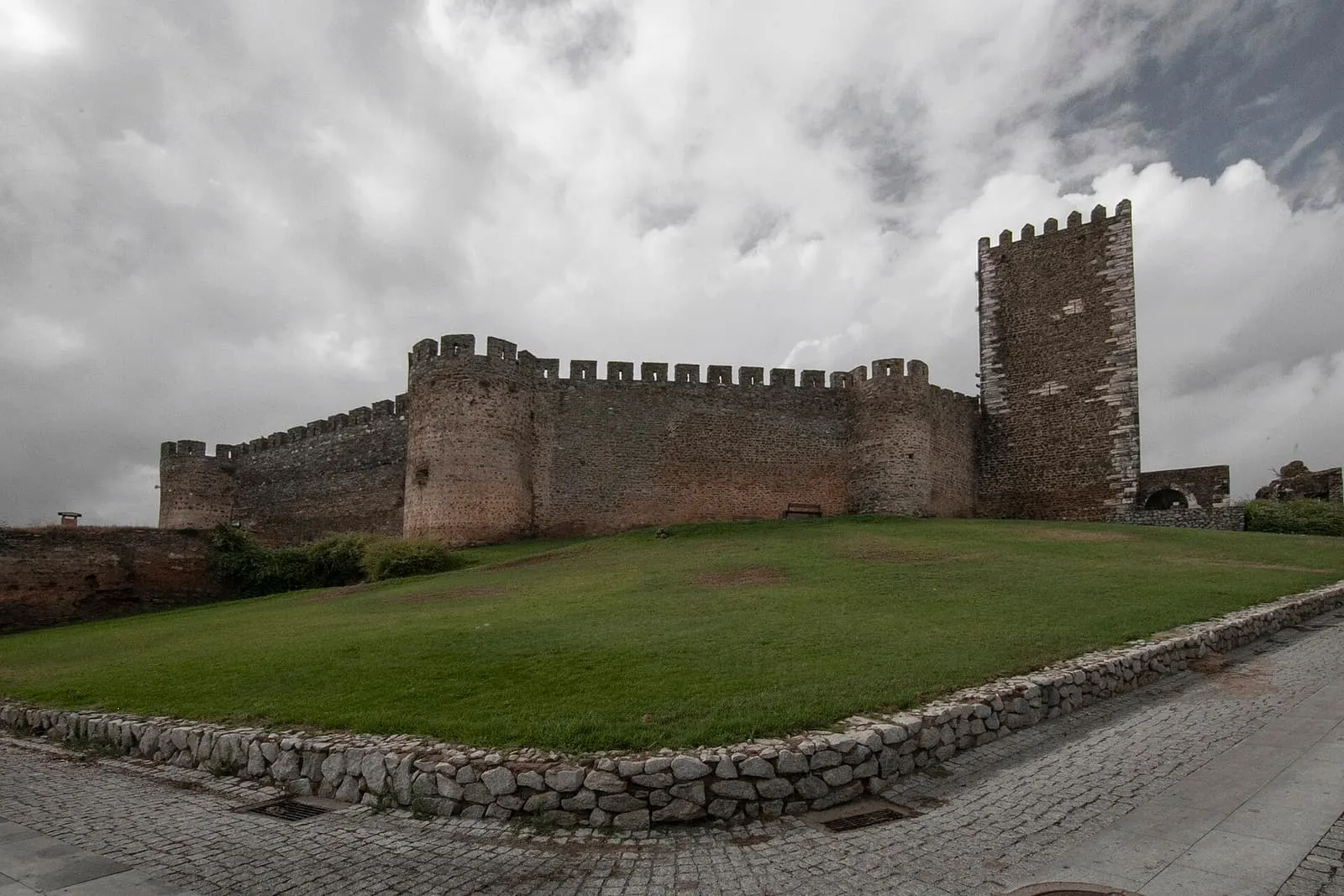
The Gothic castle of Portel, in the district of Évora: a heptagonal fortress commissioned in the 13th century by João de Aboim, in the Alentejo.
- Location
- Portel, Évora
- Built
- 1262-1510
- Style
- Gótico
Portel Castle rises on a height that dominates the town of Portel, in the district of Évora, in the very heart of the Alentejo. It is one of the most singular fortifications of the Portuguese Gothic period, notable for its heptagonal plan, a defensive solution that is uncommon in the country. It has been classified as a National Monument since 23 June 1910.
Origin and foundation
The place name Portel Mafomede, recorded in the time of King Afonso III, reveals the earlier Muslim presence in this territory, which at the time of the Reconquista belonged to the vast district of Évora. Before 1257, the monarch granted these lands to the nobleman João de Aboim, one of the most influential members of the court. After the boundaries of the jurisdiction were defined, in 1261, King Afonso III authorised the building of a castle that would better serve his vassal’s interests.
On 1 December 1262, João de Aboim, accompanied by his wife and son, granted a charter (foral) to the settlers of the castle of Portel, on terms similar to those of Évora. The fortress thus came into being as an instrument of settlement and seigneurial assertion in an Alentejo only recently incorporated into the kingdom. In 1289, already under King Dinis, the domain reverted to the Crown, becoming part of the policy of reinforcing the royal fortifications.
Architecture and evolution
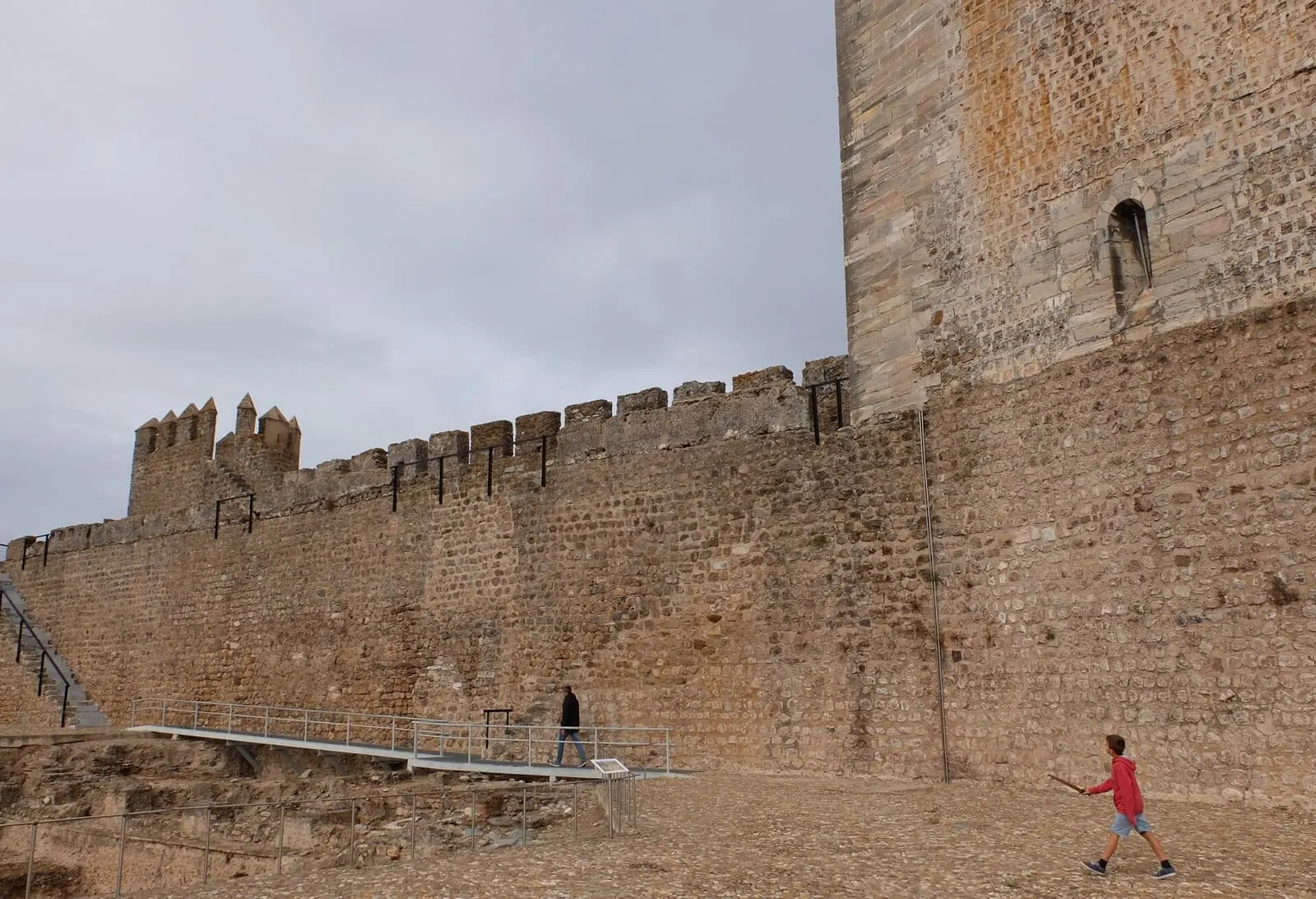
The heptagonal plan, reinforced by circular towers at its corners, gives the castle a layout that is rare in Portuguese medieval military architecture, sometimes likened to the model of the French castle of Angers. The keep and the curtain walls organise an ensemble designed for active defence, articulated with the urban wall that protected the settlement. This combination of fortification and residential nucleus belongs to the tradition of the Gothic castles of the Alentejo, like other strongholds of the frontier and the interior.
During the dynastic crisis of 1383–1385, the stronghold was taken by the forces aligned with the Constable Nuno Álvares Pereira. By the reign of King Manuel I, the castle appears depicted by Duarte de Armas in the Livro das Fortalezas (c. 1509), a graphic record of its state on the eve of extensive works. In 1510, under the tutelage of the House of Bragança, the structure was remodelled to house a seigneurial palace and equipped with a barbican, the works being entrusted to the royal architect Francisco de Arruda, a central figure of Gothic architecture in Portugal in its transition to the Manueline style.
Significance and visit
Throughout the 19th century, with the loss of its military function, the ensemble fell into progressive abandonment, recovered by conservation interventions over the course of the 20th century. Today, the castle is one of the landmarks of the built heritage of the Alentejo and a privileged vantage point over the landscape of the Alqueva reservoir. It belongs to the vast group of castles that structure our reading of medieval Portuguese territory and that, as a national monument, benefit from legal protection and from heritage enhancement programmes.
Frequently asked questions
- Who commissioned the building of Portel Castle?
- Construction was authorised by King Afonso III in 1261 and promoted by the nobleman João de Aboim, lord of Portel, who granted a charter (foral) to the settlers on 1 December 1262.
- Where is Portel Castle located?
- It stands in the town of Portel, seat of the municipality of the same name, in the district of Évora, in the Alentejo region, overlooking the landscape to the south of the Alqueva reservoir.
- What is distinctive about the castle's ground plan?
- It has an unusual heptagonal plan reinforced by circular towers at its corners, a solution that is rare in Portugal and often compared to the French castle of Angers.
Sources
Keep exploring
Heritage nearby
More places to discover from here. Approximate straight-line distances, within 50 km.