Monuments
Sesimbra Castle
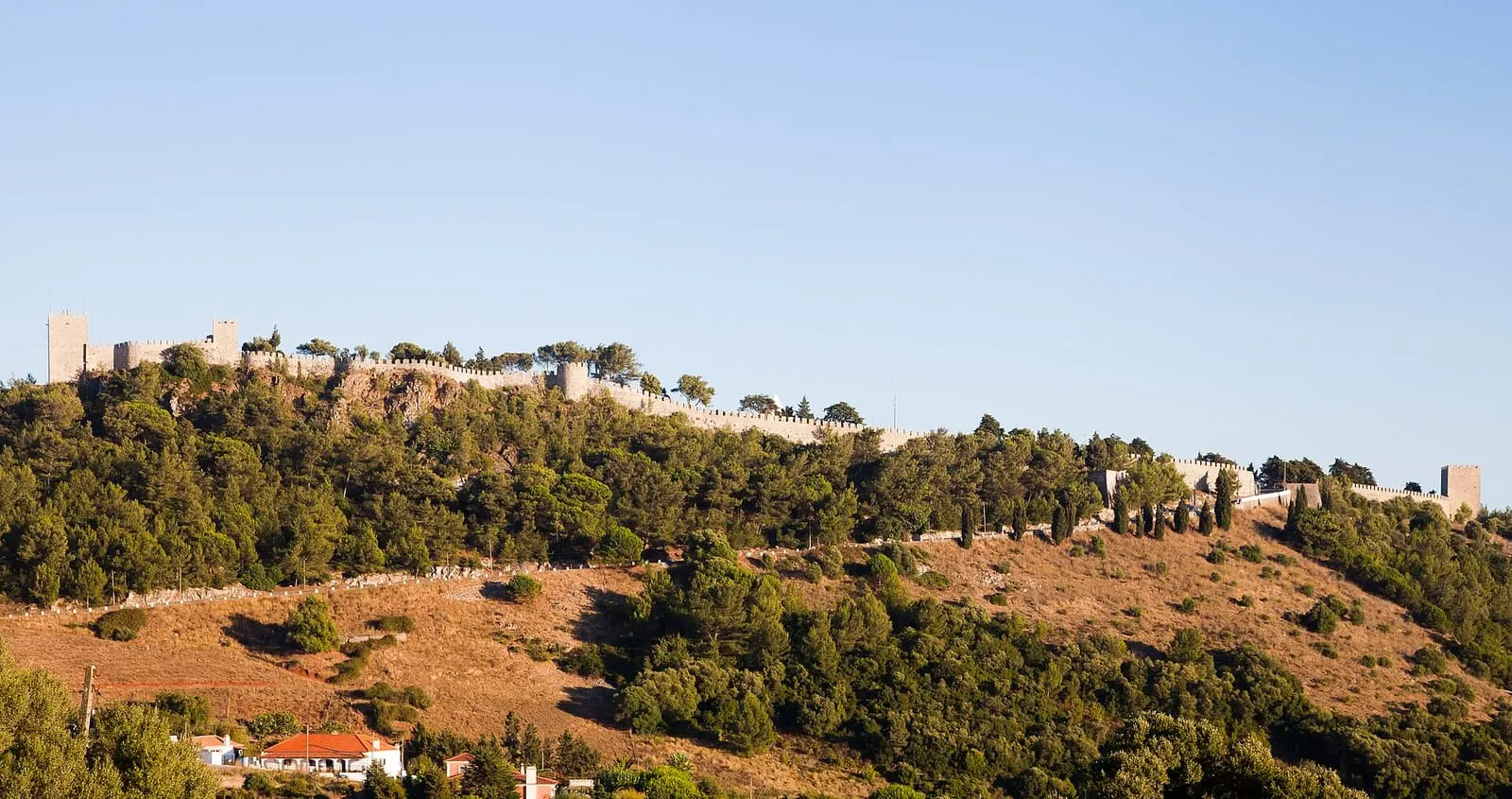
Medieval castle overlooking the fishing town of Sesimbra, taken from the Moors in 1165 and granted to the Order of Santiago, restored in the twentieth century.
- Location
- Sesimbra, Setúbal
- Built
- séc. XII (reconstruído a partir de 1201)
- Style
- Românico e gótico militar
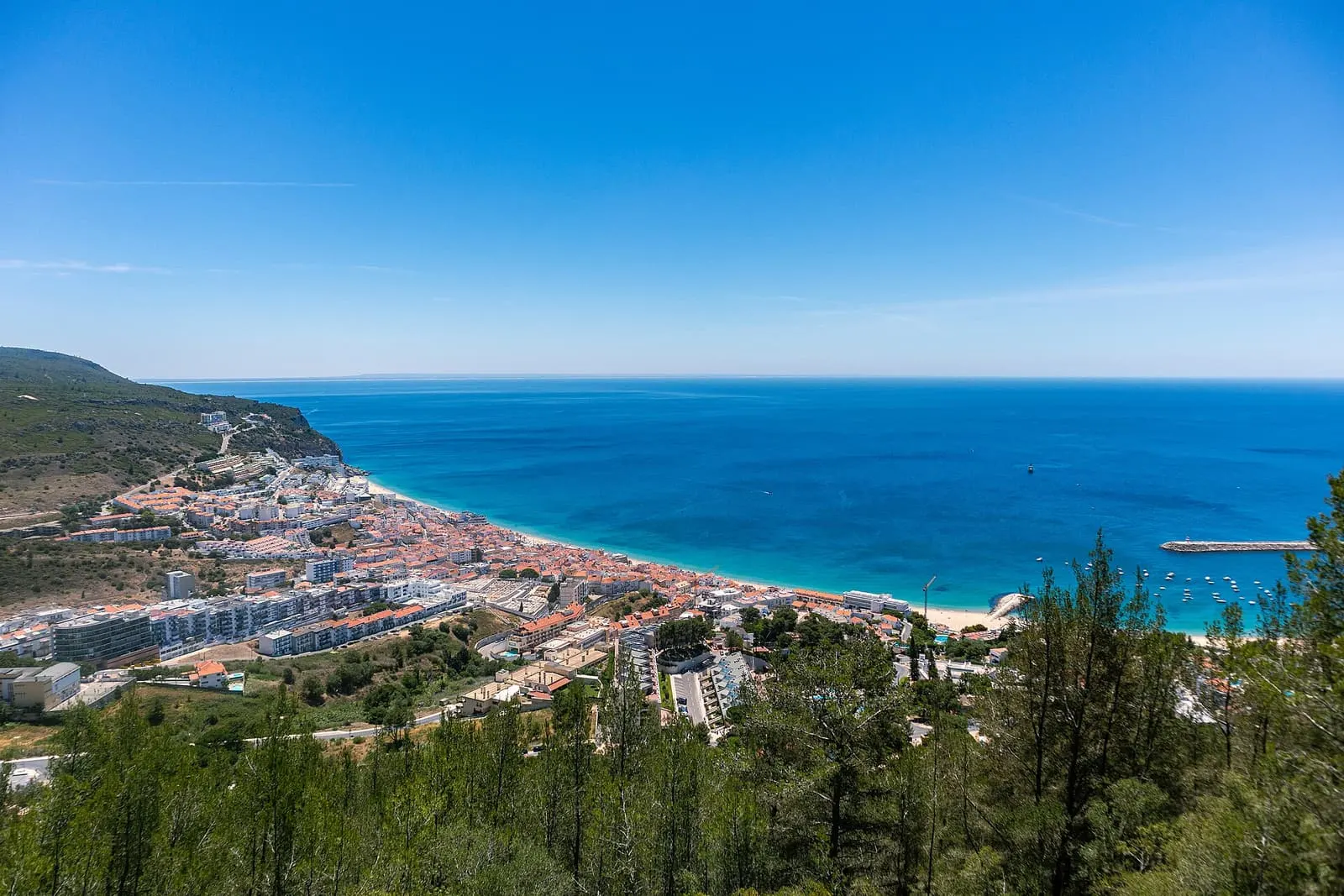
Sesimbra Castle rises on a spur of the hills that dominates the fishing town, about a kilometre and a half from the sea, at a point that allows both the sheltered cove and the inland routes to be watched at once. Its walled silhouette, outlined against the sky above the white houses of the settlement, is the most recognisable symbol of this territory on the southern bank of the Tagus.
From Muslim origins to the Reconquista
The cove of Sesimbra was, since Antiquity, a natural anchorage for Mediterranean seafarers, and the first fortified traces of the site date back to the period of Muslim occupation. The castle enters documented history with the Reconquista: it was taken by Afonso Henriques in 1165, in an advance along the coastal strip south of Lisbon that followed the conquest of the capital. The position proved, however, to be unstable.
In 1191, in the context of the Almohad counter-offensive that recovered much of the Alentejo and the Algarve, the stronghold was lost once more. It fell to Sancho I to retake it around 1200, with the help of crusaders from Northern Europe passing along the coast. On 15 August 1201, the monarch granted the settlement a charter (foral), ordering that the castle be rebuilt “from the foundations” — the fortification recognisable today arises, in essence, from this programme.
Sesimbra Castle sums up a recurring pattern on the twelfth-century Portuguese frontier: conquering was relatively quick; securing and settling required decades of charters, reconstruction, and grants to those who could guarantee its defence.
The Order of Santiago and the castle town
On 19 February 1236, Sancho II granted Sesimbra and its castle to the Order of Santiago, integrating the stronghold into the vast domain that the military order administered between the Tagus and the Sado — a network that also included nearby fortresses such as Palmela Castle, the order’s commandery seat. Under its guardianship, the early town took shape within the walls, with a church, houses, and defensive structures.
This intramural core preserves the Church of Nossa Senhora da Consolação do Castelo, of medieval origin but profoundly remodelled, where eighteenth-century embellishment campaigns — above all that of 1721 — left gilded woodwork and panels of blue-and-white tiles with themes from the life of Christ and of Santiago. With the gradual descent of the population towards the harbour, from the fifteenth and sixteenth centuries onwards the walled precinct lost importance and fell into decline.
Ruin, restoration and present-day reading
Visitations by the Order of Santiago as early as the start of the sixteenth century recorded clear signs of abandonment. The process of degradation continued for centuries, aggravated by the difficulties of maintaining a fortress removed from the houses. The advance of ruin was only effectively halted in the twentieth century, with the conservation works promoted by the national monumental heritage administration between the 1930s and 1940s, which consolidated stretches of wall, towers, and the precinct.
Today the castle is a freely accessible complex, integrated into the built heritage circuits of the town of Sesimbra and the Setúbal region, neighbour to the singular landscape of the Arrábida range. Those who walk its wall-walks find one of the broadest viewpoints on the coast south of the Tagus, with the ocean on one side and the white houses descending to the harbour on the other — a privileged observatory for understanding why so many powers contested this promontory. It thus belongs to the lineage of the great Portuguese medieval castles raised to defend the frontier and the coast.
Frequently asked questions
- When was Sesimbra Castle taken from the Moors?
- The castle was captured by Afonso Henriques in 1165, lost to the Almohads in 1191, and definitively reconquered by Sancho I around 1200.
- Which military order did the castle belong to?
- In 1236, Sancho II granted Sesimbra and its castle to the Order of Santiago, which administered the town for centuries.
- What can be visited within the castle precinct?
- Inside the walls stands the Church of Nossa Senhora da Consolação do Castelo, with eighteenth-century tilework, alongside the wall-walks with views over the town and the ocean.
Sources
Keep exploring
Heritage nearby
More places to discover from here. Approximate straight-line distances, within 50 km.