Places
Sesimbra
Sesimbra, a fishing village in Arrábida within Setúbal district, featuring a Moorish castle, Santiago Fortress, and maritime traditions.
- Location
- Sesimbra, Setúbal
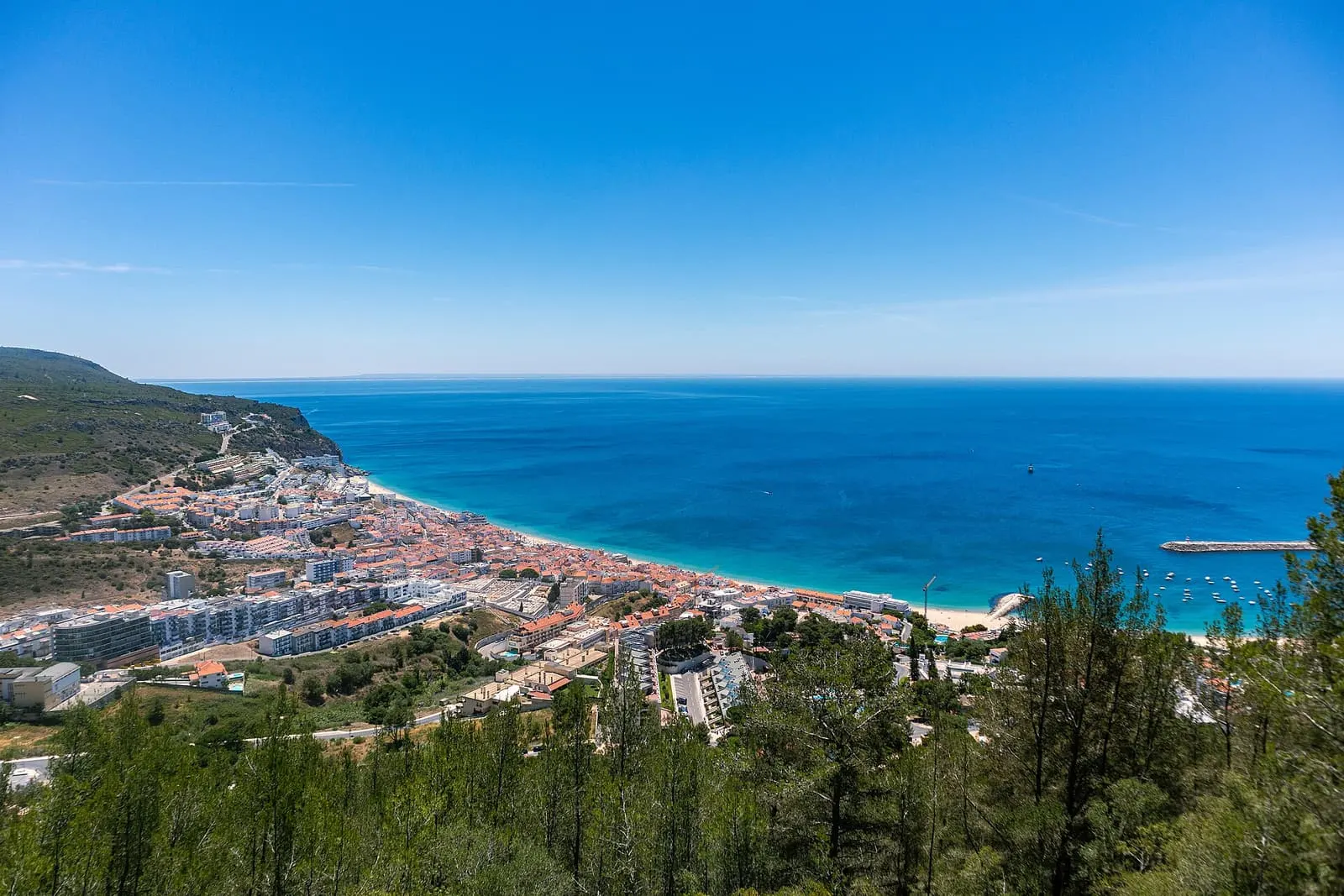
Sesimbra stretches along a sheltered bay in southwest Setúbal Peninsula, where the southern slopes of Arrábida meet the Atlantic. The village belongs to Setúbal district and lies within Lisbon region, its history intertwined with the sea: from the medieval castle on the heights to the whitewashed houses descending to the shore, everything in Sesimbra speaks of fishing, coastal defense, and limestone landscapes of rare beauty.
From Moorish castle to 1199 charter
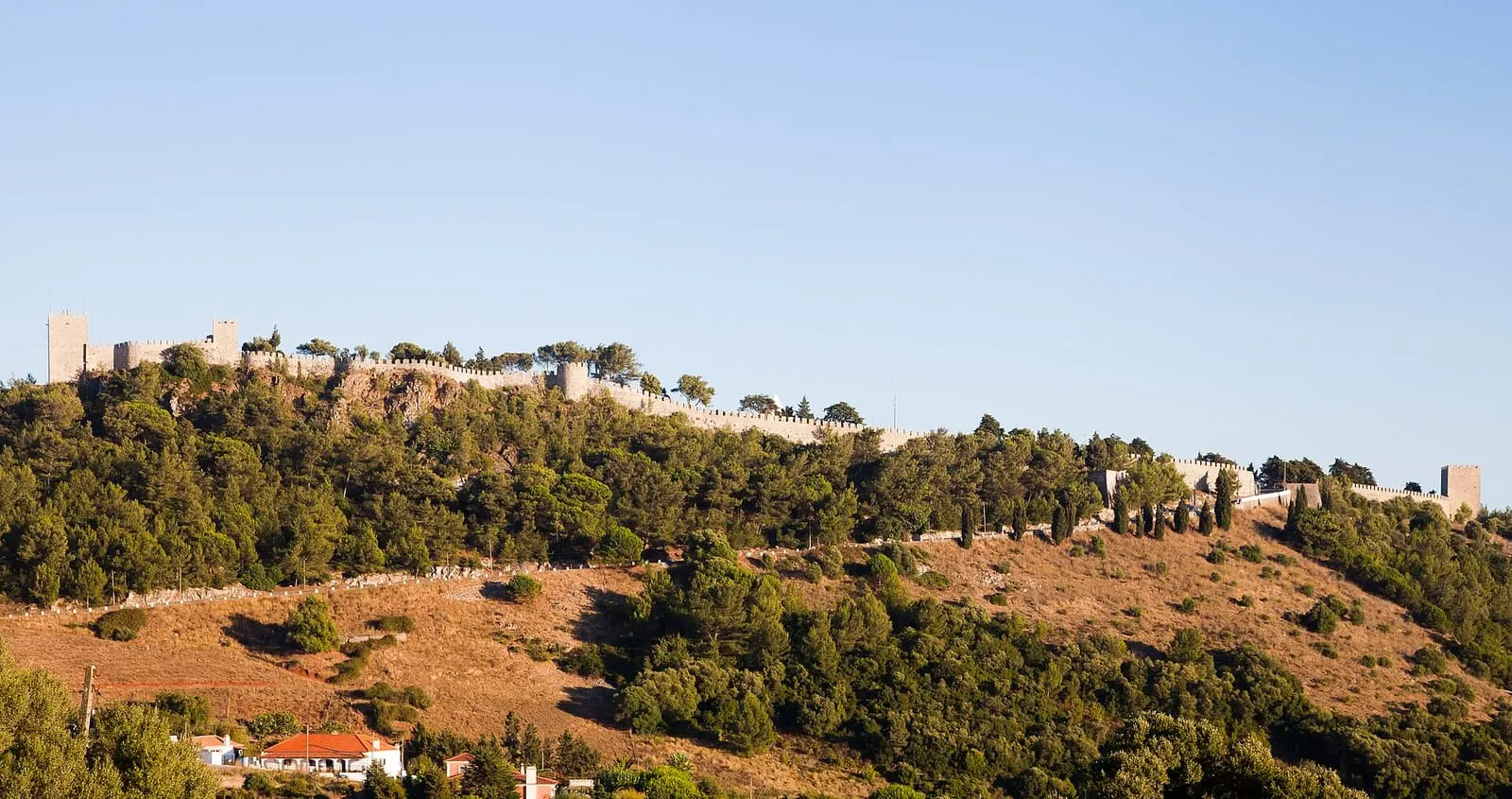
Settlement origins trace back to Muslim occupation, when the fortress dominating the valley and coast was built. The castle was taken from the Moors in 1165 by Afonso Henriques, lost to the Almohads in 1191, and definitively reconquered by King Sancho I in 1199 — the monarch who granted the village its first charter that year. Perched at 240 meters altitude, the walled complex commanded the territory for centuries, sheltering the original settlement before it shifted toward the water. The ruins and restored grounds of Sesimbra Castle remain the village’s natural viewpoint and oldest identity marker.
Santiago Fortress and coastal defense
As the waterside settlement grew, defense moved to the coastline. During the Restoration War (1640-1648), Santiago Fortress was built by the shore, incorporating existing structures into the coastal fortification system protecting the Tagus estuary and Atlantic navigation. This bay-facing sentinel witnessed the fishing community’s life and now houses Sesimbra Maritime Museum, dedicated to fishing heritage.
In Sesimbra, military history and fishing history run parallel: the same waters defended by cannons have always been the village’s lifeline.
A village wedded to sea and Arrábida
Fishing shaped Sesimbra’s identity more than any other trade. Even today, the village thrives on swordfish and other catches, its waterfront preserving auction rhythms, boats, and maritime traditions. Around the bay clusters dense housing with narrow streets climbing inland, typical of Portuguese fishing settlements.
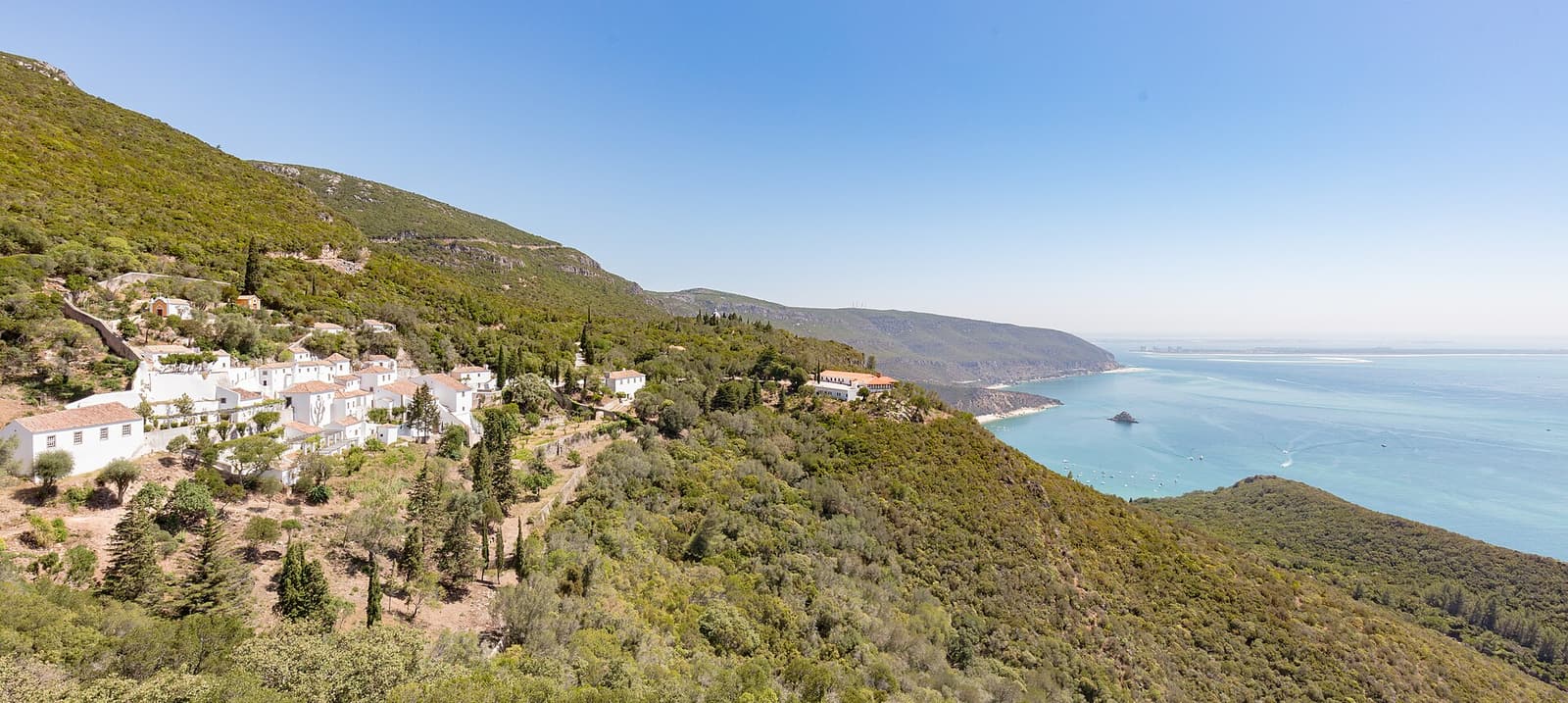
The municipality extends into one of Portugal’s most remarkable natural landscapes. To the north and west lies the limestone massif of Arrábida, protected as a natural park, hiding the secluded Arrábida Convent founded by Franciscan monks. Westward, Cabo Espichel’s cliffs and Marian sanctuary crown the peninsula. Eastward beyond the mountains opens Setúbal Bay and Sado estuary, while northeast stands Palmela Castle, another node in the medieval defensive system organized by the Order of Santiago.
Between sea and mountains, Sesimbra thus concentrates — within a compact area — an Islamic-founded castle, a Restoration-era fortress, and living fishing culture, making it one of the most expressive coastal heritage sites south of Lisbon.
Frequently asked questions
- Where is Sesimbra located?
- Sesimbra is a village in Setúbal district, southwest of the Setúbal Peninsula, nestled against the southern slopes of the Arrábida mountain range and facing the Atlantic Ocean.
- What is the origin of Sesimbra's name and settlement?
- The medieval settlement grew around the Moorish castle, definitively reconquered by King Sancho I, who granted the village its first charter in 1199.
- What to visit in Sesimbra?
- Highlights include Sesimbra Castle, the seaside Santiago Fortress (now Maritime Museum), the fishing waterfront, and within the municipality, Cabo Espichel and Arrábida Natural Park.
Sources
Keep exploring
Heritage nearby
More places to discover from here. Approximate straight-line distances, within 50 km.