Monuments
Fortress of Valença do Minho
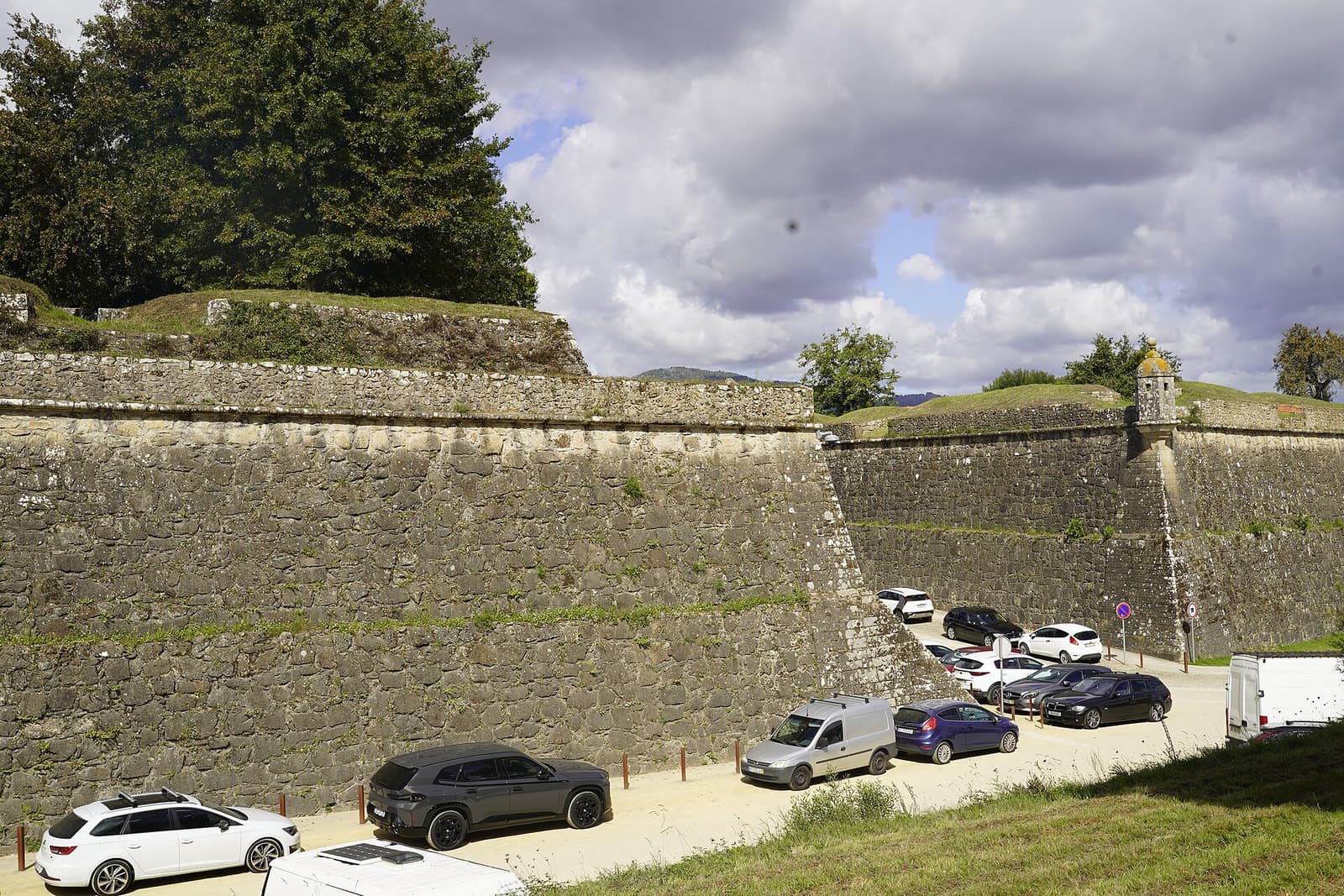
Bastioned fortress of Valença do Minho, in Viana do Castelo: a seventeenth-century stronghold above the River Minho, facing Tui, a National Monument.
- Location
- Valença, Viana do Castelo
- Built
- 1661–1713
- Style
- Fortificação abaluartada (tipo Vauban / escola holandesa)
The Fortress of Valença do Minho, officially known as the Stronghold of Valença, rises upon a granite spur on the left bank of the River Minho, at the northern tip of Portugal. Facing the Galician city of Tui across the river, it constitutes one of the most complete and best-preserved examples of bastioned military architecture on the Iberian Peninsula. It has been classified as a National Monument since 1928.
From medieval stronghold to modern fortress
The strategic position of Valença, commanding one of the chief crossings of the Minho border, was defended from the Middle Ages onwards. By the turn of the twelfth to the thirteenth century there was already a walled enclosure protecting the town and the ford across the river. It was, however, the Restoration War (1640–1668) that radically transformed the place. Exposed to Castilian incursions — the stronghold held out in 1643, fell in 1654, and was retaken by the Portuguese — Valença became a key element of the kingdom’s defensive line, and the need to rebuild it according to the principles of modern fortification became pressing.
The works began in 1661, directed by the military engineer of French origin Miguel de l’École, and continued for decades, being completed in 1713 under the guidance of the architect and engineer Manuel Pinto de Vilalobos. The result is a war machine of bastioned design that combines the French Vauban-type vocabulary with the dominant influence of the Dutch school of fortification, then very much present among the engineers in the service of the Portuguese crown.
Anatomy of a war machine
The layout of Valença is distinguished by the ingenious superimposition of two fortified enclosures, linked by a bridge and arranged so as to form an hourglass silhouette. The northern enclosure — the Coroada — is articulated around three bastions; the southern enclosure, or Magistral, brings together bastions such as those of Carmo, Esperança, São Francisco, São João, and Socorro. Between curtain walls, ravelins, moats, and monumental gates, the system was conceived for defence in depth: to take one line did not mean surrendering the stronghold.
The strength of Valença lies not in the height of its walls but in its geometry: each angle of the bastions eliminates the blind spots, ensuring that no attacker can approach without coming under crossfire.
This logic places Valença within a wider set of bastioned fortresses raised along the Luso-Castilian frontier between the seventeenth and eighteenth centuries, today travelled by the route of the bastioned fortresses of the border.
The living frontier of the Minho
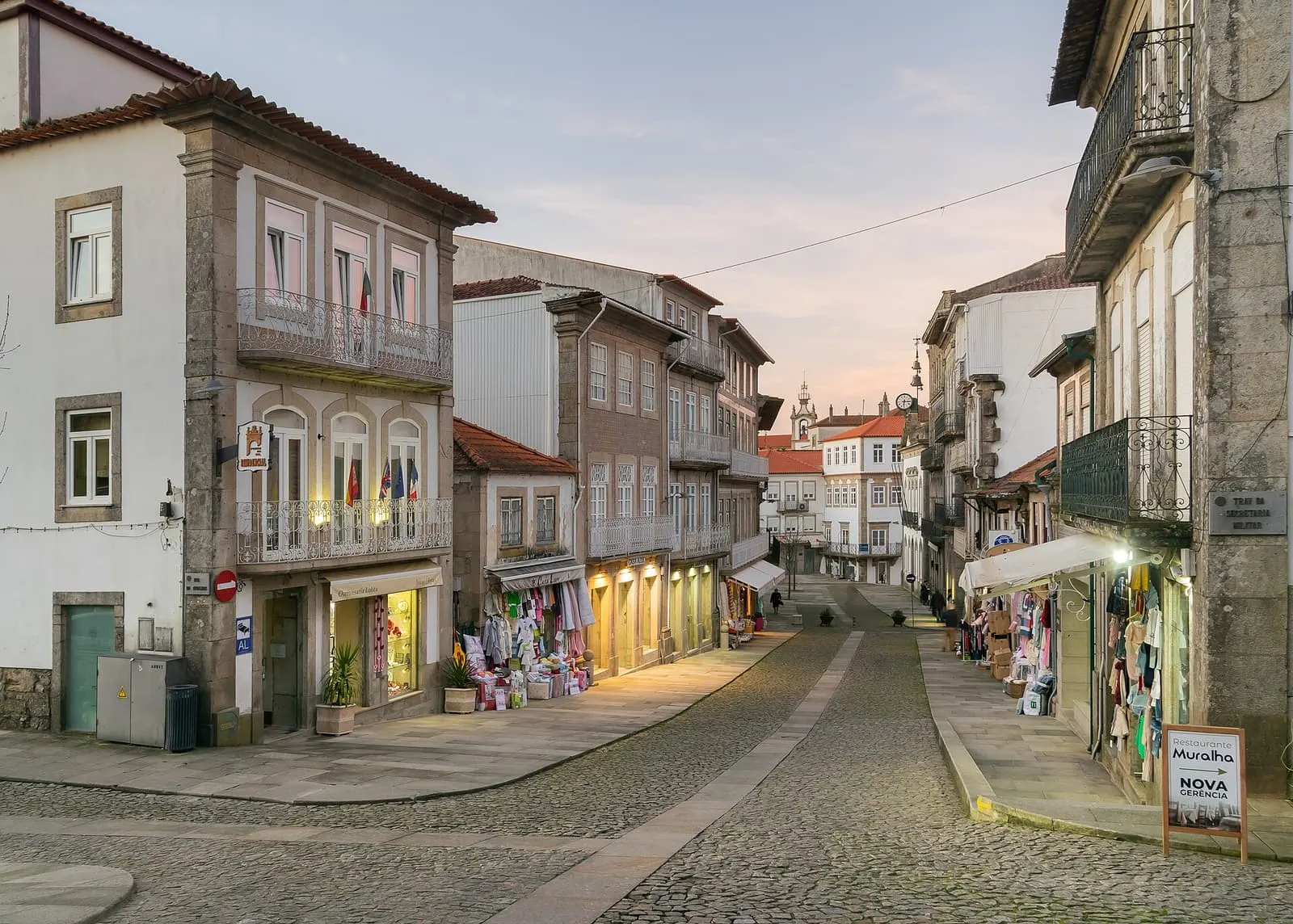
Over time, the stronghold endured further trials. It was occupied by Soult’s Napoleonic troops in 1809, during the Peninsular War, and served as a bastion for the Liberal forces in the civil wars of 1828–1834. Its military function only died out in the twentieth century, leaving intact an enclosure that was never abandoned: within the walls there endures an inhabited urban core, with narrow streets, churches, and houses that make the fortress a living organism, and not merely a monument.
Valença forms part of a regional defensive system that included other positions along the Minho border, such as the castle of Melgaço, guardian of the upper Minho upstream, and the castle of Lindoso, sentinel of the mountains. Today, a gateway for those arriving in Portugal from the north and a stage on the Ways of Saint James, the fortress remains the historic heart of the city of Valença.
Frequently asked questions
- When was the bastioned fortress of Valença built?
- The stronghold was raised between 1661 and 1713, during and after the Restoration War, upon a medieval defensive core that had existed since the thirteenth century.
- Why does the fortress have two separate enclosures?
- The plan articulates two walled enclosures — the Coroada, to the north, and the Magistral, to the south — joined by a bridge, forming an hourglass-shaped complex conceived for defence in depth.
- Can the fortress of Valença be visited?
- Yes. The enclosure within the walls remains inhabited and is freely accessible, and is today one of the most visited historic centres of the Alto Minho.
Sources
Keep exploring
Heritage nearby
More places to discover from here. Approximate straight-line distances, within 50 km.