Monuments
Castle of Melgaço
The Castle of Melgaço, in Viana do Castelo: a sentinel of the Alto Minho founded by King Afonso Henriques in 1170, guarding the border of the River Minho with…
- Location
- Melgaço, Viana do Castelo
- Built
- 1170 (séc. XII–XIII)
- Style
- Românico
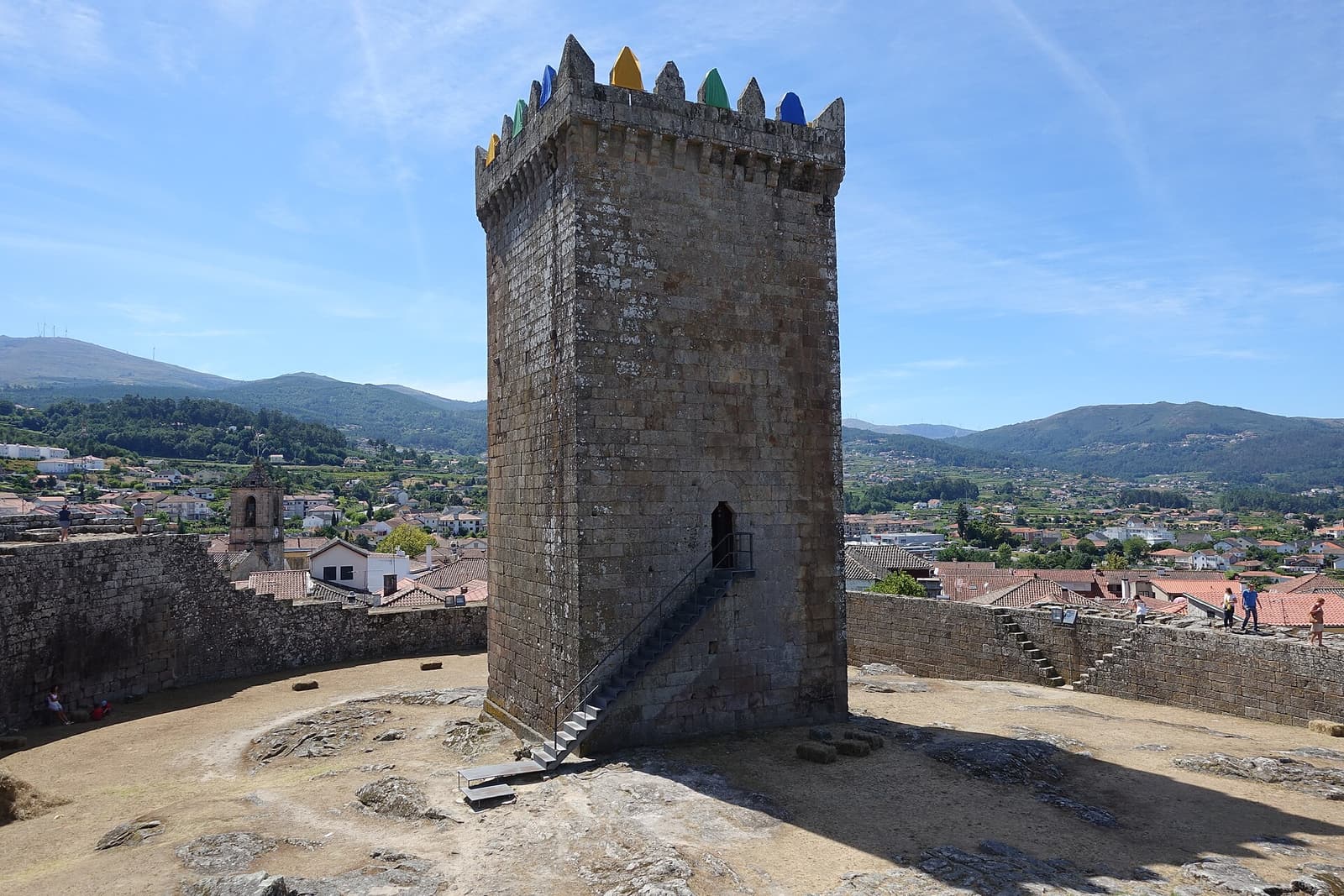
The Castle of Melgaço rises in the far north-west of Portugal, on a height that commands the town of Melgaço and the passage into Galicia, on the stretch where the River Minho takes on its role as a border. It was the northernmost of Portugal’s frontier strongholds, a watchpoint over the fords of the Minho and the head of an extensive defensive line across the Alto Minho.
Foundation and construction
The building of the castle dates back to around 1170, by order of Afonso Henriques, as part of the consolidation of the northern frontier of the newly formed kingdom. The earliest known document referring to the settlement is the charter granted by the sovereign in 1183, which guaranteed its inhabitants privileges similar to those of the Galician fief of Ribadavia, encouraging the settlement of a strategic and exposed area.
The original ensemble would have been completed in the early thirteenth century, with the sturdy quadrangular keep as its dominant feature. In the middle of that century, under Afonso III, an extensive building campaign took place: the town wall was begun in 1245 and its western section completed in 1263, updating the defences and incorporating the castle into a walled urban perimeter. Like other fortifications of this type, Melgaço belongs to the network of castles that structured the medieval defence of the frontier.
Military history
Because of its frontier position, the castle saw a succession of wartime episodes. In 1212 it withstood, together with other neighbouring strongholds, the invasion of the forces of the kingdom of León. During the dynastic crisis of 1383–1385 it initially remained loyal to the Castilian party, being besieged in 1387 by the forces of John I, who took it after a prolonged blockade. The castle appears depicted in the Livro das Fortalezas of Duarte de Armas, around 1509, then with three towers and two gates.
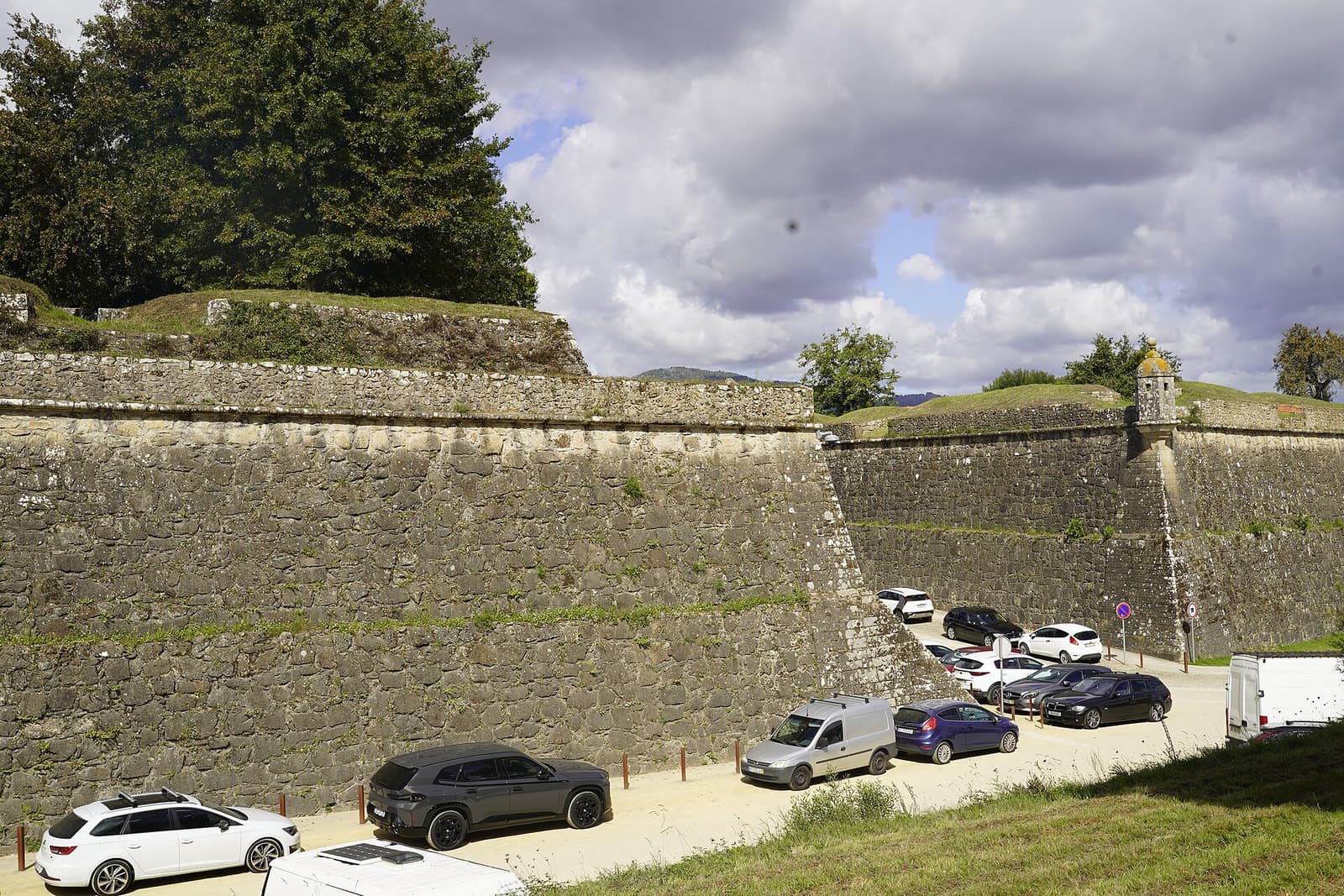
During the Restoration War in the seventeenth century, its defences were adapted to modern artillery with bastioned works, becoming part of the effort to defend the frontier that also marked strongholds such as Valença and other points of the Alto Minho. The castle of Lindoso, in the same mountainous region, shares this role of border guard.
Present state and classification
Of the medieval ensemble there survives above all the keep, now restored as a museum centre of an archaeological character, alongside sections of the wall and the historic urban structure of the town. The Castle of Melgaço has been classified as a National Monument since 1910, being one of the identity landmarks of the municipality and a testimony to the long frontier role played by this stronghold of the Alto Minho.
Frequently asked questions
- Who ordered the Castle of Melgaço to be built?
- Construction dates back to 1170, by order of Afonso Henriques, the first king of Portugal, who granted the town its charter in 1183.
- Where is the Castle of Melgaço?
- It stands in the town of Melgaço, in the municipality of the same name, in the district of Viana do Castelo, in the far north-west of Portugal, beside the border of the River Minho with Galicia.
- Is the Castle of Melgaço a National Monument?
- Yes. It has been classified as a National Monument since 1910 and forms part of the network of border fortifications of the Alto Minho.
Sources
Keep exploring
Heritage nearby
More places to discover from here. Approximate straight-line distances, within 50 km.