Monuments
Fort of São Julião da Barra
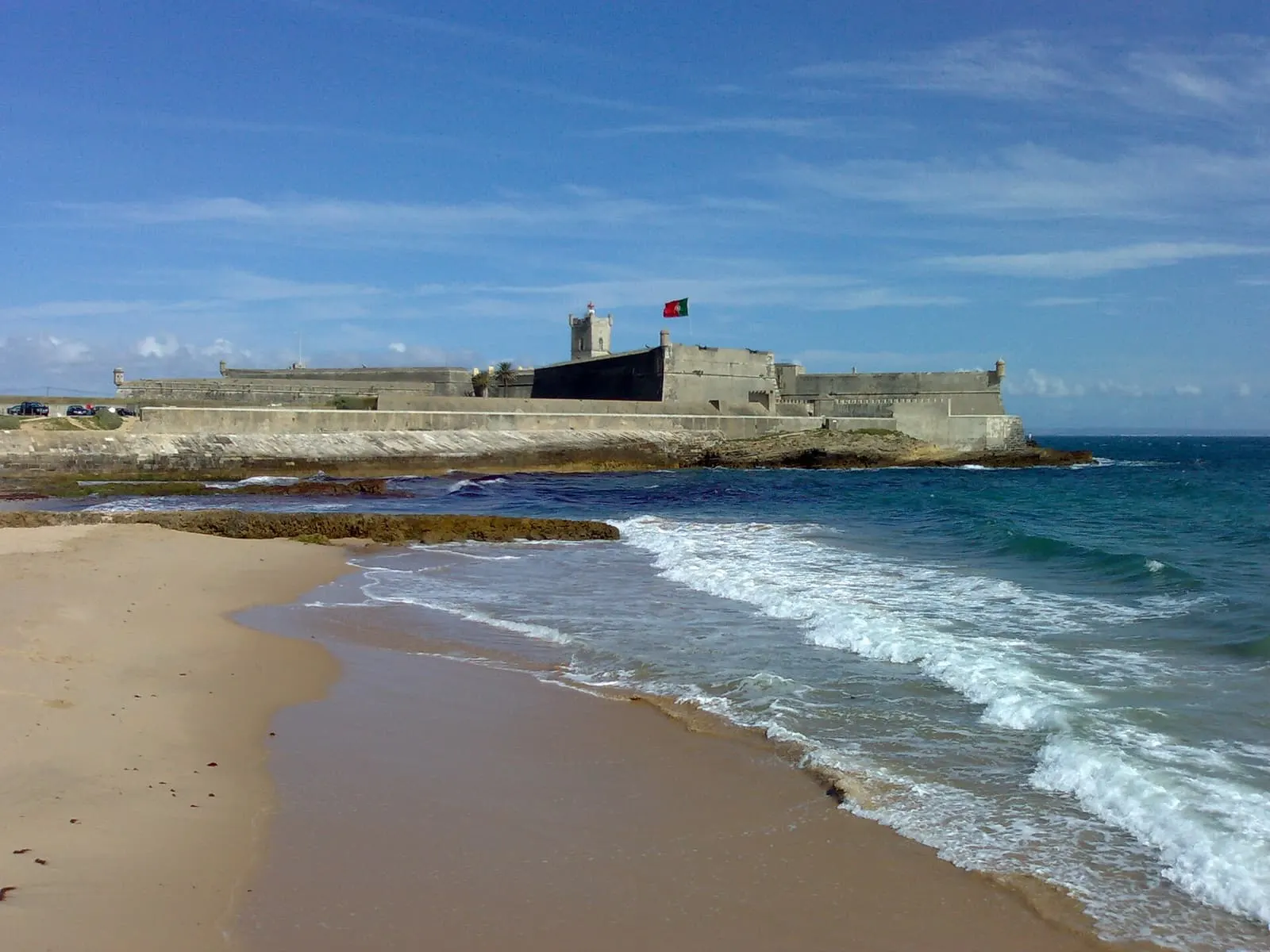
Fort of São Julião da Barra, in Oeiras: Portugal's largest bastioned fortress, guardian of the mouth of the Tagus since the sixteenth century.
- Location
- Oeiras, Lisboa
- Built
- 1553–1568
- Style
- Arquitetura militar abaluartada
The Fort of São Julião da Barra, in Oeiras, is the largest and most complete bastioned fortress in Portugal. Raised on the São Gião point, at the westernmost edge of the municipality, it commands the mouth of the Tagus and was, for centuries, the principal defensive key to the bar that gave access to the port of Lisbon. Formerly known as the Tower of São Gião, it was once called the “shield of the kingdom”.
History and construction
Construction began in 1553, in the reign of King João III, under the direction of the architect Miguel de Arruda, and was essentially complete by around 1568. The location was no accident: together with the Fort of São Lourenço do Bugio, on the opposite bank, the ensemble created a crossfire capable of controlling the entry and departure of ships across the bar of the Tagus.
During the Iberian Union (1580–1640), the fortress was thoroughly reinforced. New batteries were raised, the flanks were extended and bastions were added — works that, continuing until the end of the sixteenth century, turned São Julião into the most powerful fortification in the country. The bastioned plan, with angular bastions, ditches and low, thick walls, answered to modern artillery and belongs to the tradition that would come to be enshrined in Europe by Vauban’s system, of which this is one of the most intact examples in Portuguese territory.
From defence to prison and official residence
Beyond its military vocation, the fort soon took on penal functions, serving as a political prison from the end of the sixteenth century until the First Republic. Among its famous inmates was General Gomes Freire de Andrade, detained here before his execution in 1817. During the French Invasions and the British presence in the Peninsular Wars, the stronghold retained strategic importance.
In 1951 the fortress ceased to have an active military function and was adapted to receive members of the government and distinguished guests of the State. It is currently the official residence of the Minister of National Defence, which restricts public access, possible only by arrangement. The monument has been classified as a Property of Public Interest since 1957.
Heritage significance
For its size, state of conservation and the integrity of its layout, the Fort of São Julião da Barra is an essential reference among the Portuguese bastioned fortresses and among the group of coastal forts that protected the shoreline. Alongside works such as the Fortress of Peniche, it illustrates the evolution of modern military architecture in Portugal, in the transition from medieval fortification to the bastioned engineering conceived against artillery. The fort continues to mark the landscape at the entrance of the Tagus, recalling the decisive role that Oeiras played in the maritime defence of the capital.
Frequently asked questions
- Where is the Fort of São Julião da Barra?
- It stands on the São Gião point, at the westernmost edge of the municipality of Oeiras, beside the mouth and the bar of the river Tagus, in the district of Lisbon.
- Can the Fort of São Julião da Barra be visited?
- The fort is today the official residence of the Minister of National Defence and property of the State, so access is restricted and visits depend on prior arrangement.
- What was the function of the fort?
- To defend the entrance to the bar of the Tagus and the access to the port of Lisbon, in coordination with the Fort of Bugio, having also served as a political prison for centuries.
Sources
Keep exploring
Heritage nearby
More places to discover from here. Approximate straight-line distances, within 50 km.