Monuments
Church of Graça (Évora)
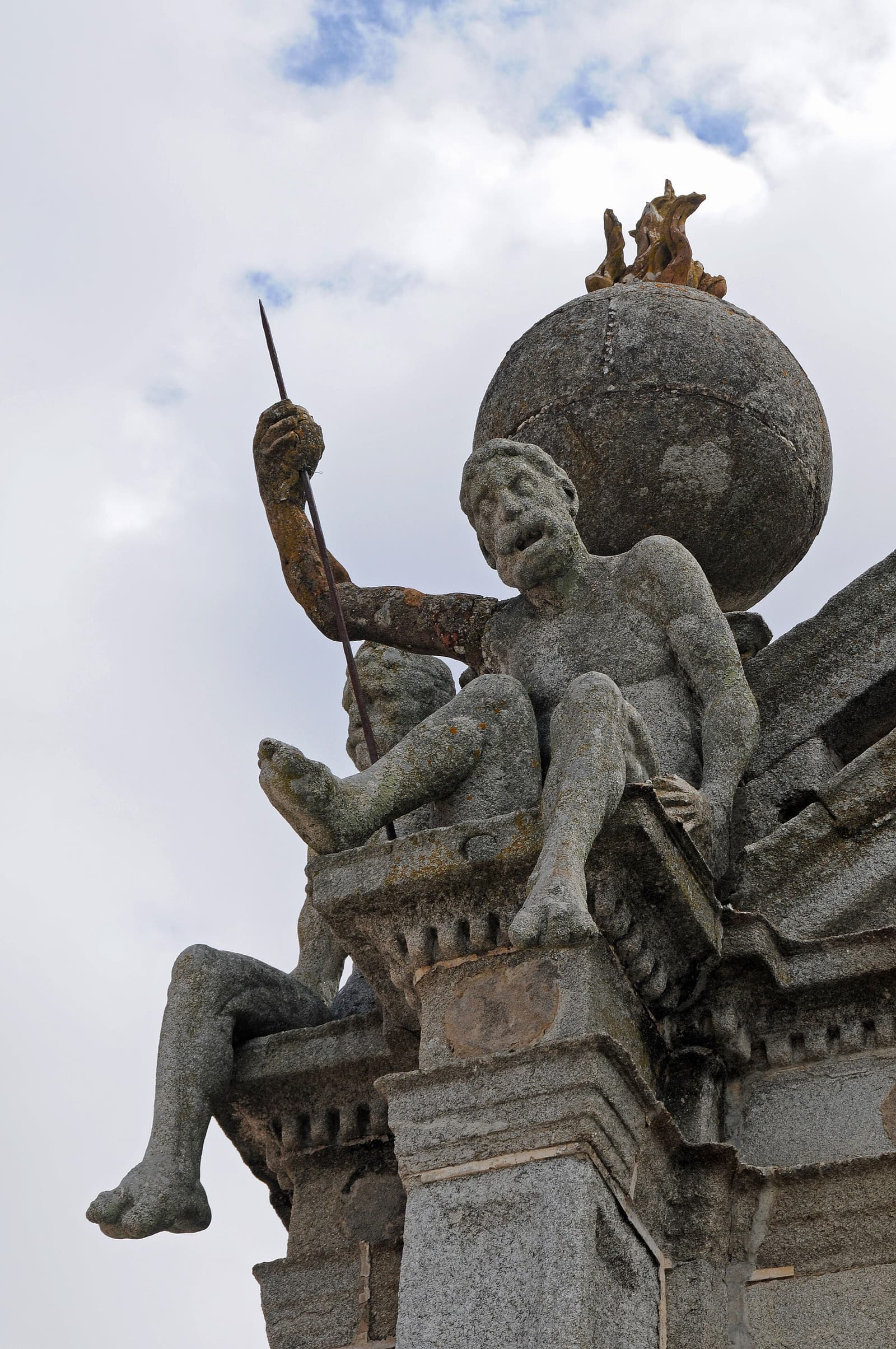
A Renaissance church in Évora, the work of Miguel de Arruda, with the unmistakable façade of the celebrated «meninos da Graça», giant atlantes crowning the pediment.
- Location
- Évora, Évora
- Built
- 1511 (fundação); fachada c. 1530–1540
- Style
- Renascimento
The Church of Graça, in the historic centre of Évora, is generally regarded as the city’s first fully Renaissance monument. It belonged to the convent of the Hermits of Saint Augustine, founded in 1511, and its construction took place mainly during the second quarter of the sixteenth century, under the patronage of King John III and Bishop Afonso de Portugal, a cousin of the monarch. Built at a time when the court frequently resided in the Alentejo capital, the church reflects the arrival of Italianate classicism in a city until then marked by the Gothic and the Manueline.
A classicist façade and the «meninos da Graça»
The design of the church is attributed to the royal architect Miguel de Arruda, with the collaboration of masters such as Diogo de Torralva, in a strongly erudite solution. The façade is arranged as a portico of classical inspiration, with columns, a triangular pediment and a crowning that breaks with local tradition. It is precisely in this crowning that the figures appear which made the monument famous: four giant atlantes, seated over the angles and visibly straining under their effort, holding flaming spheres.
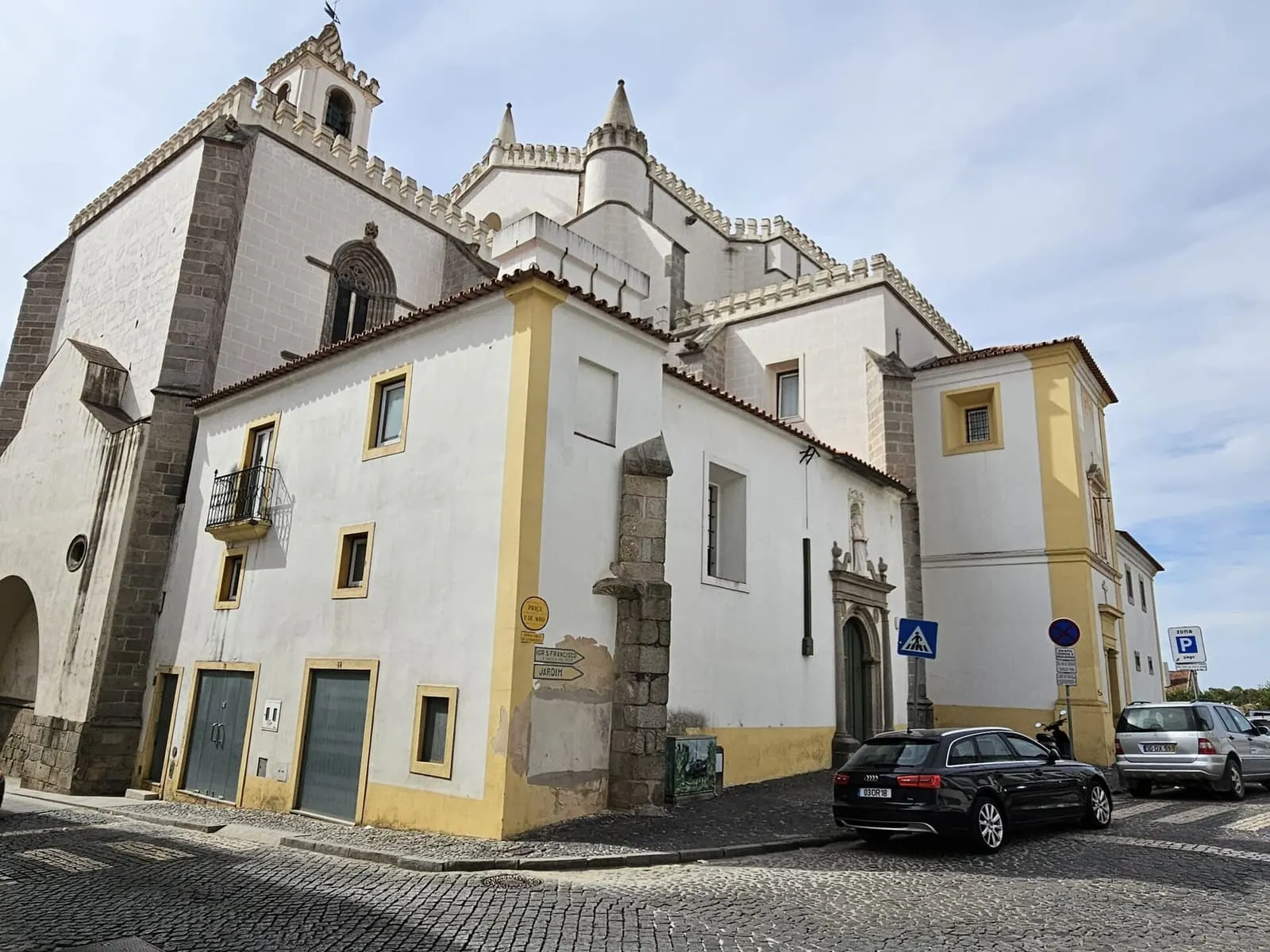
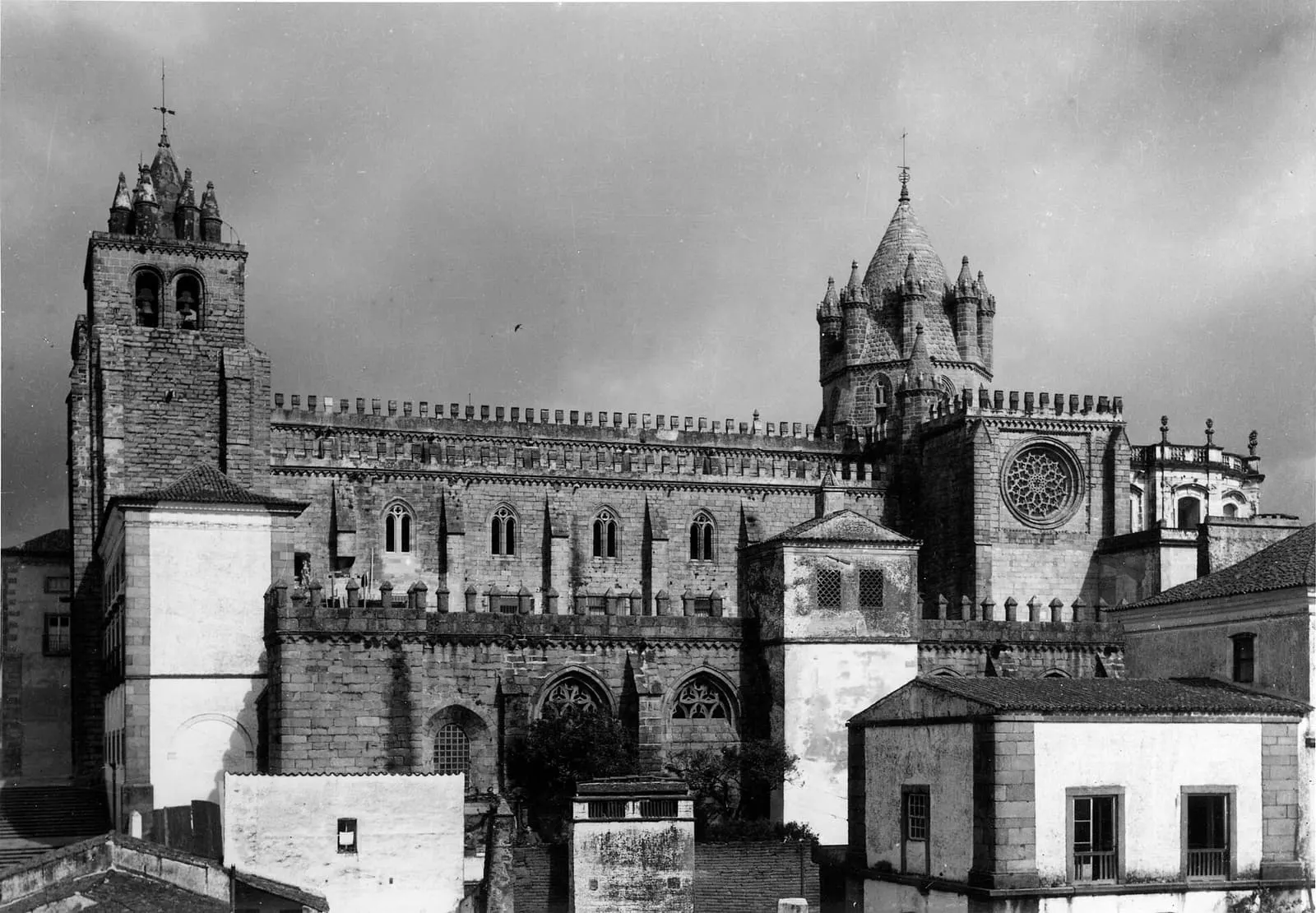
The people of Évora humorously christened them the «meninos da Graça», and their symbolic reading is usually associated with the four parts of the world and the universal power of King John III, at the height of the Portuguese expansion. Robust and expressive, these atlantes make the Graça one of the most singular façades of the Renaissance in Portugal, anticipating solutions that Mannerism would later develop. Anyone walking through the city will find, a few steps away, the contrast with the Gothic-Manueline idiom of the Church of São Francisco and with the medieval monumentality of the Évora Cathedral.
From splendour to ruin and recovery
Like so many of Évora’s convents, the Graça went through a troubled history. With the dissolution of the religious orders in 1834, the building was adapted to military uses, serving as a barracks. The most serious disaster occurred in 1884: the collapse of the church’s vault, which brought down with it the remarkable azulejo panels that lined the interior and depicted the life of Saint Augustine. The monument remained in a state of profound decay for decades.
Only in the second half of the twentieth century was a thorough restoration carried out, preserving the façade and the conventual quarters of Renaissance design, such as the cloister and the refectory. The complex is integrated into the city’s military fabric, and the church today serves functions linked to the local garrison — a survival that explains the occasionally restricted access to the interior.
Setting and visit
The Church of Graça has been classified as a National Monument since 1910 and forms part of the historic centre of Évora, inscribed on UNESCO’s World Heritage List in 1986. It is an essential piece for understanding the spread of the Renaissance in Portugal, which here took on one of its most original and most discussed expressions.
Located in the Largo da Graça, the church fits naturally into a tour of the monumental heritage of the city of Évora and of the Alentejo, where it converses with cathedrals, convents and temples of various periods. Even without permanent access to the interior, careful observation of the façade and its unforgettable giants amply rewards the visit.
Frequently asked questions
- What are the «meninos da Graça»?
- They are four figures of giant atlantes, shown straining under their burden, placed over the angles of the façade's crowning. The people of Évora ironically nicknamed them the «meninos da Graça», and they symbolise the universal power of King John III.
- Who designed the Church of Graça?
- The design is attributed to the royal architect Miguel de Arruda, with the participation of masters such as Diogo de Torralva. It is regarded as the first fully Renaissance work in Évora.
- Is the Church of Graça a National Monument?
- Yes. The Graça complex has been classified as a National Monument since 1910 and forms part of the historic centre of Évora, inscribed on UNESCO's World Heritage List.
Sources
Keep exploring
Heritage nearby
More places to discover from here. Approximate straight-line distances, within 50 km.