Places
Marialva
Marialva, a historic village in the municipality of Mêda, Guarda district: a ruined walled citadel, a medieval core and Roman roots on the Beira plateau.
- Location
- Marialva (Mêda), Guarda
- Built
- séc. XII (foral de 1179)
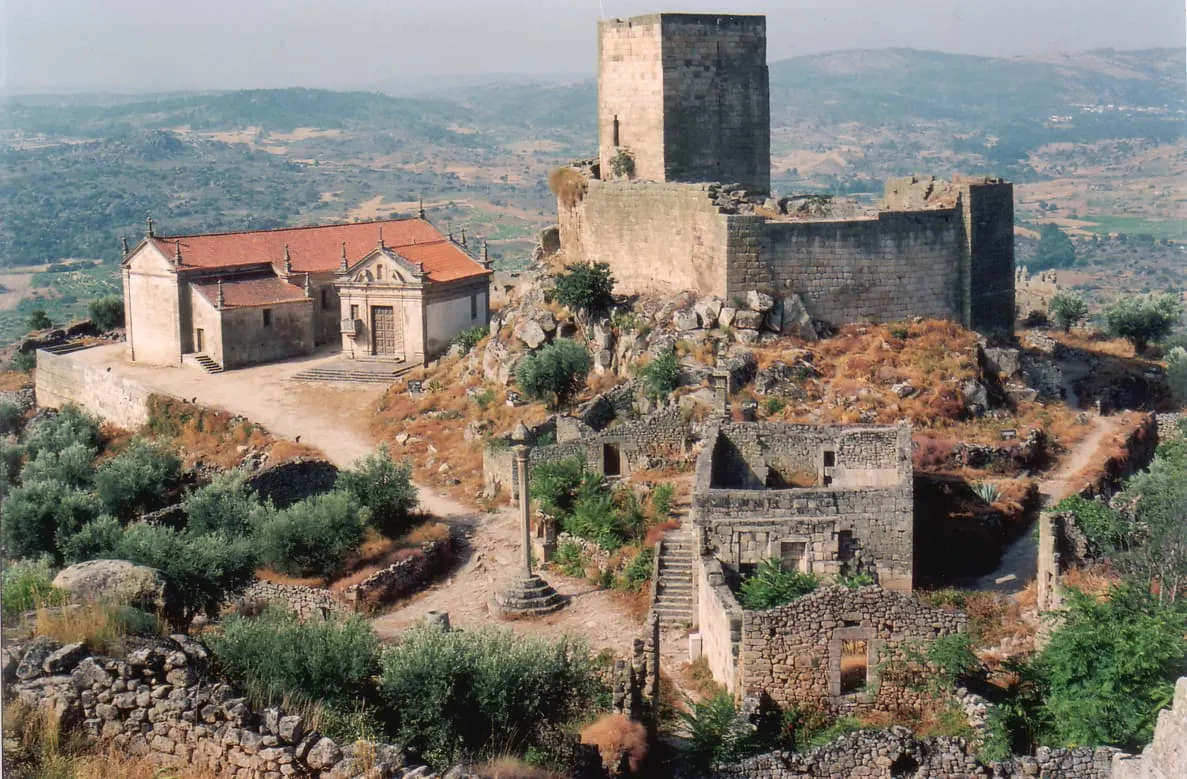
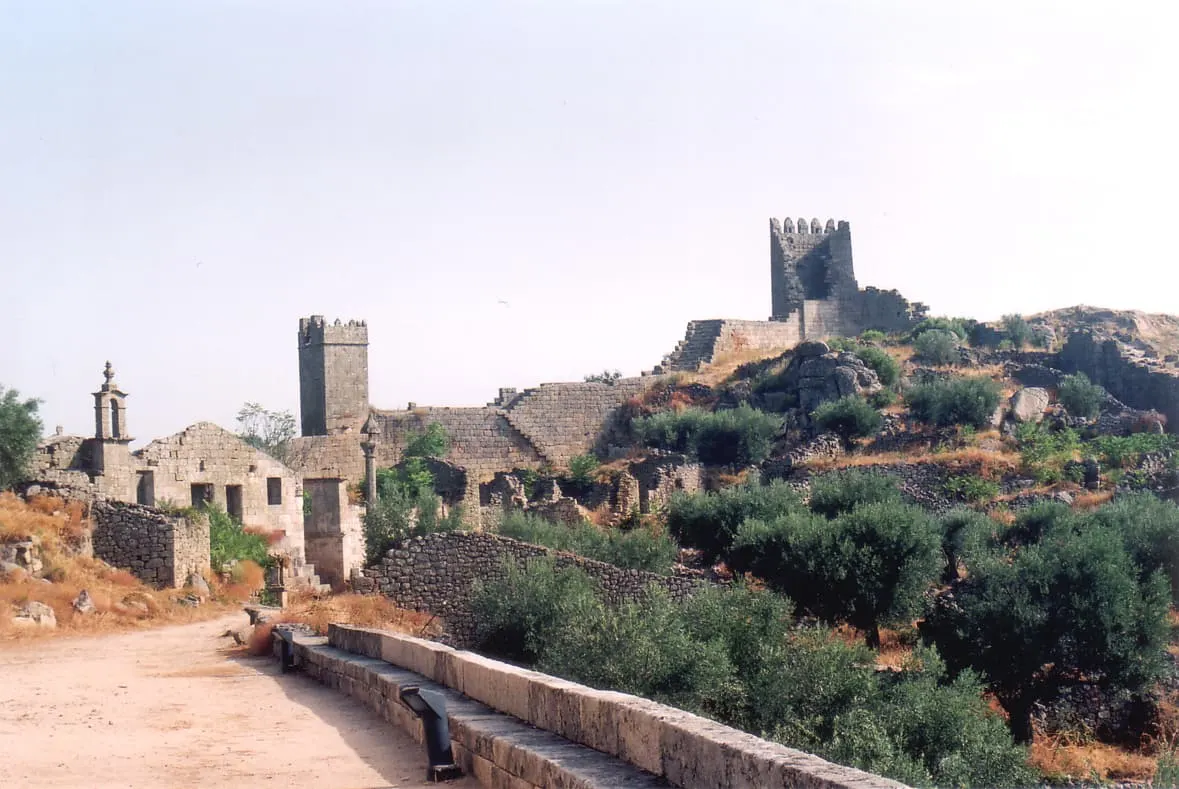
Perched on a granite plateau in the Beira Interior, about seven kilometres from the town of Mêda, Marialva is one of the most singular settlements of the Portuguese interior. Where other historic villages maintain everyday life within their walls, Marialva offers something rarer: an almost uninhabited medieval citadel, crystallised in time, in which streets, houses and public buildings survive as a silent testimony to centuries of history. The ensemble is part of the network of the Historic Villages of Portugal, which brings together the fortified settlements of the Beira interior.
From Arava roots to Civitas Aravorum
Occupation of the site long predates the medieval foundation. On the hilltop there is said to have been a hillfort of the Aravos, a people associated with the Lusitanians, and during Roman rule the place grew until it formed a city, the Civitas Aravorum. The sources point to enlargement works during the reigns of the emperors Trajan and Hadrian, when Marialva served as a junction of roads, notably the road linking the future region of Guarda to the territory of Numão.
The present name dates back to the Reconquista. In 1063, the site is said to have been taken from the Muslims by Ferdinand the Great of León, to whom tradition attributes the name. Once Christian territory, it received a charter from Afonso Henriques in 1179, being resettled and organised as a municipality. Dinis I established a fair there in 1286 and Manuel I granted it a new charter in 1512, milestones of its administrative importance throughout the Middle Ages and the early modern period.
The citadel and the walled core
The most impressive element of Marialva is its castle and urban enclosure, classified as a National Monument. Structured according to military needs, the ensemble is organised into two walled cores: the citadel, at the highest point, with the keep and defensive towers, communicating with the settlement through two gates; and the urban core, which brings together an administrative pole, with the pillory and the former town hall, court and gaol, and a religious pole, with churches and a cemetery.
The oval and irregular plan of the walls, moulded to the rocky crest, reveals an engineering that adapted to the terrain rather than dominating it — a trait common to the frontier fortifications of the Beira.
Within the walls the Church of Santiago, with its carved altarpiece, and the chapel of Senhor dos Passos, also known as the chapel of the Misericórdia, also stand out. The urban space is traditionally divided into three zones: the citadel or town within the walls, today depopulated; the outskirts, which extended the housing beyond the walls; and the Devesa, to the south, which slopes down towards the stream.
Decline and preservation
The history of Marialva is also that of a slow emptying. The population gradually moved down to the outskirts and to the Devesa, and the abolition of the municipality in the mid-nineteenth century, with its subsequent integration into the municipality of Mêda, deprived it of administrative prominence. That abandonment, paradoxically, preserved the core within the walls from modern transformations, making it one of the most intact medieval ensembles in the country.
Today, Marialva converses with other fortified settlements of the Beira plateau, such as Trancoso and Linhares da Beira, sharing with them a landscape of granite, frontier and memory. To walk through its empty streets, between the keep and the pillory, is to traverse almost a thousand years of history in a single glance.
Frequently asked questions
- Where is Marialva?
- Marialva is a parish in the municipality of Mêda, Guarda district, in the Beira Interior, located about 7 km from the municipal seat, on a granite plateau beside the Marialva stream.
- Why is Marialva in ruins?
- The walled citadel was gradually depopulated as the inhabitants moved down to the outskirts and the Devesa. The loss of its status as a municipality in 1855 accelerated the abandonment, leaving the core within the walls as a remarkable fossilised ensemble.
- Does Marialva belong to the Historic Villages of Portugal?
- Yes. Marialva is part of the network of the Historic Villages of Portugal, a programme that promotes settlements of medieval origin in the Beira interior.
Sources
Keep exploring
Heritage nearby
More places to discover from here. Approximate straight-line distances, within 50 km.