Monuments
Mosteiro de São Martinho de Tibães
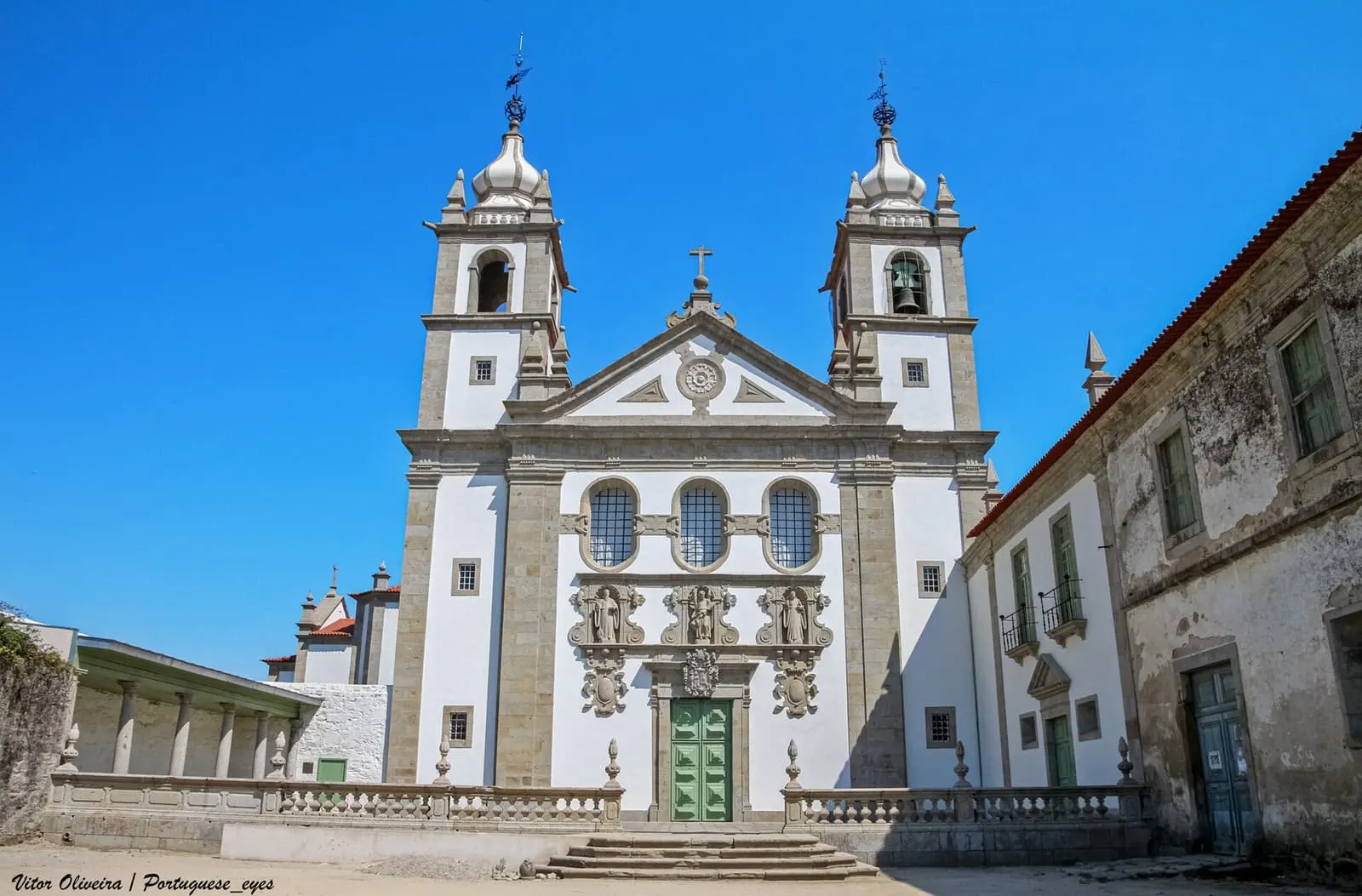
Mosteiro de São Martinho de Tibães, in Mire de Tibães, Braga: the Portuguese Benedictine mother house and a major expression of conventual Baroque and Rococo.
- Location
- Mire de Tibães, Braga
- Built
- 1628–1760
- Style
- Barroco e rococó
The Mosteiro de São Martinho de Tibães rises in a secluded valley of Mire de Tibães, a few kilometres from Braga, and forms one of the most significant monastic complexes in northern Portugal. As the mother house of the Portuguese Benedictine Congregation, it was for nearly three centuries a centre of spiritual, economic and artistic power whose influence extended from across the kingdom to the order’s foundations in Brazil.
From medieval origins to the Benedictine mother house
Tradition traces a monastic presence at Tibães to remote times, but it is with the reconstruction of the eleventh century and, above all, with the Charter of Immunity (Carta de Couto) granted in 1110 by the counts D. Henrique and D. Teresa that the monastery established its jurisdiction over the surrounding lands. The turning point came in 1567, when Tibães was chosen as the seat of the newly founded Congregation of São Bento de Portugal. From that date, the abbot of Tibães coordinated the life and discipline of the Benedictine monasteries of the kingdom, giving the house a prominence that would justify the great architectural renewal of the following centuries.
At Tibães the fate of a network of monasteries linking Minho to colonial Brazil was decided: its importance is measured not only in stone, but in the Benedictine network that was governed from here.
The great Baroque campaign and Rococo splendour
With the congregation’s resources assembled, an ambitious building campaign began in the early seventeenth century, replacing the ruined medieval structures with the complex known today. The church, raised mainly between 1628 and 1661, is organised around a single nave flanked by chapels, in keeping with Counter-Reformation taste. Cloisters, dormitories, refectory, kitchen and granaries are articulated in successive wings, forming one of the largest conventual complexes of Portuguese Baroque.
The decorative peak arrived in the mid-eighteenth century. Between about 1757 and 1760, the architect André Soares of Braga provided the designs for the high altarpiece, the triumphal arch, the pulpits and the side altarpieces, landmark works of national Rococo. The execution of the gilded woodcarving fell to the Benedictine woodcarver Friar José de Santo António Vilaça, while much of the statuary is due to Friar Cipriano da Cruz, both monks of the house itself. This artistic flowering makes Tibães one of the great laboratories of northern Rococo, in dialogue with Braga works such as the Santuário do Bom Jesus do Monte and with the cathedral tradition of the Sé de Braga.
The estate, the gardens and the memory of the place
Beyond the buildings, Tibães is distinguished by its vast monastic estate, with more than forty hectares of woodland, cultivated fields, pools and irrigation channels. Here the monks brought to the landscape the same learned care they devoted to the church: fountains fed by aqueducts, a Baroque stairway punctuated by jets of water that culminates in the chapel of São Bento, and an agricultural system that sustained the community. The ensemble embodies the Benedictine ideal of ora et labora, in which prayer and labour shape both the built environment and the territory alike.
The suppression of the religious orders in 1834 ended monastic life and opened a long period of sale and decay. Only in 1986 did the Portuguese State acquire the property, beginning an extensive restoration campaign that returned the monastery to public use as a museum and cultural centre. In 2024 it was reclassified as a National Monument, confirming its place among the country’s great monasteries and within the broader panorama of Portuguese religious heritage. Those who walk today through the cloisters, the church and the estate find one of the most complete readings of what a Benedictine monastery once was in full operation.
Frequently asked questions
- Where is the Mosteiro de Tibães?
- It lies in the parish of Mire de Tibães, about six kilometres north-west of Braga, in a rural valley near the Serra de Carvalho.
- Why is it considered the mother house of the Benedictines?
- In 1567 it became the seat of the Congregation of São Bento de Portugal, coordinating the Benedictine monasteries of the kingdom and of Brazil until the suppression of the religious orders in 1834.
- Who designed the Rococo decoration of the church?
- The design of the high altarpiece and much of the woodcarving (c. 1757–1760) is attributed to the architect André Soares, with the carving executed by the woodcarver Friar José de Santo António Vilaça.
Sources
Keep exploring
Heritage nearby
More places to discover from here. Approximate straight-line distances, within 50 km.