Resources
National Museum of Natural History and Science
National Museum of Natural History and Science (MUHNAC), the University of Lisbon's museum housed in the former Polytechnic School, featuring scientific…
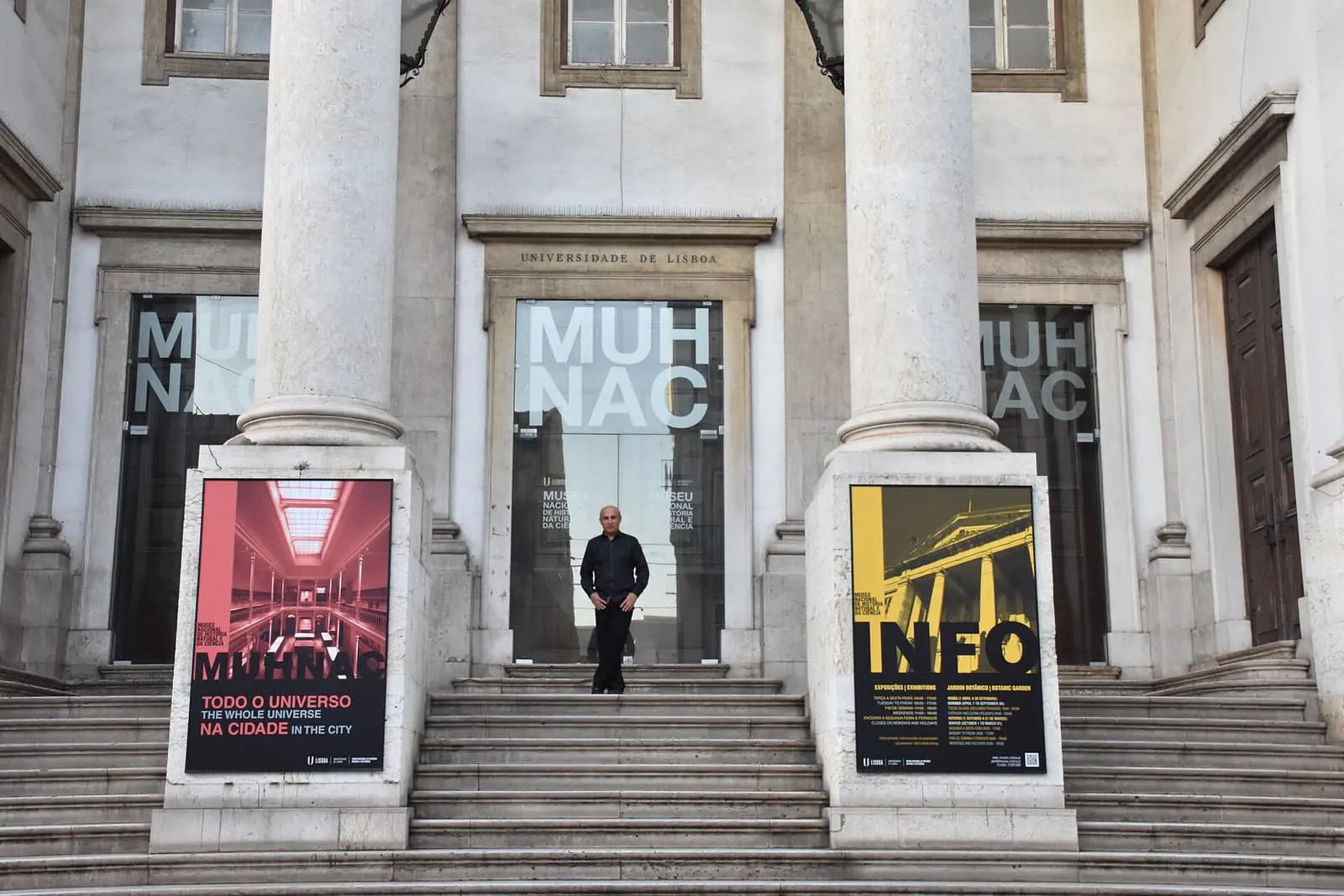
- Location
- Lisboa, Lisboa
- Built
- 2011
The National Museum of Natural History and Science (MUHNAC) is the University of Lisbon’s museum, housed in the former Polytechnic School building on Rua da Escola Politécnica in Lisbon. Established in 2011, it brings together under one institution the collections and heritage of two predecessor entities — the National Museum of Natural History and the University of Lisbon’s Science Museum — while also incorporating the Lisbon Botanical Garden and the Lisbon Astronomical Observatory, which joined the unit in 2012.
Origins and Historical Trajectory
The site where the museum now stands has a long institutional memory. It was successively home to the Noviciado da Cotovia, founded by the Society of Jesus in the early 17th century; the Royal College of Nobles (1761–1837); the Lisbon Polytechnic School (1837–1911); and finally the Faculty of Sciences of the University of Lisbon. This layering of scientific educational functions over more than two centuries explains the density of heritage preserved by the museum.
The natural history component traces back to the Royal Museum of Natural History and Botanical Garden, established in the latter half of the 18th century in Ajuda. Transferred to the Polytechnic School in 1858, the museum was renamed the National Museum of Lisbon and later the National Museum of Natural History. In March 1978, a fire destroyed much of the building and devastated zoological and geological collections — an event that profoundly marked the institution’s history and its subsequent reconstruction.
Collections and Scientific Heritage
MUHNAC’s holdings span two major domains. In natural history, the museum safeguards zoology, physical anthropology, mineralogy, and paleontology collections comprising tens of thousands of specimens, herbaria, and significant human osteological remains used in research. In the history of science, it preserves scientific instruments, physics and chemistry apparatus, teaching models, and archives associated with instruction at the Polytechnic School and Faculty of Sciences, forming one of Portugal’s most important collections of historical instrumentation.
Alongside preservation, the museum conducts intensive research, scientific outreach, and exhibition programming for both school and general audiences. As a university museum with national status, it collaborates with the Portuguese Museum Network and forms part of Portugal’s national museums, sharing with institutions like the National Archaeology Museum the mission to study and promote cultural and natural heritage.
MUHNAC’s trajectory — from its 18th-century roots to its 2011 establishment — vividly illustrates the history of heritage institutions in Portugal and how museums, gardens, and observatories became organized around scientific education and research in Lisbon.
Frequently asked questions
- Where is the National Museum of Natural History and Science located?
- It is located at Rua da Escola Politécnica, no. 56/58, in Lisbon, in the former Polytechnic School building, adjacent to the Lisbon Botanical Garden.
- When was MUHNAC established?
- It was created in 2011 as the University of Lisbon's museum, succeeding the National Museum of Natural History and the Science Museum, whose collections it incorporated.
- What collections does the museum hold?
- It houses zoology, anthropology, mineralogy, and paleontology collections, along with extensive scientific instrumental heritage linked to the former Polytechnic School and the Faculty of Sciences.
Sources
Keep exploring
Heritage nearby
More places to discover from here. Approximate straight-line distances, within 50 km.

Resources for research
Find the sources. Follow the story.
Guides to researching buildings, exploring museum collections and understanding heritage protection.
SIPA
Get to know the architectural inventory, building records and documentary archive.
Read the guideMuseum collectionsMatrizNet
Explore the museum catalogue and records of works, materials, authorship and provenance.
Read the guideHeritage protectionHeritage classification
Understand cultural property categories and the levels of national, public and municipal interest.
Read the guide