Resources
National Museum Soares dos Reis
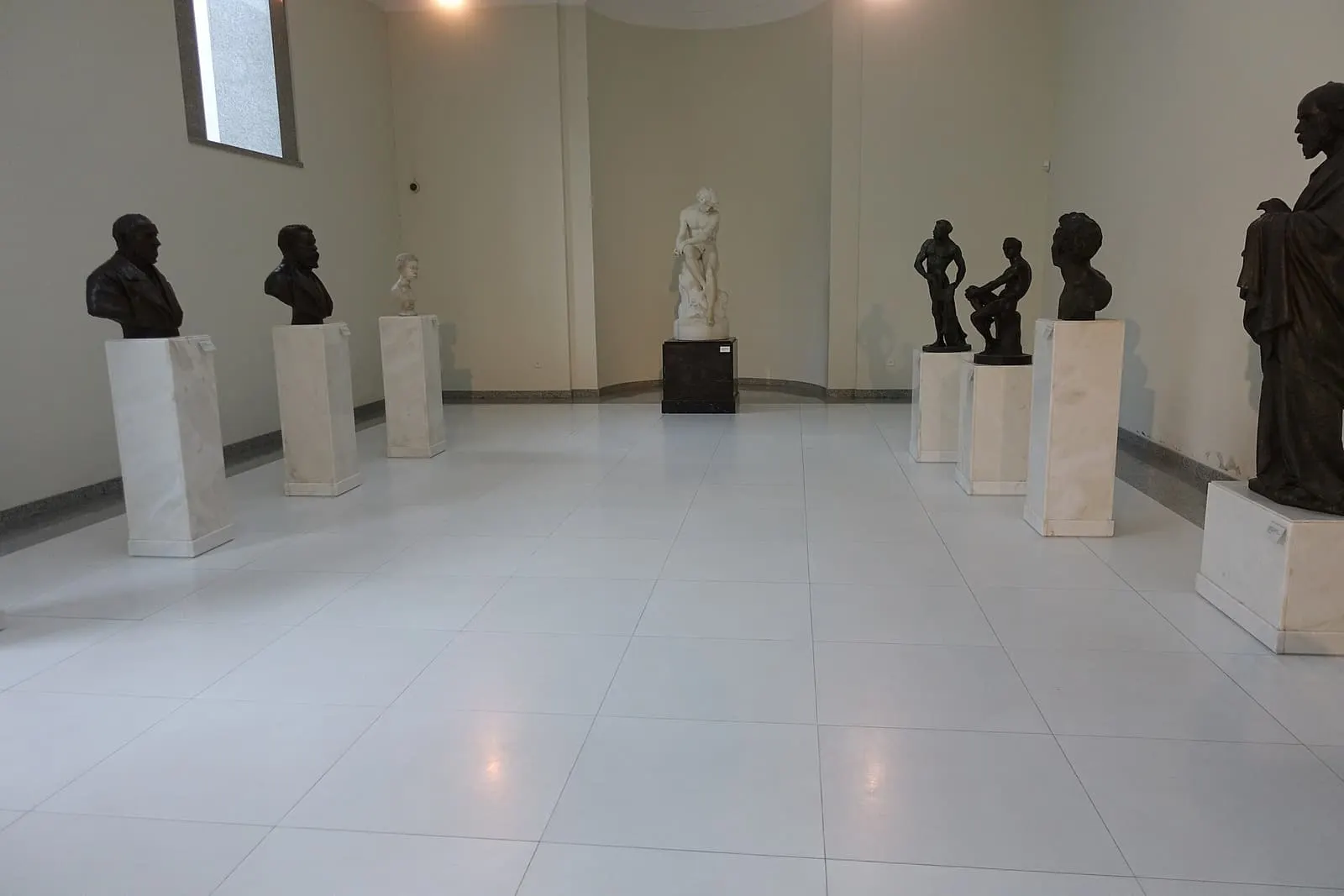
The National Museum Soares dos Reis, located in the Carrancas Palace in Porto, is Portugal's oldest public art museum, founded in 1833.
- Location
- Porto, Porto
- Built
- 1795 (palácio)
- Style
- Neoclássico
The National Museum Soares dos Reis in Porto is Portugal’s oldest public art museum. Its origins date back to 1833 when, during the Civil War and in the aftermath of the Siege of Porto, D. Pedro, Duke of Bragança, ordered the creation of the Museu Portuense de Pinturas e Estampas (Porto Museum of Paintings and Prints), also known as Ateneu D. Pedro IV. The initial collection assembled sacred art from dissolved convents and assets confiscated from absolutist supporters, housed in the former Convent of Santo António da Cidade.
In 1911, already under the Republic, the institution took the name of Porto sculptor António Soares dos Reis, incorporating a significant body of his work. Among the pieces gathered was O Desterrado (1872), a male marble figure that became the museum’s signature piece and one of the peaks of 19th-century Portuguese naturalist sculpture.
From Convent to Carrancas Palace
The move to its current headquarters occurred between 1940-1942 when the state acquired the Carrancas Palace from Santa Casa da Misericórdia do Porto. The neoclassical building had begun construction in 1795 commissioned by the wealthy Morais e Castro family — New Christians with royal privilege for manufacturing gold braid — combining residence and factory. Its sober and monumental style is often attributed to architect Joaquim da Costa Lima Sampaio and follows the tradition of grand urban palaces that marked the city’s 18th-century expansion.
Few Porto buildings encapsulate so much History: Carrancas Palace served as Marshal Soult’s headquarters during the 1809 Napoleonic occupation and later as an occasional residence for the royal family before becoming a museum.
The palace’s adaptation into a museum facility was led by architect Fernandes de Sá, who transformed the former factory workshops into a painting gallery illuminated by skylights. The museum reopened in 1942 with national museum status.
Collections and Mission
The collection exceeds eighteen thousand pieces, covering painting, sculpture, goldsmithery, ceramics, furniture, engraving, and archaeology from the 16th century to contemporary times. 19th-century Portuguese painting is particularly well represented, with works by Henrique Pousão, Silva Porto, Marques de Oliveira, and António Carneiro, alongside a remarkable collection of Portuguese decorative arts including faience, glass, and woodcarving. The sculpture of Soares dos Reis and his disciple Teixeira Lopes provides coherence to the exhibition narrative.
Renovation and Place in the Museum Network
Between 1988 and 2001, architect Fernando Távora led a profound modernization and expansion campaign, equipping the museum with reserves, technical areas, and new routes without distorting the palace’s historic structure. The intervention became a benchmark for Portuguese museography and the so-called School of Porto.
Classified and integrated into the national museums of Portugal system, the National Museum Soares dos Reis holds a central place in the history of national heritage institutions. Due to its antiquity, collection richness, and the architectural quality of its headquarters, it remains one of the primary cultural references in Porto and northern Portugal.
Frequently asked questions
- Why is it considered Portugal's oldest public art museum?
- It was established in 1833 on the initiative of D. Pedro, Duke of Bragança, as the Museu Portuense, becoming the country's first public art museum.
- Where is the museum located?
- In the Carrancas Palace on Rua de D. Manuel II in Porto, a neoclassical building from the late 18th century to which the museum moved in 1942.
- What is the most emblematic work in the collection?
- The marble sculpture O Desterrado (The Exile) by António Soares dos Reis from 1872, which gave the institution its name in 1911.
Sources
Keep exploring
Heritage nearby
More places to discover from here. Approximate straight-line distances, within 50 km.
Resources for research
Find the sources. Follow the story.
Guides to researching buildings, exploring museum collections and understanding heritage protection.
SIPA
Get to know the architectural inventory, building records and documentary archive.
Read the guideMuseum collectionsMatrizNet
Explore the museum catalogue and records of works, materials, authorship and provenance.
Read the guideHeritage protectionHeritage classification
Understand cultural property categories and the levels of national, public and municipal interest.
Read the guide