Monuments
Buçaco Palace
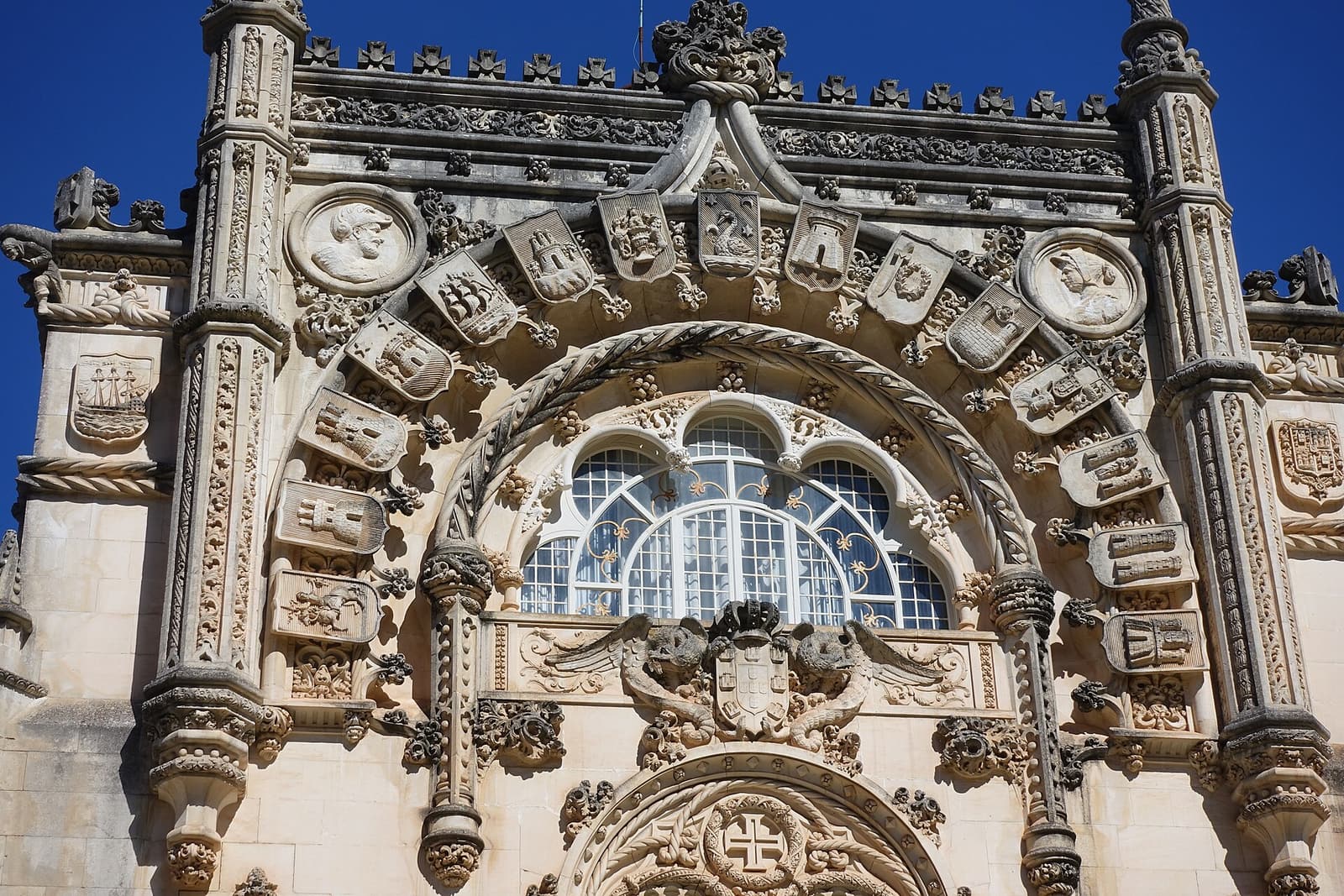
Buçaco Palace, a neo-Manueline palace-hotel by Luigi Manini in Buçaco Forest, Luso (Mealhada), commissioned by the Portuguese Royal House.
- Location
- Luso, Aveiro
- Built
- 1888–1907
- Style
- Neomanuelino
Amidst the ancient cedars and hermitages of a former Carmelite desert in Buçaco National Forest stands one of Portuguese Romanticism’s most singular buildings: Buçaco Palace. Conceived as a royal hunting lodge and summer residence, it transformed—even before fulfilling that destiny—into one of the country’s most celebrated hotels, a scenographic synthesis of a nation gazing wistfully at its Age of Discoveries past.
An Unfinished Royal Commission
Construction began in 1888 under royal initiative, continuing until 1907 during the reign of King Carlos I, who intended it as a hunting retreat. History, however, denied the crown its planned occupancy: the 1910 Republican revolution and 1908 regicide dismantled the royal project. Completed on the eve of monarchy’s fall, the palace was leased and converted into a hotel in 1917—a vocation it maintains today.
The location was no accident. The palace stands adjacent to the former Santa Cruz do Buçaco Convent, founded in 1628 by the Discalced Carmelites, whose walled enclosure and scattered hermitages imbue the forest with profound spiritual symbolism. Building a neo-Manueline palace here inscribed dynastic memory upon one of Portugal’s landscape sanctuaries.
The Scenographic Genius of Luigi Manini
The initial design belongs to Italian Luigi Manini, set designer at São Carlos Theatre before establishing himself as an architect. Manini didn’t create a historical building but a theatrical evocation of Manueline style: turrets, rope-twist windows, armillary spheres, and filigree portals openly quoting Belém Tower and Jerónimos Monastery. This is second-generation Manueline—free and operatic—serving a national narrative.
Buçaco doesn’t imitate the 16th century: it stages it. This is stage architecture rendered in stone, where every twisted column functions less as structural element than as scenic cue.
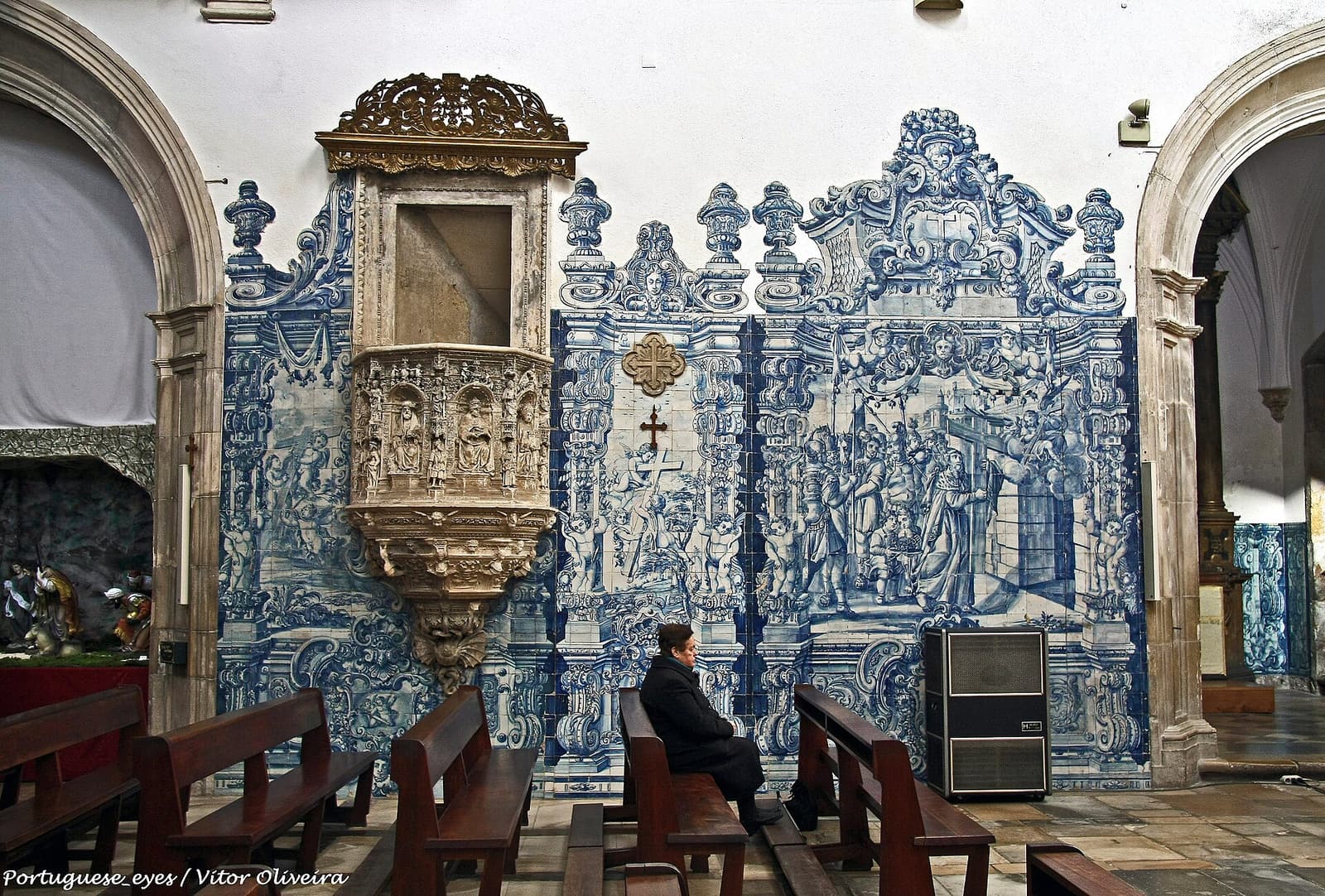
After Manini, Nicola Bigaglia, José Alexandre Soares, and Manuel Joaquim Norte Júnior intervened, the latter designing the adjacent Casa dos Brasões. Interiors feature stucco mimicking ribbed vaults, early 20th-century woodcarving, painting, sculpture, and especially Jorge Colaço’s remarkable azulejo panels depicting naval expeditions and the 1810 Battle of Buçaco.
Between Palace and Luso Village
Buçaco Palace lies in Luso parish (Mealhada municipality, Aveiro district), within the Buçaco Foundation-managed national forest. Proximity to Luso’s thermal waters and the mystical forest—nominated as World Heritage as part of the Carmelite Desert and Buçaco ensemble—established this as an elite destination by the early 20th century.
As part of Portugal’s constellation of royal residences, the palace dialogues with other monarchical Romantic works like Sintra’s Pena National Palace, sharing scenographic flair and historical quotation. It belongs to the broader universe of royal palaces and residences marking Portuguese territory.
Classified as a Property of Public Interest in 1996 and as a National Monument since 2018, Buçaco Palace remains a rare case: a royal palace that was never truly royal, and a hotel that is, above all, a monument.
Frequently asked questions
- Who designed Buçaco Palace?
- The initial design was by Italian set designer and architect Luigi Manini (1848–1936), later continued by Nicola Bigaglia, José Alexandre Soares, and Manuel Joaquim Norte Júnior.
- Is Buçaco Palace a national monument?
- Yes. Classified as a Property of Public Interest in 1996, it was elevated to National Monument status in 2018.
- Can Buçaco Palace be visited?
- The building now operates as a five-star hotel in the heart of Buçaco National Forest, remaining accessible to guests and visitors.
Sources
Keep exploring
Heritage nearby
More places to discover from here. Approximate straight-line distances, within 50 km.