Typologies
Pillories
Portuguese pillories: stone columns marking municipal autonomy, instruments of justice and symbols of civic power.
- Style
- Gótico, Manuelino, Renascentista
The pillory is one of the most distinctive features of Portuguese urban landscapes: a stone column — rarely wooden — erected in a public space, usually at the center of the main square, facing the town hall or the parish church. Despite its modest scale, it was the most eloquent symbol of municipal dignity, encapsulating in a single structure the ideas of justice, jurisdiction, and autonomy that distinguished a self-governing community.
Symbol of Municipal Autonomy
Classical historiography, from Alexandre Herculano to Teófilo Braga, traces the pillory back to the Roman columna moenia, which marked cities endowed with certain privileges. In Portugal, its spread accompanied the rise of medieval municipalities: having a pillory equated to possessing a charter and, with it, the right to administer justice within its jurisdiction. Not only royal towns displayed them — major landowners, bishops, chapters, and monasteries also erected them in their domains as tangible proof of their jurisdictional authority.
More than a decorative monument, the pillory was a functioning civic space. Official proclamations were read there, royal edicts were announced, and rents and properties were auctioned publicly. The column physically marked the administrative heart of the community.
Unlike a castle or a cathedral, the pillory does not protect or celebrate: it commands. It is the stone embodiment of a political idea — that this land governs itself and has the right to judge its own.
Justice and Public Punishment
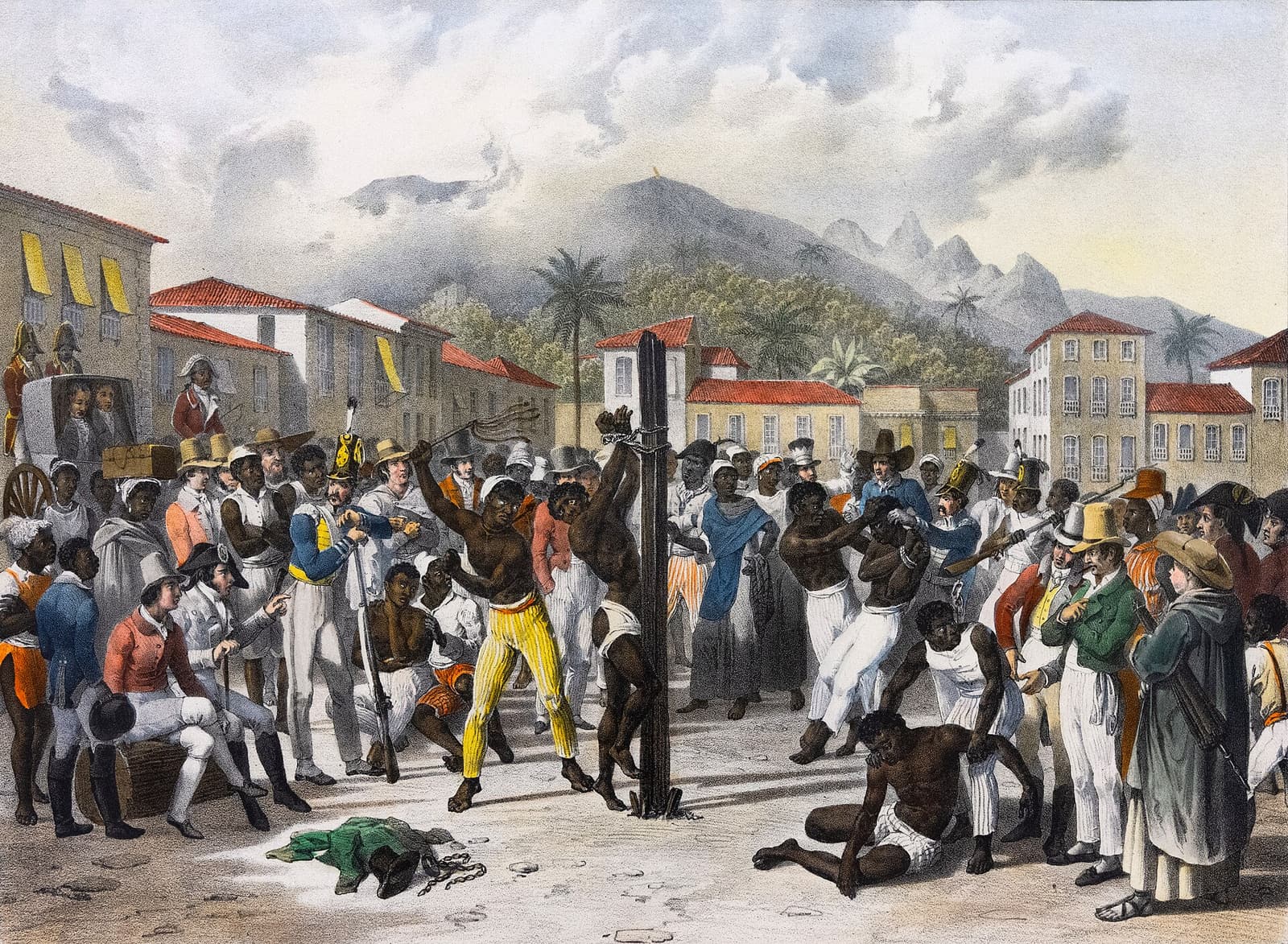
The darkest aspect of this structure is its penal function. The pillory was the site of public shaming: those convicted of minor offenses were bound there, exposed to public scorn, sometimes fastened with rings or chains still visible on some shafts today. Capital executions typically took place at the gallows, but the ritual of humiliation often began at the foot of the pillar. It was precisely this symbolic association with oppression that, after the establishment of liberalism in 1834, led to the deliberate destruction of many pillories, then seen as emblems of arbitrary power to be abolished.
Types and Artistic Styles
Structurally, a pillory consists of three elements: a stepped base, a shaft or column, and a finial. The artistic diversity of the typology is expressed primarily in the finial, classified by researchers into variants such as the gaiola (cage), roca (distaff), pinha (pinecone), and bola (sphere). Stylistically, Romanesque and Gothic examples exist, but the pinnacle of the typology coincides with the reign of King Manuel I and his sweeping charter reforms in the early 16th century: many towns seized the opportunity to erect pillories carved in the exuberant language of the Manueline style, featuring helical twists, armillary spheres, and the cross of the Order of Christ — decorative developments inherited from Gothic architecture in Portugal and already embracing the early Renaissance.
This ornamental richness turned some pillories into true urban sculptures. The pillory of Évora, in Largo de Santa Clara, ranks among the most notable examples, but nearly every historic town preserves its own, often as the oldest object still in situ in its square. Like the remarkable Domus Municipalis of Bragança, the pillory belongs to the material testimonies of Portuguese municipalism, helping to trace, in public space, the long history of local freedoms.
Heritage recognition for this typology came early and comprehensively: Decree No. 23,122 of October 11, 1933, mandated the classification as Heritage of Public Interest for all unprotected pillories across the national territory, safeguarding en masse a collection that, due to its dispersion and quantity, would have been difficult to preserve individually. This and other built heritage categories can be explored through the typologies of built heritage.
Frequently asked questions
- What was a pillory?
- A stone column erected in a public place, typically in the main square of a town, symbolizing the jurisdiction and autonomy of the municipality, where convicts were publicly displayed and punished.
- Why are there so many Manueline-style pillories?
- The charter reforms led by King Manuel I in the early 16th century prompted numerous towns to erect or rebuild their pillories in stone to mark their new charters, multiplying examples carved in the decorative Manueline style.
- Are pillories protected by law?
- Yes. Decree No. 23,122 of October 11, 1933, collectively classified all remaining unprotected pillories across the national territory as Heritage of Public Interest.