Monuments
Manueline Pillories of Portugal
The Manueline pillories of Portugal: carved stone columns from the early 16th century as symbols of municipal power and the royal taste of King Manuel I.
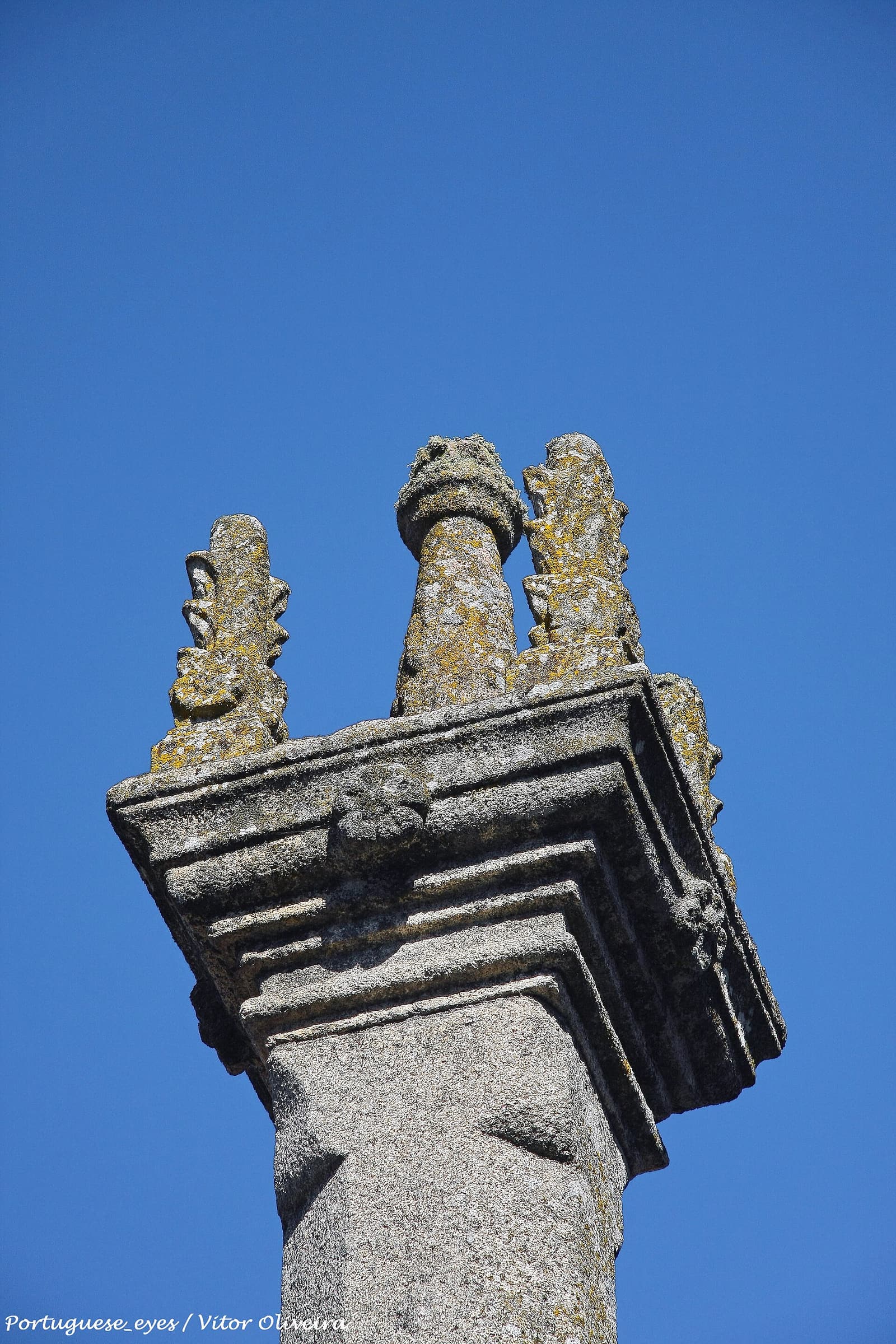
- Built
- século XVI
- Style
- Manuelino
The Manueline pillories are among the most expressive legacies of King Manuel I’s reign (1495–1521) in Portugal’s urban landscape. Scattered across town squares, these stone columns combined two inseparable dimensions of ancient municipal life: they were both symbols of a town’s autonomy and visible instruments of the justice that autonomy conferred. The artistic peak of this typology coincided with the early 16th century, when royal taste and the Crown’s administrative reforms converged to multiply examples carved in the exuberant language of the Manueline style.
The Charter Reforms and Royal Taste
The great wave of Manueline pillory construction was no accident. Between 1497 and 1520, King Manuel I conducted a sweeping reform of the forais—charters that established the rights, taxes, and jurisdictions of each municipality—replacing hundreds of medieval documents with new royal charters. Many towns seized the occasion to erect or renew their pillories, marking the new charter in stone. The column ceased to be merely a site of public punishment and became a monument of prestige, displaying the monarch’s emblems.
Hence the recurrence on these pillories of the armillary sphere—King Manuel I’s personal emblem—and the cross of the Order of Christ. More than mere ornamentation, these symbols inscribed the presence and centralization of royal power at the heart of municipal space, linking local freedom to the Crown’s authority. The pillory thus became a political statement in stone.
Decorative Language and Notable Examples
Structurally, a pillory consists of a stepped base, shaft, and finial. It is in the shaft and finial that the Manueline style leaves its mark: helical twists making the column appear to coil upon itself, ropes and knots evoking the maritime themes of expansion, scales, pearls, thistles, and vegetal elements treated with naturalism. The finial, classified by researchers into variants like the cage, spindle, or pinecone, often culminates in an armillary sphere.
Among the best-documented examples is the pillory of Vila Nova de Foz Côa, erected in 1514 on the occasion of the town’s third charter, with an octagonal base, carved shaft, and finial featuring an armillary sphere crowned by a fleur-de-lis—classified as a National Monument since 1910. In Elvas, the 16th-century marble pillory, with iron arms shaped like dragon heads, was dismantled in 1872 and reconstructed in 1942 from original pieces preserved in the municipal museum. These two cases illustrate opposite yet frequent fates: survival in situ and later reconstruction.
The Case of Évora and the Typology’s Fate
The pillory of Évora, which stood in what is now Praça do Giraldo near the old town hall, shared the fate of many Alentejan counterparts: it was removed during the profound urban transformations of the 19th century. After the establishment of liberalism in 1834, the pillory came to be seen as an emblem of arbitrary power to be abolished, and numerous examples were deliberately demolished.
This wave of destruction explains why many Manueline pillories survive today only as fragments, relocated or reconstructed. Heritage recognition came belatedly to compensate for these losses: Decree No. 23,122 of 1933 mandated the blanket classification of all unprotected pillories across the national territory. For an overview of the typology, its variants, and its civic function, see the page dedicated to pillories.
Frequently asked questions
- What distinguishes a Manueline pillory from others?
- The Manueline pillory is characterized by its twisted, helical shaft and decorative repertoire featuring ropes, spheres, scales, pearls, and thistles, often crowned with an armillary sphere or the cross of the Order of Christ—emblems of King Manuel I's reign.
- Why do many pillories date from the early 16th century?
- The charter reforms promoted by King Manuel I between 1497 and 1520 led numerous towns to erect or remake their pillories in stone to mark the new charter, multiplying examples crafted in the Manueline style.
- Does the Manueline pillory of Évora still exist?
- Not in its original location. The pillory of Évora, which stood in what is now Praça do Giraldo, was removed during 19th-century urban transformations, like many Alentejan counterparts suppressed after liberalism.