Places
Redondo
Redondo, a walled town in Central Alentejo, Évora district: a Dinis-era castle, medieval walls, and one of Portugal's most vibrant pottery traditions.
- Location
- Redondo, Évora
- Built
- 1318
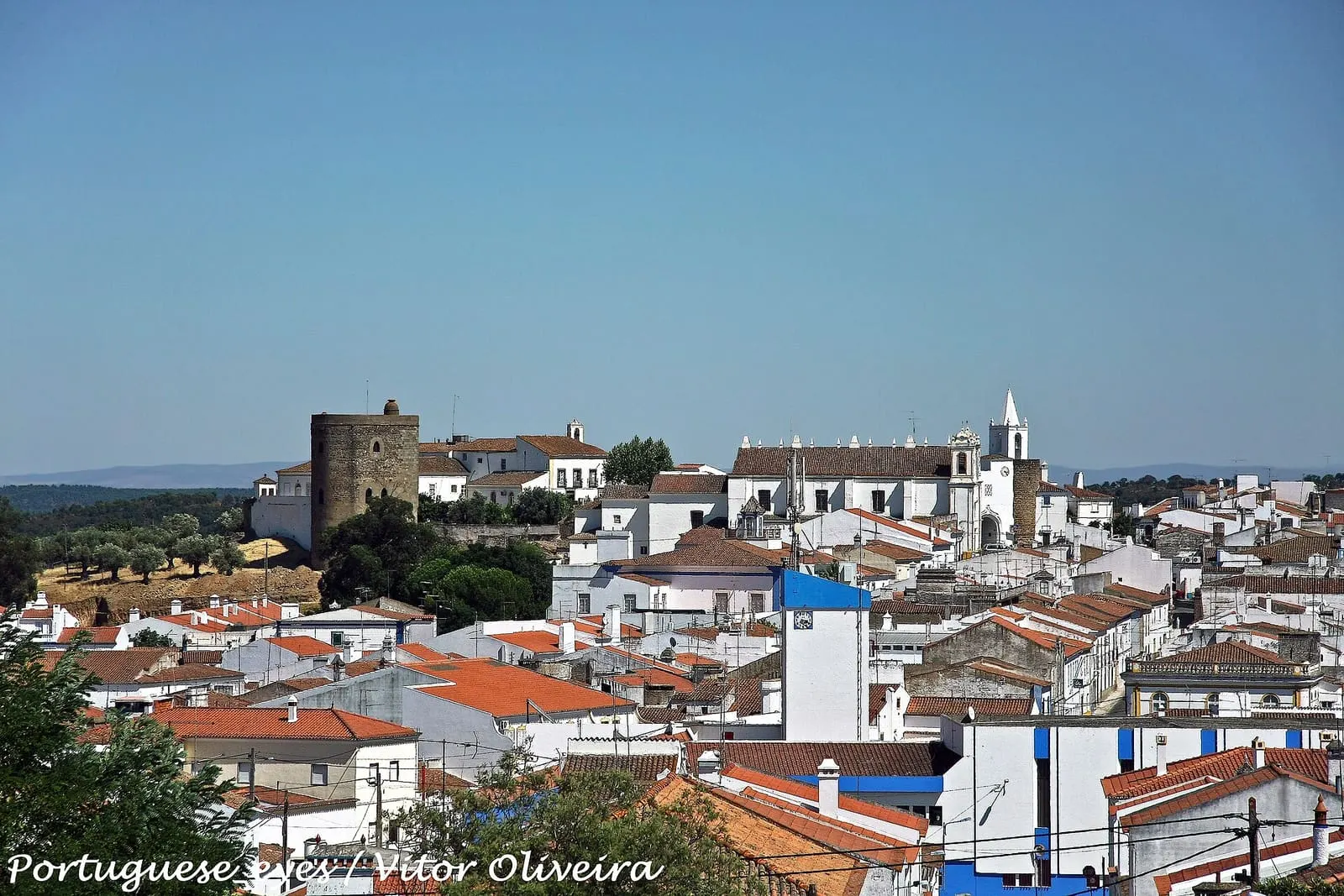
In the shadow of Serra d’Ossa, halfway between Évora and the Spanish border, Redondo is one of those Alentejo towns that reveal themselves from afar: whitewashed houses cling to the hillside, the castle tower stands out against the sky, and all around stretches a plain of cork oaks and vineyards. It’s a small place — just over six thousand inhabitants in the entire municipality — but with a firm place in the history and material culture of Alentejo.
A town created by royal decree
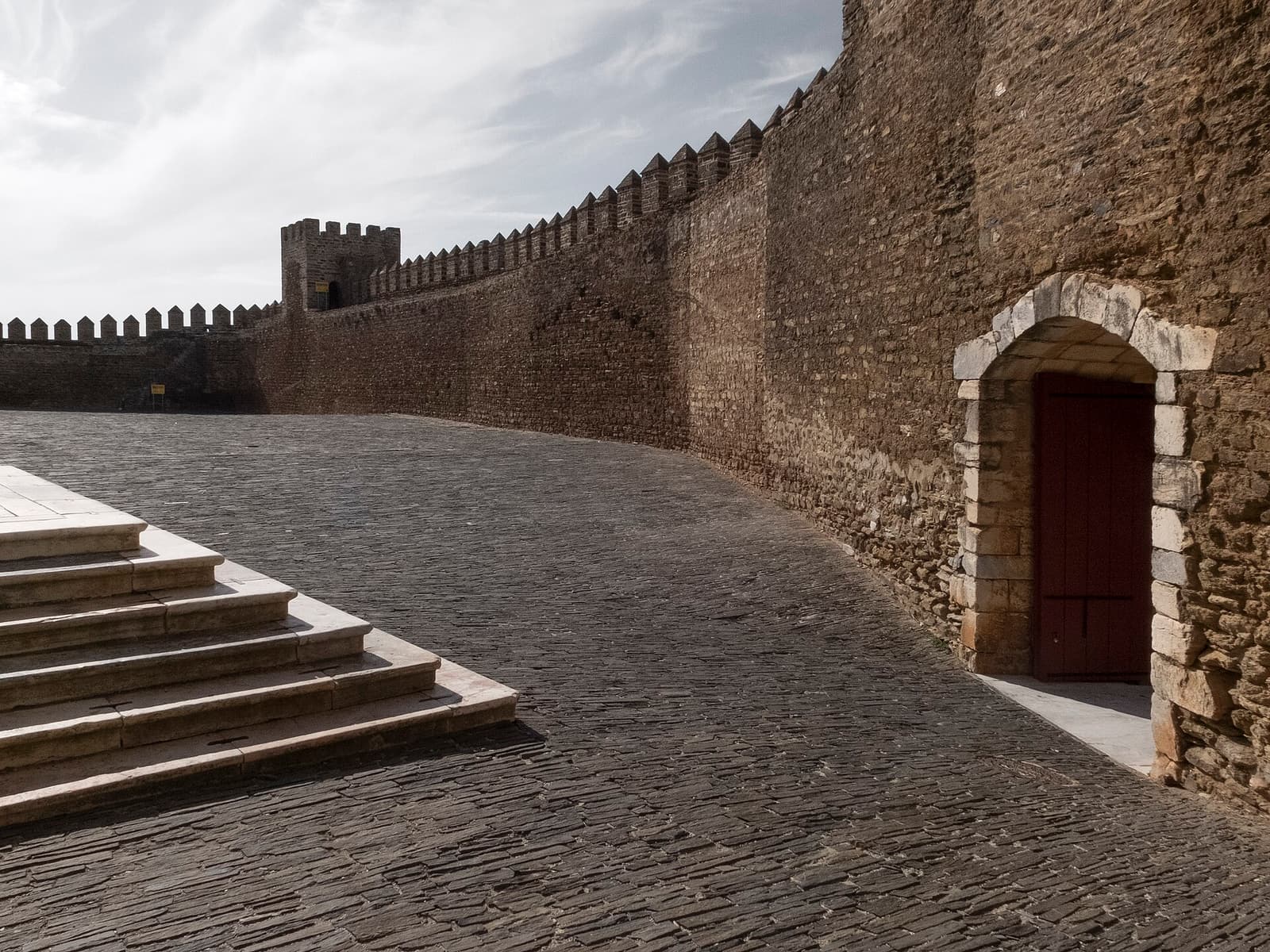
Unlike many settlements that grew slowly around a castle, Redondo was born from a deliberate political decision. In 1318, during the civil war between King Dinis and his heir, the future Afonso IV, the king carved out parcels from the municipalities of Evoramonte and Monsaraz and created, almost from nothing, a new loyal municipality. He granted it a charter that same year and ordered the reconstruction of the castle, raising the keep and the curtain walls that still encircle the old town today.
The name, according to local tradition, comes from a round rock — a rocky outcrop that marked the territory’s boundaries and around which the first walls were built. The town also received a renewed charter from King Manuel I in 1516 and, in 1500, was granted by Manuel to the hero of Arzila, Vasco Coutinho, giving rise to the title of Count of Redondo.
The castle and medieval walls
The network of Alentejo castles includes Redondo as a characteristic example of the fortifications King Dinis ordered to be reorganized along the kingdom’s eastern border. The walls, classified as a National Monument since 1946, preserve significant sections of ramparts, towers, and gates, with the keep dominating the townscape.
Redondo belongs to a constellation of Alentejo strongholds — Evoramonte, Monsaraz, Vila Viçosa, Estremoz — conceived not as isolated castles but as a coordinated defensive line controlling the roads to Castile.
Within the walls, narrow sloping streets preserve whitewashed houses, chapels, and the memory of a town that, expanding from the 15th century onward, overflowed the walls and occupied the surrounding outskirts.
Capital of clay
If there’s one thing that sets Redondo apart nationally, it’s pottery. The town is part of Portugal’s ceramic localities network and maintains a centuries-old tradition of red clay, where plates, jugs, pitchers, and jars are brush-painted with floral motifs, rustic landscapes, animals, and scenes of peasant life — a simple and recognizable decorative language.
This production, now sustained by family workshops and safeguarding initiatives, makes Redondo a case study in Alentejo ceramic craftsmanship. Unlike the more refined pottery of other centers, Redondo’s wares were born utilitarian — for water, oil, the table — and only later became collectible objects of identity.
Visiting Redondo
Visitors will find, besides the castle, the Igreja Matriz de Nossa Senhora da Anunciação, the pillory, and, nearby, the remarkable Convento de São Paulo in Serra d’Ossa, adorned with 17th-century tiles. A few kilometers away stretches the vast wine region that made Redondo’s name known for its reds. It’s a discreet gateway to Central Alentejo, a short distance from the historic center of Évora, a World Heritage site.
Frequently asked questions
- Where is Redondo located?
- Redondo is a town in Central Alentejo, Évora district, situated on the southern slopes of Serra d'Ossa, about 35 km east of the city of Évora.
- Why is Redondo famous for pottery?
- Redondo preserves one of the country's oldest and most vibrant pottery traditions, with red clay pieces decorated with floral and rustic motifs, still produced in local workshops.
- Who founded the municipality of Redondo?
- The municipality was created by King Dinis, who granted it a charter in 1318, combining territories from Evoramonte and Monsaraz; the castle was rebuilt during the same period.
Sources
Keep exploring
Heritage nearby
More places to discover from here. Approximate straight-line distances, within 50 km.