Archaeology
Roman Ruins of Cerro da Vila
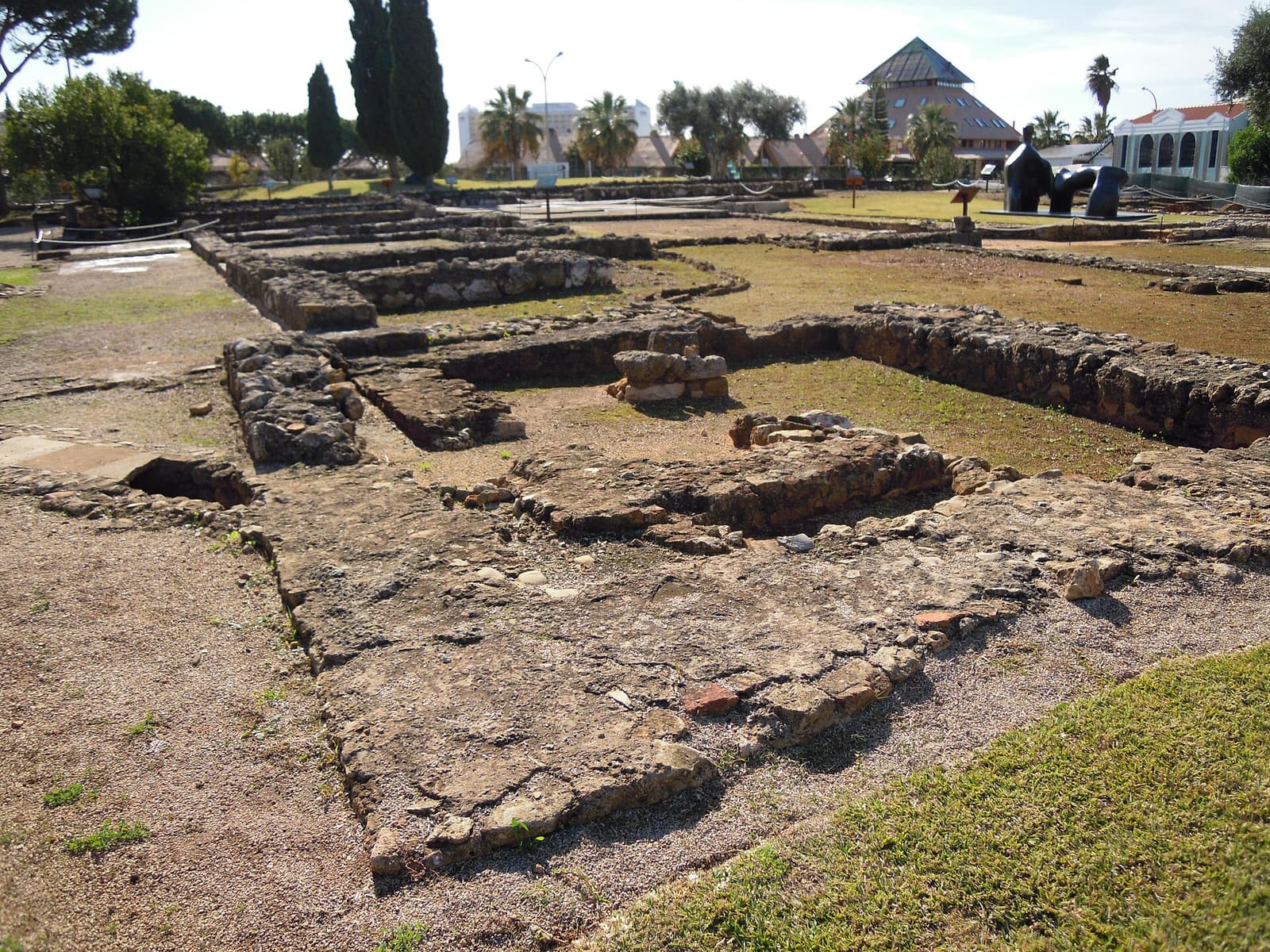
Roman Ruins of Cerro da Vila, a Roman villa and port station in Vilamoura (Quarteira, Loulé), featuring baths, fish-salting tanks, and an on-site museum.
- Location
- Vilamoura (Quarteira, Loulé), Faro
- Built
- Séc. I a.C. – séc. XI d.C.
- Style
- Arquitetura romana
The Roman Ruins of Cerro da Vila are one of the richest archaeological sites on the Algarve coast, located near the current marina of Vilamoura, in the parish of Quarteira, municipality of Loulé. Unlike purely agricultural villae inland, Cerro da Vila developed as a coastal port and industrial settlement, linking rural production with long-distance maritime trade. The complex was part of the territory of Ossonoba (modern-day Faro), the capital of the far south of Lusitania, and thrived thanks to its privileged connection with Mediterranean routes.
A maritime station between land and sea
The site was organized around two large residences, the main one facing the ancient waterway that served as a port. Fragments of polychrome mosaic floors, marble friezes, and painted stuccos can still be seen, testifying to the comfort and taste of their owners. A bathhouse with an atrium and tanks completed the residential core, reflecting the full adoption of Roman urban habits in a rural property.
The true uniqueness of Cerro da Vila, however, lies in its productive vocation. Near the residences were fish-salting tanks, where preserves and, above all, the famous garum—a fermented fish sauce highly prized throughout the Empire and exported as a luxury condiment—were prepared. This industry, linked to coastal fisheries, made the site a link in the vast economic chain connecting southern Hispania to Rome.
The presence of a river or estuary port, now silted up, reminds us that the geography of the Algarve coast was very different in antiquity: the sea and the ria extended inland, turning Cerro da Vila into a true embarkation platform.
From Roman villa to Islamic occupation
The occupation of the site was remarkably long. The earliest Roman remains date back to the turn of the era, but the peak of the station was between the 1st and 4th centuries AD. After the end of Roman rule, the site was not abandoned: it experienced a Visigothic phase and later an Islamic presence documented by a set of silos and ceramic materials from the 8th to 11th centuries. This continuity makes Cerro da Vila a privileged observatory of the transformations that the Algarve underwent over more than a millennium.
The necropolis associated with the site included elaborate funerary monuments, among them a mausoleum with a quadrangular plan, interpreted as a funerary tower or columbarium, whose foundations are still preserved. These funerary remains, alongside the residential and industrial structures, offer a rare insight into the life, economy, and death of a Roman coastal community.
Discovery, museum, and context
The site was identified in 1963 by archaeologist José Farrajota, who immediately recognized the importance of the remains emerging on the land where the Vilamoura resort would later be built. Subsequent excavation campaigns revealed the complexity of the settlement and led to the creation of an archaeological station and an on-site museum, where mosaics, coins, ceramics, glass, and architectural elements recovered over the decades are displayed.
Cerro da Vila dialogues with other major testimonies of the Romanization of the Algarve, such as the Roman villa of Milreu, in Estoi, famous for its mosaics and the later Christianized temple. Together, both sites enrich the broader understanding of Roman Portugal and its archaeology and Roman archaeology in the national territory. The visit also fits into the heritage trail of the municipality of Loulé and the discovery of the Algarve beyond its beaches.
Frequently asked questions
- Where are the Roman Ruins of Cerro da Vila located?
- They are situated in Vilamoura, in the parish of Quarteira, municipality of Loulé, district of Faro, near the marina, on the central coast of the Algarve.
- What can be visited at Cerro da Vila?
- Remains of two residences, a bathhouse (thermae), fish-salting tanks, port structures, and a necropolis with a mausoleum are preserved, along with an on-site museum displaying finds from the excavations.
- From which period do the ruins of Cerro da Vila date?
- The main occupation dates from the 1st to the 4th century AD, but the site was almost continuously occupied, with Visigothic and Islamic phases extending until around the 11th century.
Sources
Keep exploring
Heritage nearby
More places to discover from here. Approximate straight-line distances, within 50 km.