Monuments
Roman Ruins of Conímbriga
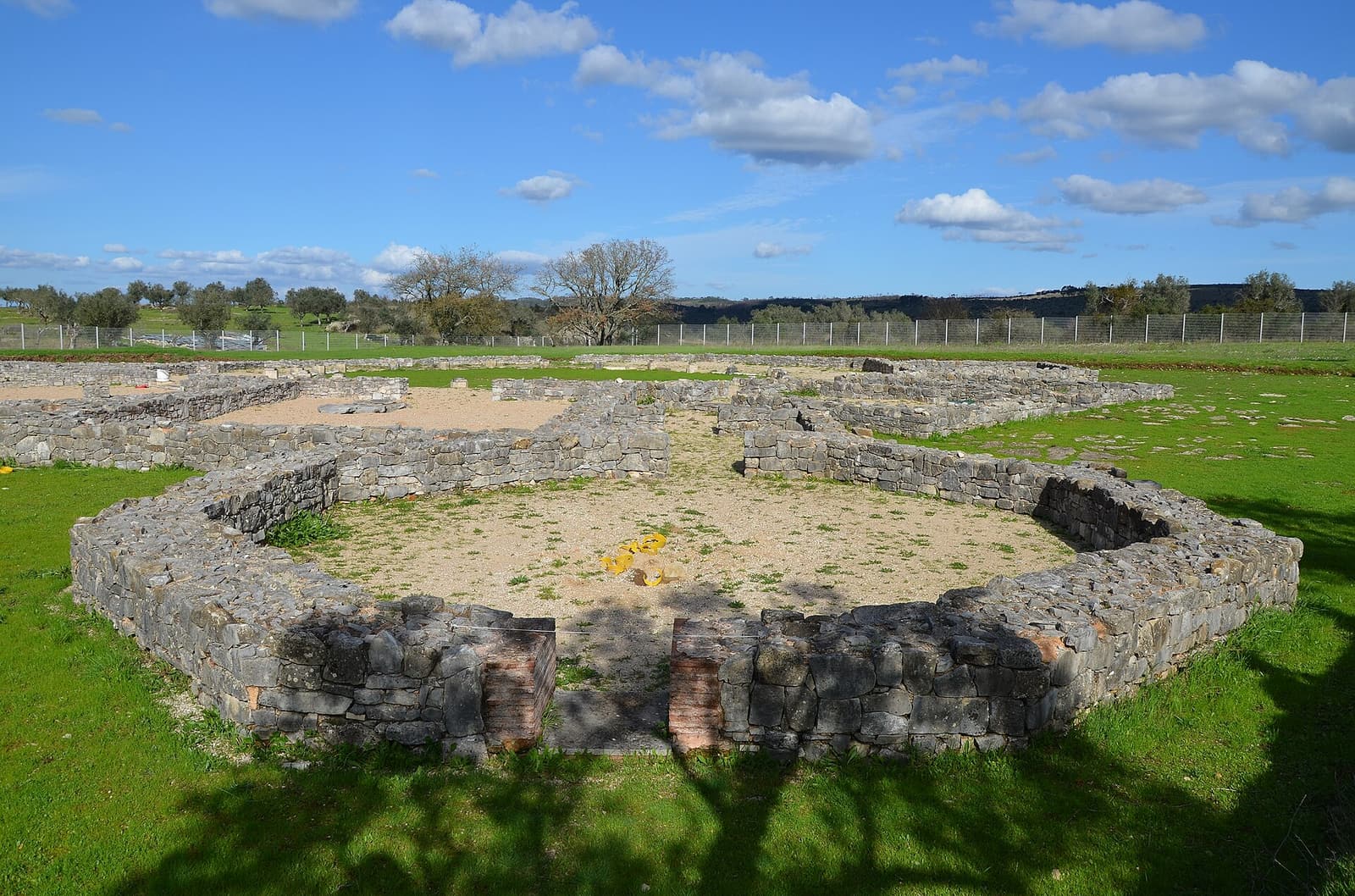
The Roman Ruins of Conímbriga, in Condeixa-a-Nova, are the largest excavated Roman city in Portugal, renowned for the mosaics of the House of Fountains.
- Location
- Condeixa-a-Velha, Coimbra
- Built
- Século I a.C. – século V d.C.
- Style
- Romano
The Roman Ruins of Conímbriga, in the parish of Condeixa-a-Velha (municipality of Condeixa-a-Nova, Coimbra district), constitute the largest excavated Roman city in Portugal and the country’s most thoroughly studied archaeological site. Classified as a National Monument since 1910, Conímbriga offers an exceptionally clear insight into urban life in the province of Lusitania, from its aristocratic domus to its baths, forum, and walls erected during times of crisis.
From pre-Roman origins to the Augustan city
The settlement that gave rise to Conímbriga dates back to the Iron Age, occupying a spur between two watercourses—a naturally defensible position where important routes intersected. The toponym itself, with the pre-Latin root briga (“fortified settlement”), reveals this indigenous substrate. Romanization transformed it into a full-fledged city: it was particularly during the time of Emperor Augustus, at the turn of the 1st century BC to the 1st century AD, that Conímbriga received its first major monumental program, including the forum, baths, and the orthogonal street grid that can still be walked today.
Over the following centuries, the city prospered, integrated into the commercial and administrative networks of the Empire. Its location on the road linking Olisipo (Lisbon) to Bracara Augusta (Braga) secured it a prominent place in the territory that would later give its name to Coimbra—the neighboring Aeminium, whose heritage can be explored on the page of the Old Cathedral of Coimbra and that of the heritage ensemble of Coimbra.
The House of Fountains and the art of mosaic
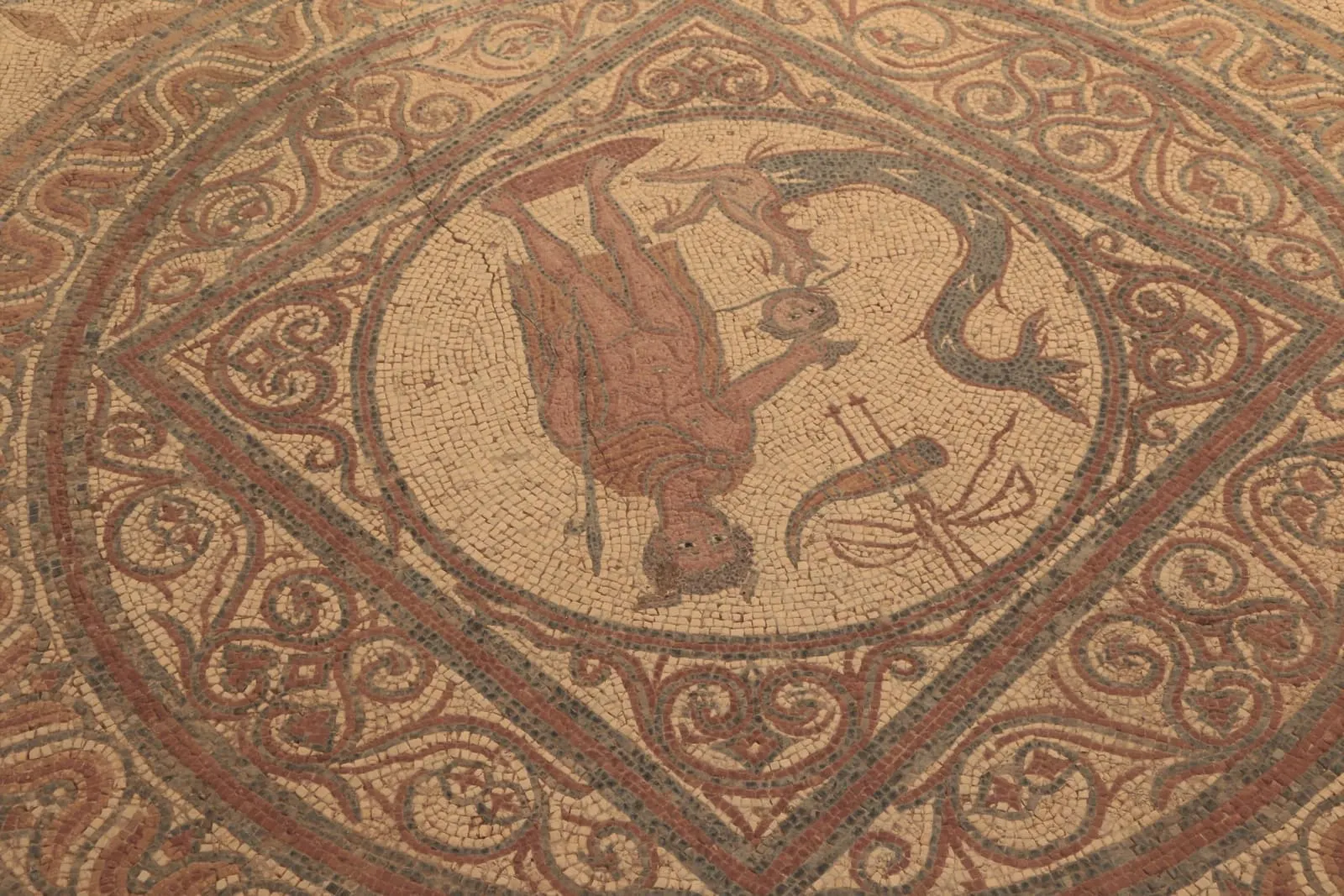
The emblem of Conímbriga is the House of Fountains, a domus of approximately 569 m² organized around a peristyle garden featuring a hydraulic system with hundreds of fountains. Its floors preserve some of the most remarkable Roman mosaics in the Iberian Peninsula, with hunting scenes, mythological figures—Perseus and the Gorgon, Bellerophon, the seasons—and a bestiary of birds and marine animals. Excavated from 1939 onward, the house is now protected by a roof that allows visitors to appreciate in situ the chromatic and narrative richness of these stone carpets.
The irony of Conímbriga is that what destroyed it also preserved it: the late wall, hastily erected, sealed streets and houses that would otherwise have been lost, leaving us with a snapshot of the city at the moment of its crisis.
The late wall and the decline
Faced with the instability of the late Empire and the threat of invasions—the Suebi attacked the city between 465 and 468 AD—the inhabitants built a powerful defensive wall, repurposing blocks, columns, and fragments of older buildings. This belt, which even cut the city in half and sacrificed part of the House of Fountains itself, confined the population to a smaller, more defensible area. Conímbriga was not abandoned immediately but lost prominence to Aeminium and ceased to be mentioned in sources after the 9th century.
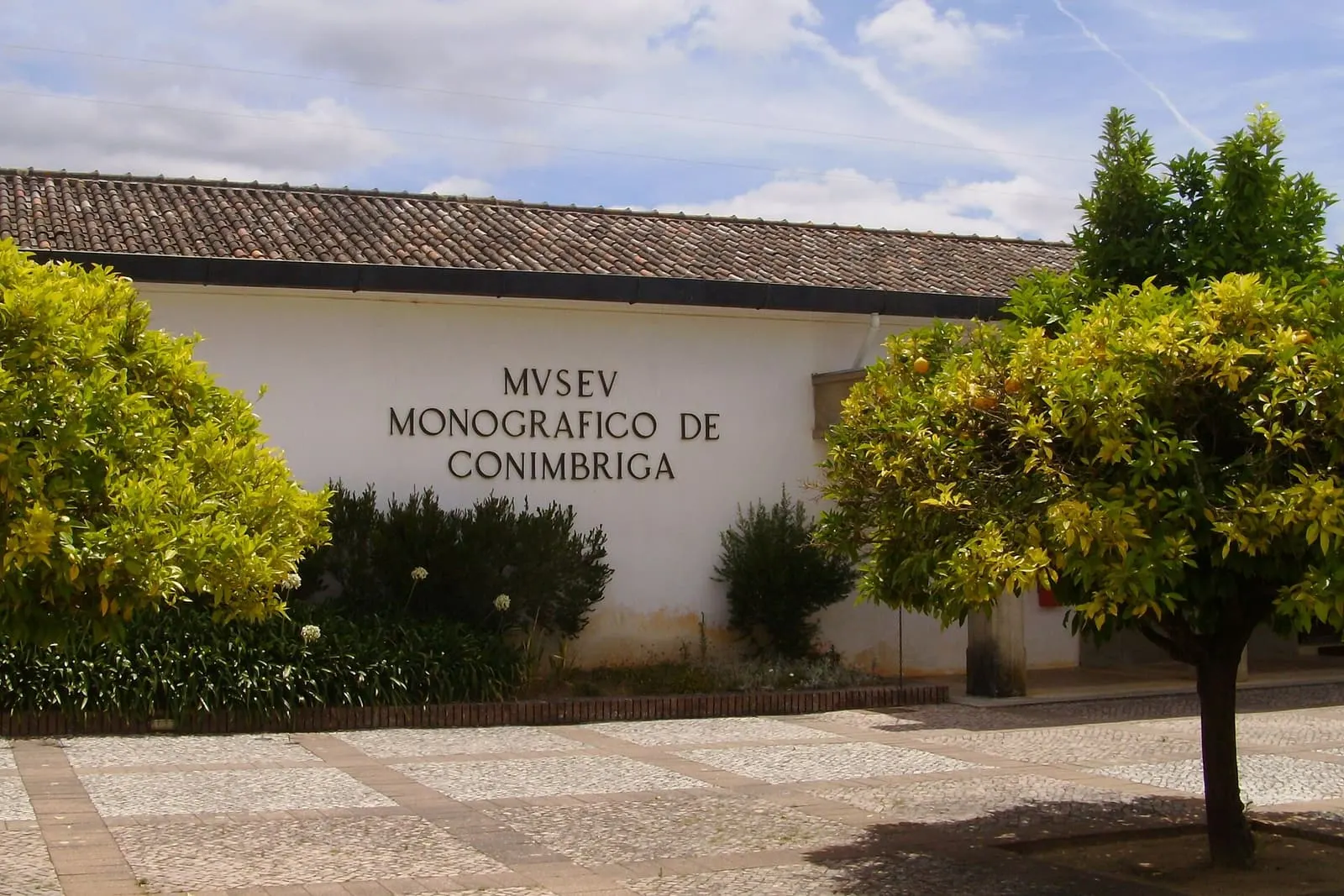
The ruins, known since the 16th century, began to be studied systematically from 1873 onward by the Instituto de Coimbra, with campaigns intensifying in the 20th century. Adjacent to the site is the National Museum of Conímbriga, which houses mosaics, sculptures, coins, and everyday objects. To contextualize this site within the broader panorama of Roman presence, see the page dedicated to Roman archaeology and the ensemble of monuments of Portugal.
Frequently asked questions
- Where are the Roman Ruins of Conímbriga located?
- They are situated in the parish of Condeixa-a-Velha, in the municipality of Condeixa-a-Nova, Coimbra district, about 16 km south of the city of Coimbra.
- What is the House of Fountains?
- It is the most famous domus in Conímbriga, with approximately 569 m² of polychrome mosaic flooring and a central garden featuring hundreds of water fountains, dating from the Severan period (2nd-3rd centuries AD).
- Is Conímbriga the largest Roman city in Portugal?
- It is the largest excavated Roman city in Portugal and the most thoroughly studied, although it is estimated that only about 10% of the urban area has been uncovered.
Sources
Keep exploring
Heritage nearby
More places to discover from here. Approximate straight-line distances, within 50 km.