Monuments
Old Cathedral of Coimbra
The Old Cathedral of Coimbra, in the Almedina, is Portugal's most intact Romanesque cathedral, erected in the 12th century and designated a National Monument…
- Location
- Coimbra, Coimbra
- Built
- c. 1146–1184
- Style
- Românico
The Old Cathedral of Coimbra, or Cathedral of Santa Maria, stands in the heart of the Almedina, the old upper town of Coimbra, and is widely regarded as Portugal’s most intact Romanesque cathedral. Built during the 12th century, it remarkably preserved its medieval design, escaping the profound transformations that altered almost all Portuguese cathedrals of the same period. It has been classified as a National Monument since 1910 and is part of the University of Coimbra — Alta and Sofia site, inscribed on the World Heritage List.
A Cathedral of the Reconquista
Construction began around 1146, under the patronage of Afonso Henriques, then engaged in asserting the new monarchy and its capital. The work continued throughout the second half of the 12th century, with the church consecrated in 1184; the following year, the acclamation of Sancho I, the second king of Portugal, likely took place in Coimbra. The building is the product of an international workshop: tradition attributes the direction of the work to Master Roberto, who also worked on the nearby Cathedral of Porto, and to a Master Bernardo, traces of a stonemasonry tradition that traversed the Romanesque West.
The result is a Latin cross-shaped church, with three staggered naves, a protruding transept, and a three-apse chevet. The thick, sparsely pierced walls give the ensemble an almost military character, reinforced by the crenellations crowning the facade and the lantern tower over the crossing. This defensive austerity is no accident: in a newly consolidated frontier city, the cathedral was also a marker of power and security.
More than a temple, the Old Cathedral was conceived as an assertion of a young monarchy — stony, austere, and enduring like the kingdom it sought to represent.
Sculpture, Altarpiece, and Chapel
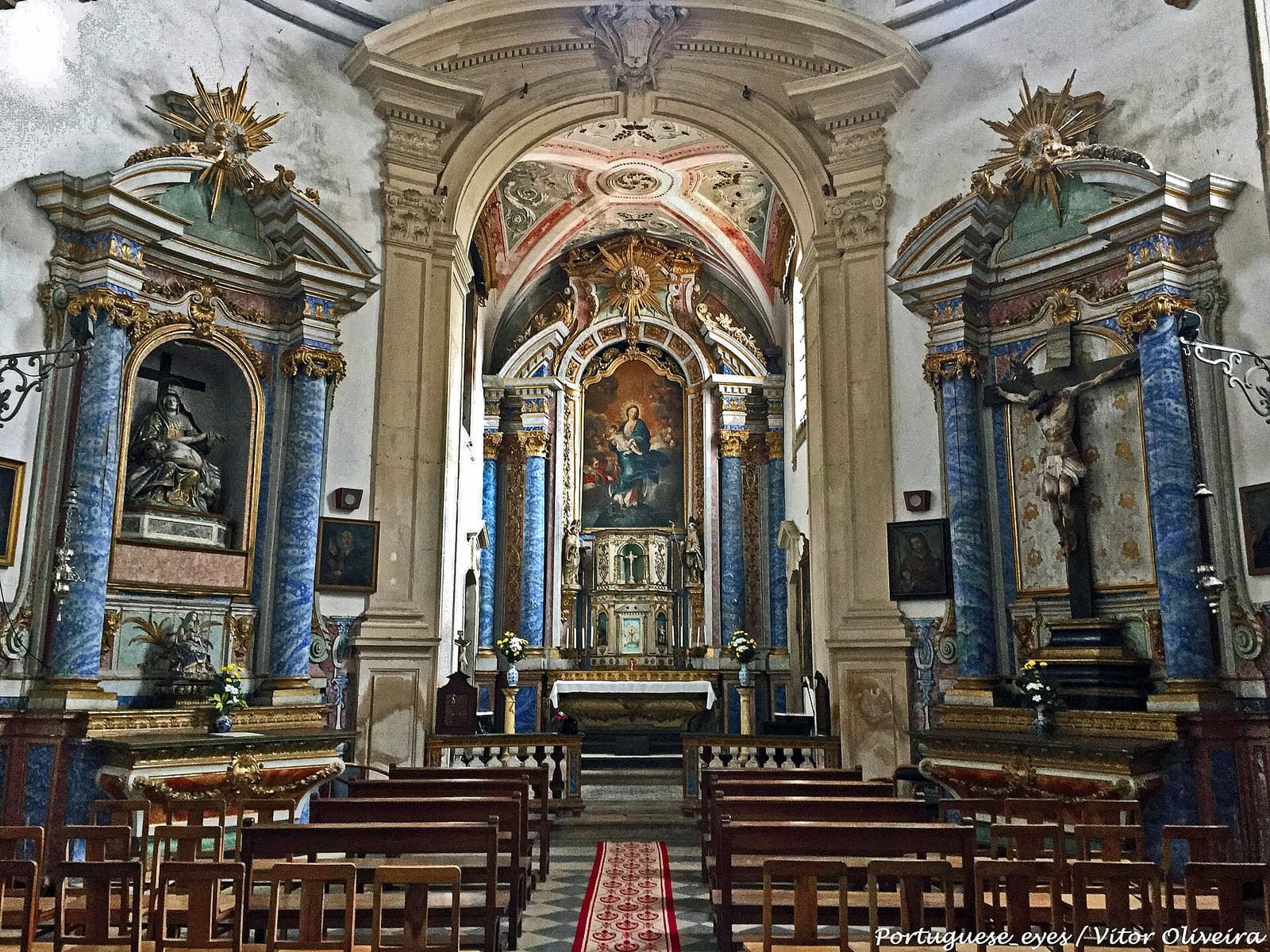
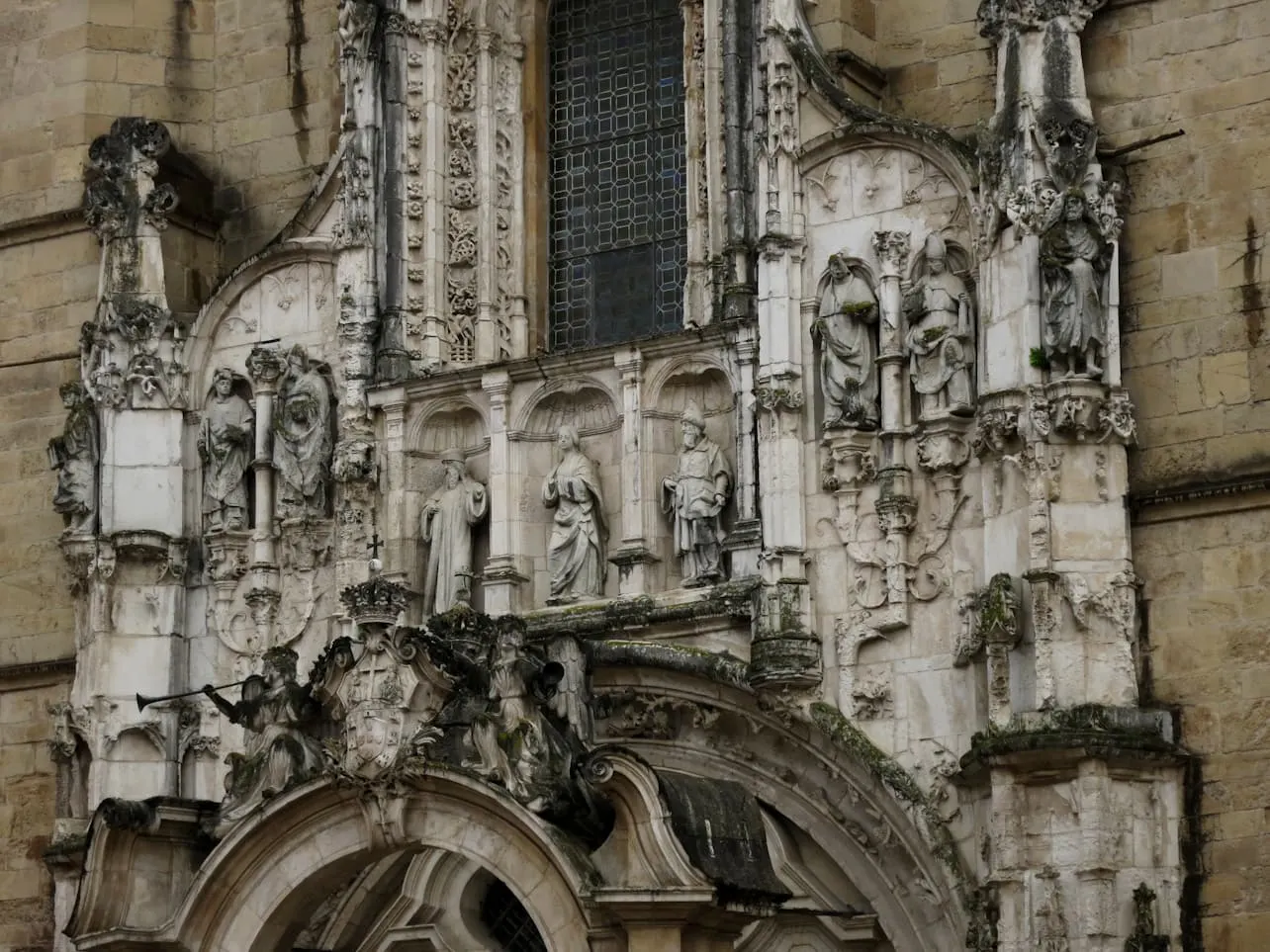
The interior houses one of the most important collections of Romanesque sculpture in the country, with several hundred historiated and ornamental capitals featuring vegetal motifs, fantastical animals, and echoes of a decorative grammar rooted in Islamic and pre-Romanesque traditions. To the Romanesque austerity were added, in subsequent centuries, exceptional pieces: the grand Gothic altarpiece in Flemish gilt and polychrome woodwork, executed in the early 16th century by Olivier de Gand and Jean d’Ypres, and the Chapel of the Blessed Sacrament, in Renaissance style, attributed to the circle of João de Ruão. The so-called Porta Especiosa, on the north flank, also introduces a Renaissance vocabulary that contrasts with the restraint of the Romanesque.
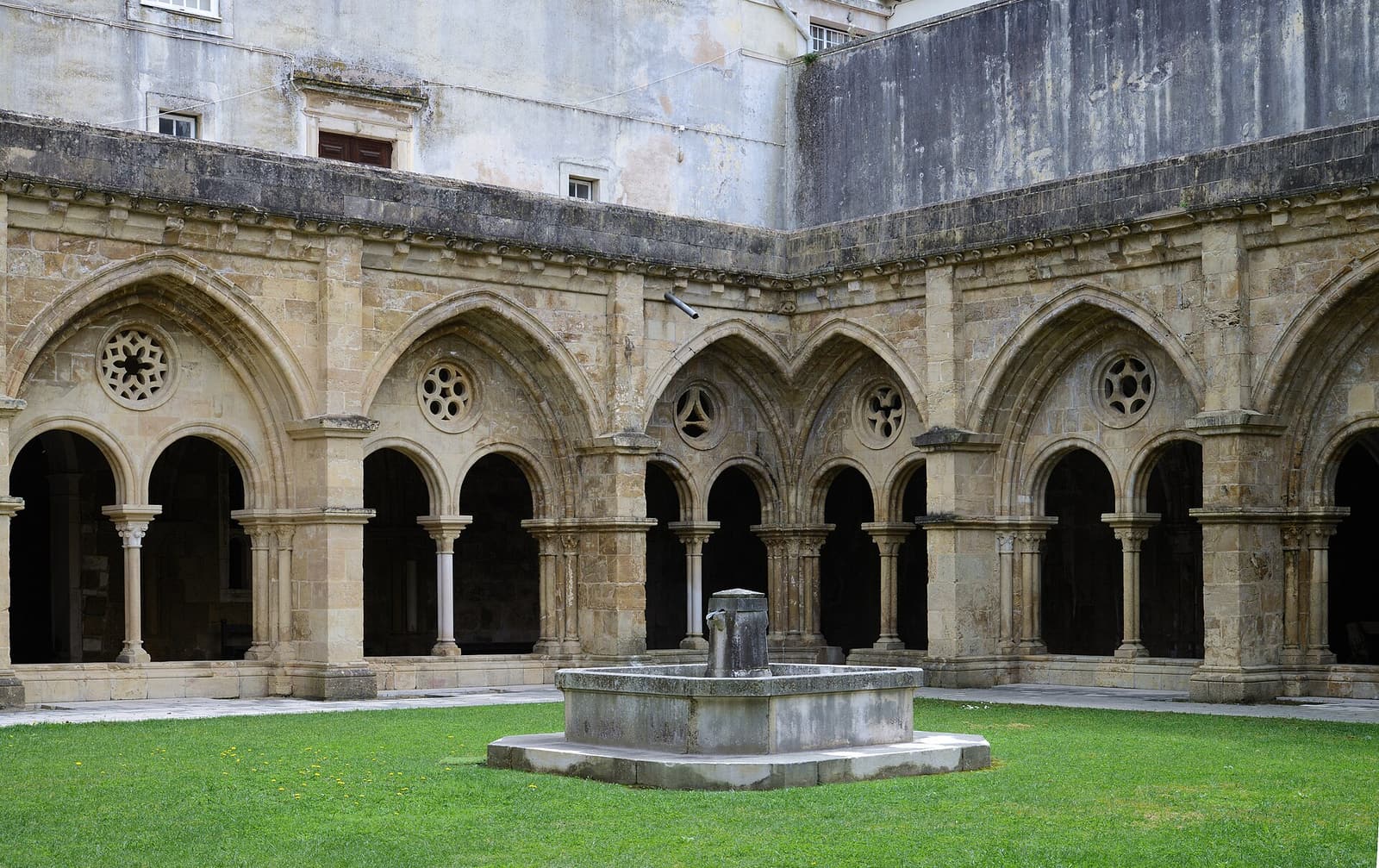
To the west lies the Gothic cloister, commissioned around 1218 during the reign of Afonso II — one of the oldest Gothic cloisters on the Iberian Peninsula and a serene counterpoint to the enclosed mass of the church.
From Cathedral to Old Cathedral
In 1772, amid the Pombaline reforms and after the expulsion of the Jesuits, the episcopal seat was transferred to the New Cathedral, housed in the former Jesuit college. The medieval cathedral then lost its status as the active seat and became known as the Old Cathedral, a name it retains. A few steps away stands the Monastery of Santa Cruz, the pantheon of the first kings, sharing with the cathedral a leading role in the medieval history of the city.
Visiting the Old Cathedral is to experience Portuguese Romanesque in its purest form, in dialogue with other great cathedrals like the Cathedral of Lisbon, and to understand how stone served, simultaneously, faith, defense, and the construction of a kingdom. It thus stands among the great cathedrals and sees that punctuate the national territory.
Frequently asked questions
- Why is it called Old Cathedral?
- It distinguishes itself from the New Cathedral, where the episcopal seat of Coimbra was transferred in 1772. From that date, the medieval cathedral became known as the Old Cathedral.
- When was the Old Cathedral of Coimbra built?
- Construction began around 1146, during the reign of Afonso Henriques, and the church was substantially completed by the end of the 12th century; it was consecrated in 1184.
- Is it the only Romanesque cathedral in Portugal?
- It is the Portuguese Romanesque cathedral that has best preserved its medieval design, making it the most intact in the country.
Sources
Keep exploring
Heritage nearby
More places to discover from here. Approximate straight-line distances, within 50 km.