Places
Setúbal
Setúbal, a port city on the banks of the Sado estuary: birthplace of the Manueline style at the Convent of Jesus and guarded by the Fort of São Filipe.
- Location
- Setúbal, Setúbal
Setúbal stretches along the northern bank of the Sado River estuary, about forty kilometers south of Lisbon and sheltered by the imposing Arrábida mountain range. A port and fishing city by vocation, it is now the capital of the district that bears its name and one of the most dynamic hubs of the peninsula separating the estuaries of the Tagus and Sado rivers. Its history intertwines Roman salt industry, fishing, fish processing, and a remarkable artistic production that marked a decisive moment in Portuguese architecture.
From Roman Cetóbriga to the Sado City
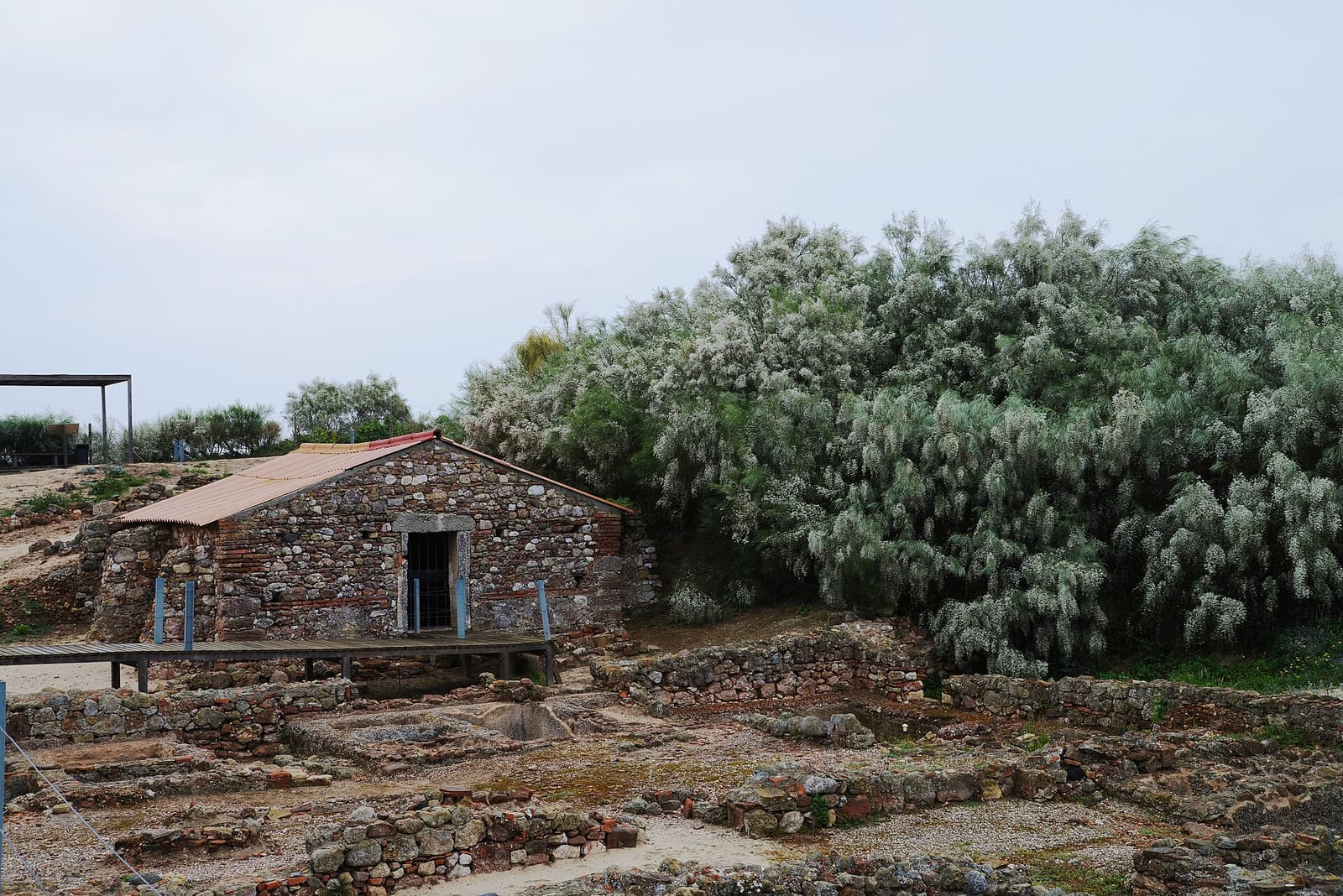
Human occupation of the Sado estuary is ancient. During Roman times, Cetóbriga flourished here, an important urban and industrial center associated with salt and garum production, whose remains are scattered on both banks of the estuary, including nearby Tróia. After the Reconquista and the establishment of the Order of Santiago — headquartered in the castle overlooking nearby Palmela — Setúbal was repopulated, first on the hill of Santa Maria and later in the lower area towards the Troino neighborhood. Growth linked to the salt and fish trade consolidated the town over the centuries until, in April 1860, King Pedro V granted it city status.
The Sado is not just a backdrop: it was the wealth from salt and fish that financed Setúbal’s monuments and attracted the masters who experimented with a new language here.
The Cradle of the Manueline Style
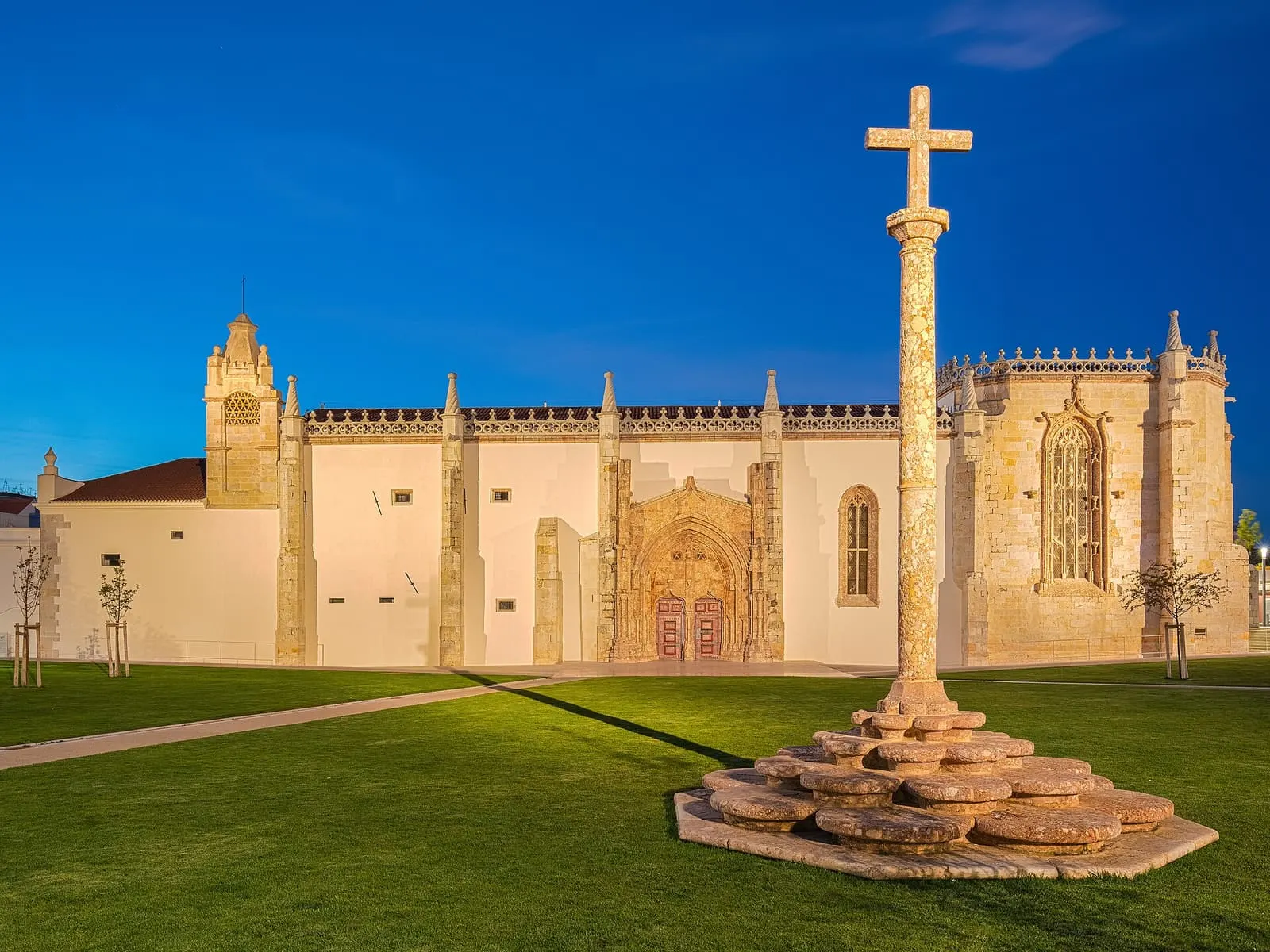
The monument that gives Setúbal its own place in art history is the Convent of Jesus, built between 1490 and 1496 by the will of Justa Rodrigues Pereira, nurse to Manuel I, to house a community of Clarissan nuns. The works followed the design of Diogo de Boitaca, the same master who would later work on the Jerónimos Monastery and Batalha. Predating these grand royal projects, the complex is often cited as the first manifestation of the Manueline style, the Portuguese version of late Gothic loaded with maritime symbolism.
The convent’s church is its boldest feature: conceived as a hall church, with three naves of equal height in a uniformly lit space, its vaults are supported by twisted columns carved from Arrábida breccia — the pink and veined stone characteristic of the nearby mountain range. The portal, also in breccia, already hints at the decorative taste that would define an entire era. Since 1961, the convent has housed the Setúbal Museum, with a collection that includes remarkable 16th-century paintings.
Fortifications, Mountains, and Estuary
Setúbal’s strategic position, guarding the entrance to the Sado, justified a robust defensive system. The Fort of São Filipe, ordered by Philip II of Spain from 1582 onwards, stands on a spur overlooking the bay, controlling both the river mouth and the city itself; it was classified as a National Monument in 1933. Around it unfolds the Arrábida mountain range, with its Mediterranean vegetation and the secluded Convent of Arrábida, a Franciscan retreat overlooking the sea.
The Sado estuary, classified as a natural reserve, extends the city’s identity beyond its urban core: sandbanks, salt marshes, and the famous resident population of bottlenose dolphins make it one of the richest ecosystems on the Portuguese coast. Between its built heritage and landscape, Setúbal maintains the physiognomy of a city that grew with its back to the mountains and its face to the water.
Frequently asked questions
- Why is Setúbal important in Portuguese architectural history?
- Because the Convent of Jesus, built between 1490 and 1496 under the design of Diogo de Boitaca, is considered one of the first works of the Manueline style, predating the Jerónimos Monastery.
- Where is Setúbal located?
- On the northern bank of the Sado River estuary, about 40 km south of Lisbon, sheltered by the Arrábida mountain range. It is the capital of the Setúbal District.
- Who ordered the construction of the Fort of São Filipe?
- Philip II of Spain (Philip I of Portugal), who attended the laying of the foundation stone in 1582, during the Iberian Union.
Sources
Keep exploring
Heritage nearby
More places to discover from here. Approximate straight-line distances, within 50 km.