Monuments
São Jorge Castle
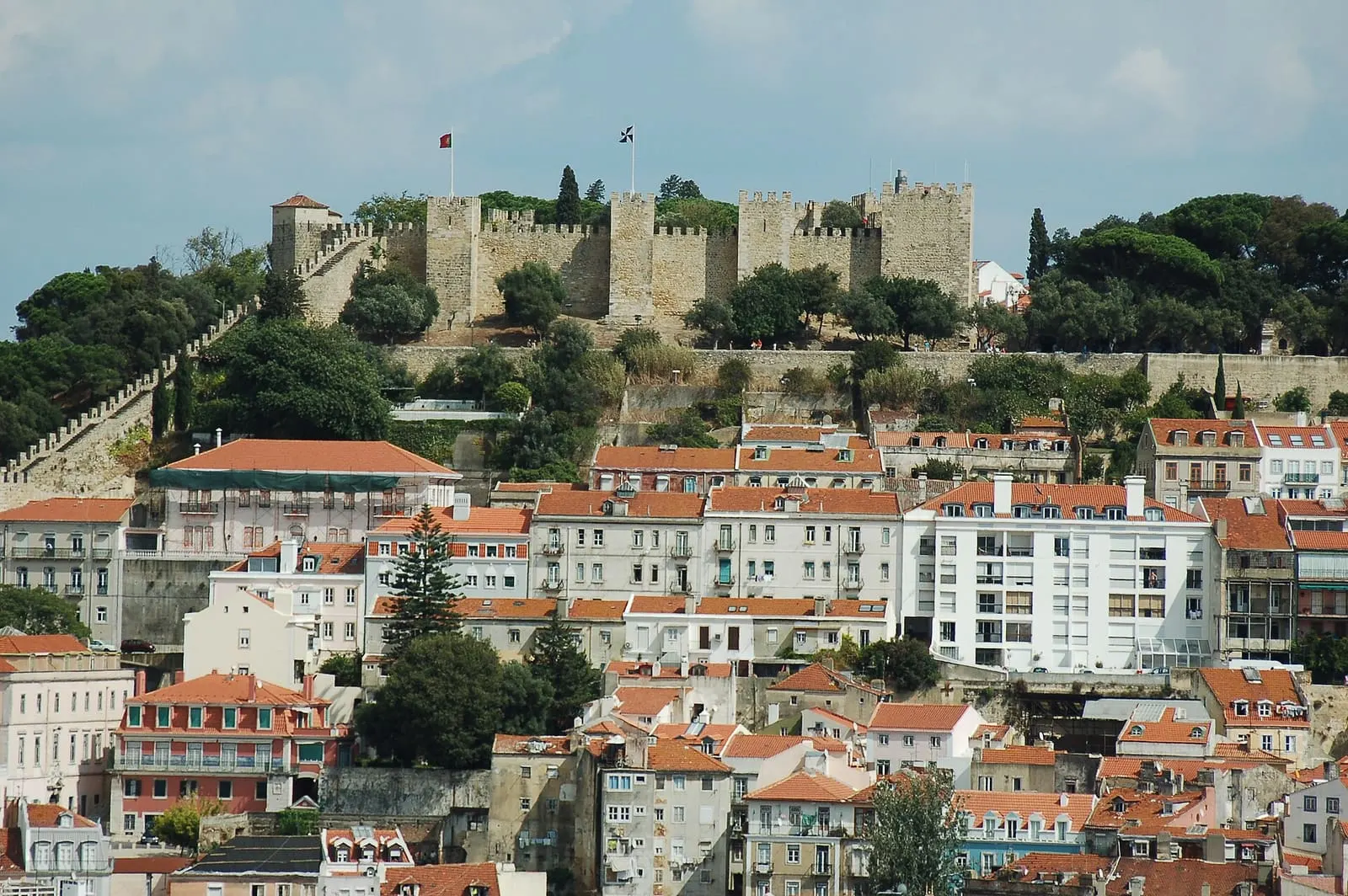
São Jorge Castle, the medieval citadel crowning Lisbon's highest hill, of Muslim origins and conquered by King Afonso Henriques in 1147.
- Location
- Lisboa, Lisboa
- Built
- séc. XI (alcáçova muçulmana); restauro 1938–1940
- Style
- Fortificação medieval
São Jorge Castle rises atop Lisbon’s highest hill, dominating the city and the Tagus estuary from the district that took its name. More than a fortification, the complex brings together centuries of superimposed occupation — from the pre-Roman settlement to the Muslim alcáçova, from the medieval royal palace to the contemporary archaeological site — making it one of the places most laden with memory in the Portuguese capital. It was classified as a National Monument in 1910.
From its origins to the Christian conquest
The castle hill has been inhabited since the Iron Age, and archaeological remains document Phoenician, Roman, and Visigothic presence before the arrival of the Muslims in the eighth century. Under Islamic rule, the hilltop was fortified and became the alcáçova — the military and residential stronghold that protected the medina of al-Ushbuna. The walls one walks today preserve, in their essential layout, the defensive perimeter raised in that period, with its albarrana towers and continuous wall-walk.
The decisive moment came in 1147, when King Afonso Henriques, aided by a fleet of crusaders from northern Europe heading for the Holy Land, besieged Lisbon for some four months. The city capitulated in October of that year, and the capture of the alcáçova sealed Lisbon’s integration into the young kingdom of Portugal — an episode recounted at first hand in the famous letter of the crusader Osbern.
More than a wall, the castle hill is a palimpsest: each layer of stone holds a different city, from Phoenician to medieval, written over the one before.
The Royal Palace and the medieval apogee
With the transfer of the kingdom’s capital to Lisbon in 1255, the castle entered its period of greatest splendour. The former Muslim stronghold was adapted into the Royal Palace of the Alcáçova, residence of the Portuguese monarchs and stage for central events in the nation’s history. It was here that Vasco da Gama is said to have been received on his return from India, and where courts and embassies gathered. The dedication to Saint George, patron of knights, took root in this context, linked to the alliance with England sealed by the Treaty of Windsor (1386).
Its palatial vocation declined in the sixteenth century, with the move of the court to the Paço da Ribeira, beside the river. From then on, the complex lost its civic prominence and was successively reused as barracks and military structure. The 1755 earthquake worsened its decay.
Rediscovery and the castle today
The scenic image we know today results in large measure from the great restoration campaign carried out between 1938 and 1940 by the General Directorate of National Buildings and Monuments, which demolished parasitic structures, consolidated the walls, and restored the precinct’s medieval character. Later excavations brought to light the foundations of the Paço da Alcáçova, integrated into a visitable museum nucleus.
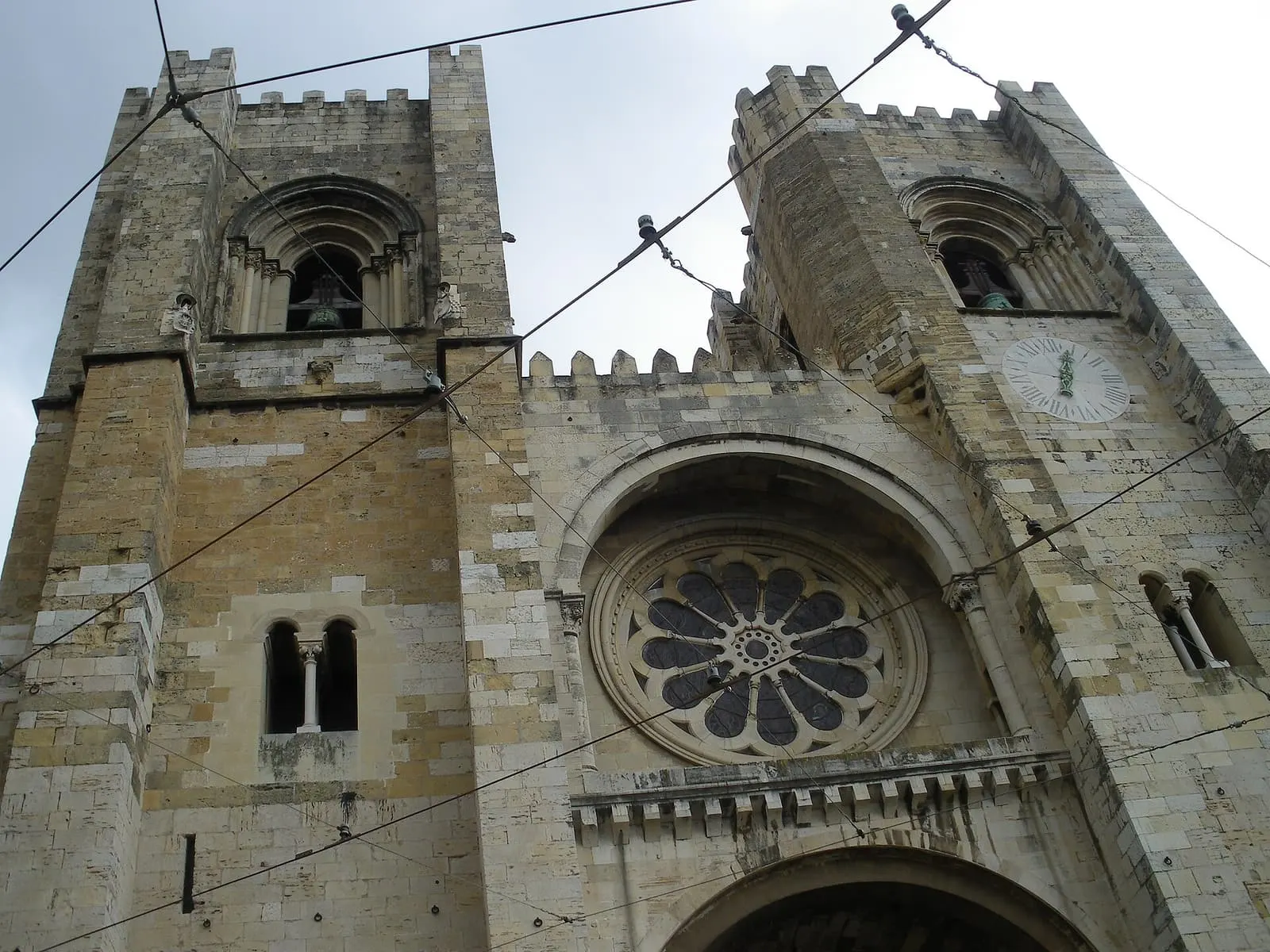
Today the castle is one of Portugal’s most visited monuments, offering from its viewpoints one of the broadest panoramas over Lisbon — from Lisbon Cathedral, built shortly after the conquest of 1147, to the rows of houses descending towards the Tagus. It belongs to the body of great Portuguese medieval fortifications, alongside such examples as Óbidos Castle or Guimarães Castle, the cradle of nationhood. More than a relic, it remains a living space for enjoyment and for reading the very urban evolution of Lisbon.
Frequently asked questions
- When was São Jorge Castle conquered from the Muslims?
- The citadel was taken by King Afonso Henriques on 25 October 1147, at the end of the siege of Lisbon, with the support of crusaders bound for the Holy Land.
- Why is it called São Jorge Castle?
- The dedication to Saint George, a warrior saint and patron of the crusaders, is thought to have been established during the reign of King João I, in the late fourteenth century, in the context of the Anglo-Portuguese alliance.
- What can be seen at the castle today?
- Besides the walls and towers of the fortification, the precinct includes the remains of the former Royal Palace of the Alcáçova, an archaeological site, the Camera Obscura, and wide viewpoints over Lisbon and the Tagus.
Sources
Keep exploring
Heritage nearby
More places to discover from here. Approximate straight-line distances, within 50 km.