Places
Vila Franca do Campo
Vila Franca do Campo, on the island of São Miguel, Azores: the first island capital, devastated by the 1522 earthquake, with a historic center, parish church…
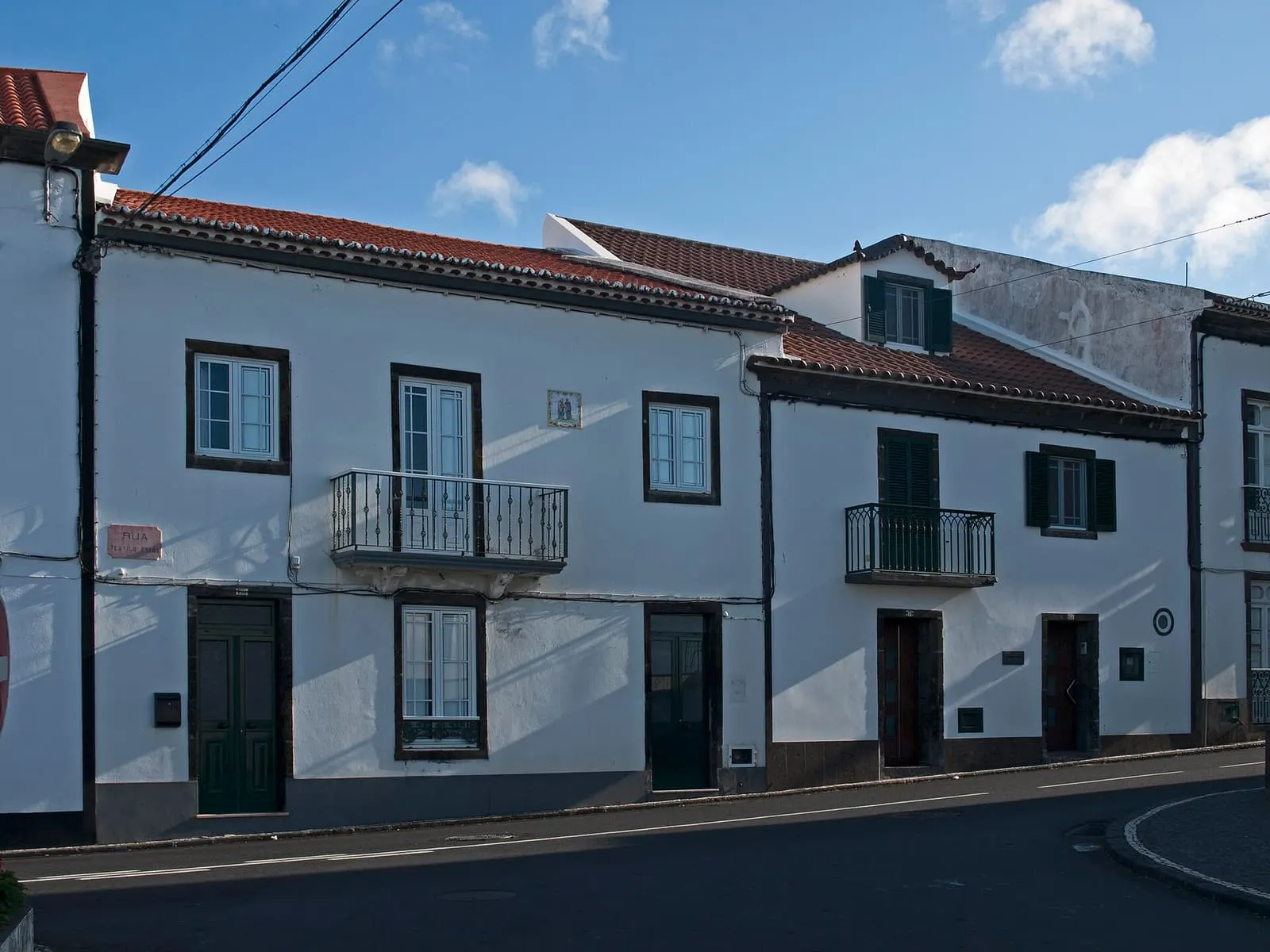
- Location
- Vila Franca do Campo, Açores
- Built
- Séc. XV (povoamento); elevada a vila em 1472
- Style
- Arquitetura tradicional açoriana
Nestled against a narrow coastal plain on the southern coast of São Miguel — the very campo (field) that gave it its name — Vila Franca do Campo was, for nearly half a century, the administrative heart of the Azores. Today, it is a tranquil town, best known for the volcanic islet rising offshore and its confectionery traditions, but its layout and monuments preserve the memory of when the fate of the entire island was decided here.
The First Capital of São Miguel
The settlement of Vila Franca do Campo began in the mid-15th century, attributed to the initiative of Gonçalo Vaz Botelho. The town grew quickly, benefiting from fertile soils and a sheltered anchorage, and in 1472 it was elevated to town status. It became the seat of the captaincy of São Miguel and the island’s most important urban center, with a parish church, convents, and a merchant community linked to the trade of wheat and, later, woad and citrus fruits.
This primacy explains why Vila Franca was, in the early 16th century, the true island capital — a role it shared, on the archipelago’s scale, with cities like Ponta Delgada and, in the central group, Angra do Heroísmo. The town concentrated political power, port functions, and religious density, in a model of urban settlement typical of the early Azorean foundations.
The 1522 Earthquake and the Loss of Status
On the night of October 22, 1522, a violent earthquake shook the flank of the mountain overlooking the town. More devastating than the tremor itself was the massive landslide that followed: masses of mud and debris cascaded down the slope and buried much of the housing, killing thousands. The disaster, one of the deadliest in Azorean history, left Vila Franca in ruins.
Unable to recover its role as capital, the captaincy’s seat was transferred to Ponta Delgada, which from then on rose irreversibly. Vila Franca only recovered economically in the 18th century, largely thanks to the export of oranges to British and North American markets — a prosperity reflected in the construction of manor houses and the enrichment of its temples.
Built Heritage and Landscape
The historic center preserves the parish church of São Miguel Arcanjo, the former Convent of Santo André, and a group of hermitages dotting the town and its surroundings. At the top of the protective mountain stands the Ermida de Nossa Senhora da Paz, a 16th-century sanctuary rebuilt in the 18th century, reached by a Baroque staircase adorned with azulejos — one of the island’s most sought-after viewpoints.
Alongside this built legacy, the municipality is inseparable from the Ilhéu de Vila Franca do Campo, a volcanic cone whose flooded crater forms a circular lagoon connected to the sea, classified as a natural reserve. The ensemble, where the white houses of traditional Azorean architecture unfold between the mountain and the ocean, makes Vila Franca one of the most expressive places in the historical and natural heritage of the Azores.
Frequently asked questions
- Why was Vila Franca do Campo the first capital of São Miguel?
- Settled from the mid-15th century and elevated to town status in 1472, Vila Franca do Campo grew as the island's main settlement and was the seat of its sole captaincy, a role it retained until the 1522 earthquake.
- What happened in the 1522 earthquake?
- On October 22, 1522, a violent earthquake and subsequent landslides buried much of the town, causing thousands of deaths. The disaster led to the transfer of the captaincy's seat to Ponta Delgada.
- What is the Ilhéu de Vila Franca do Campo?
- It is a submerged volcanic cone with a circular crater flooded by the sea, located opposite the town. Classified as a natural reserve since 1983, it is one of the municipality's landmarks.
Sources
Keep exploring
Heritage nearby
More places to discover from here. Approximate straight-line distances, within 50 km.