Places
Alcoutim
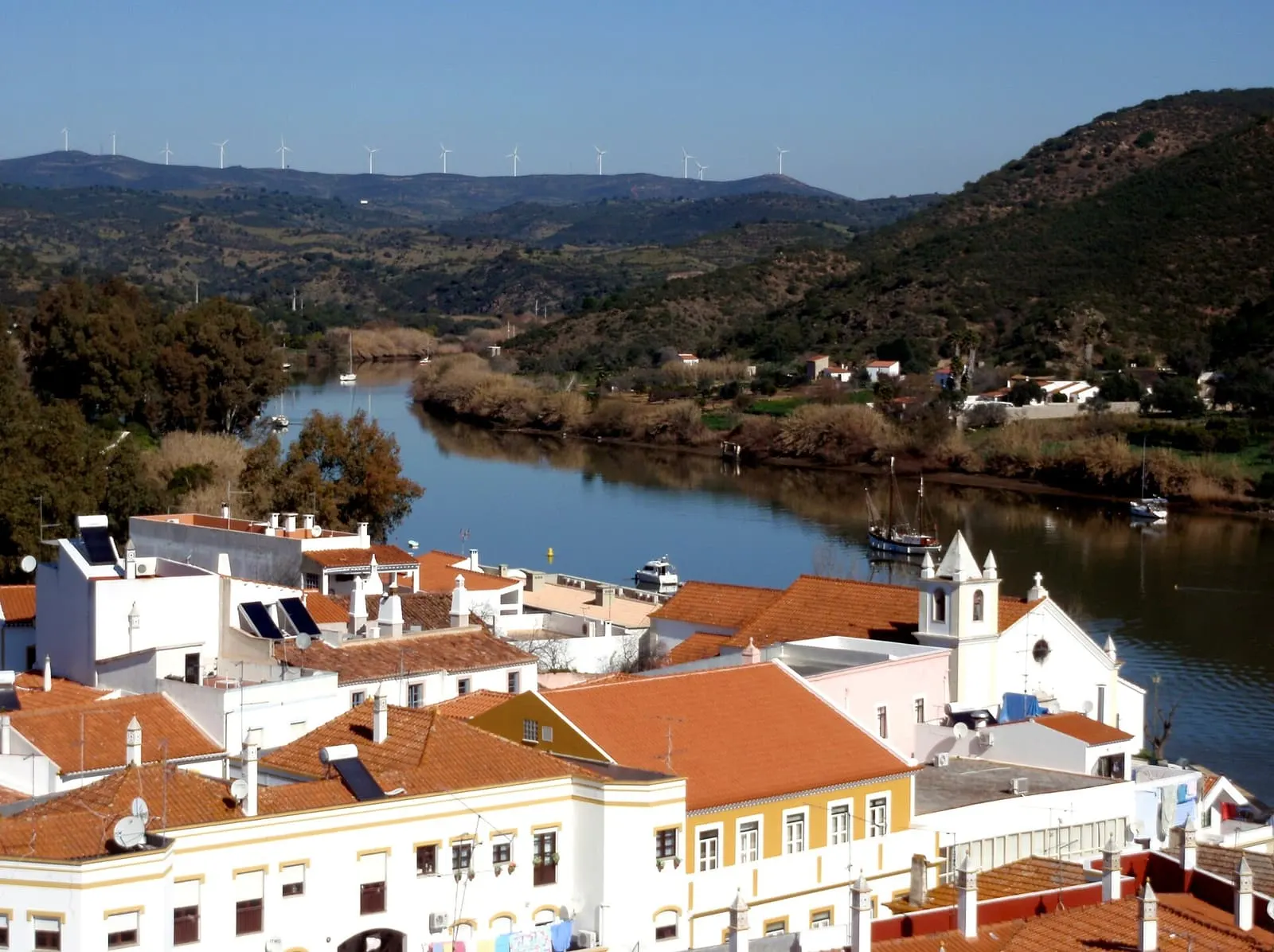
Alcoutim, a border town in the Algarve on the Guadiana River, with a medieval castle facing Sanlúcar and the Old Castle of Santa Bárbara, in the district of Faro.
- Location
- Alcoutim, Faro
- Built
- Século XIII–XIV
Nestled in the mountainous interior of the Algarve, Alcoutim is a border town whose identity is intertwined with the course of the Guadiana River. Its whitewashed houses cascade in terraces down to the riverbank, facing the Spanish village of Sanlúcar de Guadiana on the opposite shore. This frontier position, both a barrier and a crossing point, has shaped the town’s entire history: for centuries, Alcoutim served as a trading port, military outpost, and administrative centre for a vast and sparsely populated territory in the far northeast of the Algarve.
From Islamic occupation to the Reconquista
The very name reveals the region’s Arab heritage. Alcoutim derives from al-Qutami, the Arabic term for the peregrine falcon, and the Muslim occupation left deep marks on the Lower Guadiana – as seen even more monumentally in nearby Mértola, across the Alentejo border. About one kilometre north of the town stands the Old Castle of Alcoutim, also known as the Castro de Santa Bárbara: a fortress of Islamic origin, dating from the 8th to 9th centuries, built on a rocky platform overlooking the river. It controlled commercial traffic and mining activities inland but was likely abandoned by the 11th century, losing its military function.
The Christian reconquest of the region was completed around 1240 during the reign of King Sancho II. To settle the population and defend these borderlands, a new castle was built from scratch at the present site of the town, a project that continued through the second half of the 13th century.
The castle and the charter
It was under King Dinis that Alcoutim gained the status of an organised settlement. The monarch ordered the repopulation of the area and granted it a municipal charter on 9 January 1304, integrating it into the network of fortified towns that then structured the kingdom. The Castle of Alcoutim, with its roughly quadrangular plan reinforced by corner towers, guarded the river border and the trade routes crossing the Guadiana. Like other castles along the southern border, it combined defensive functions with customs control over river trade.
More than a dividing line, the Guadiana has always been a conduit for contact: the people of both banks shared trade, kinship, and festivities long before any border crossing became official.
The episode that projected Alcoutim onto the national stage occurred within this castle’s walls. On 31 March 1371, the Treaty of Alcoutim was signed here, ending the first Fernandine War between King Fernando of Portugal and Henry II of Castile. The agreement, sealed by plans for a marriage between the Portuguese king and a Castilian princess, made this modest Guadiana town the stage for a major Iberian negotiation.
Heritage and territory
Today, Alcoutim is the seat of one of Portugal’s least populated municipalities, with a population density of around four inhabitants per square kilometre. This low human pressure has preserved a mountainous territory of remarkable archaeological value, with traces ranging from the Chalcolithic to the Roman period, including menhirs and ancient hydraulic structures. The restored castle now houses a museum dedicated to the municipality’s archaeological heritage.
The town is part of the Lower Guadiana cultural route and connects with other historic centres in the inland Algarve, such as Silves, the former Muslim capital of Al-Gharb. The ensemble formed by the fortresses of Alcoutim and Sanlúcar de Guadiana, facing each other across the river, stands as a rare testament to a shared border, where for centuries the two banks lived by defence and smuggling, trade and coexistence.
Frequently asked questions
- Where is Alcoutim located?
- Alcoutim is a town in the inland Algarve, in the district of Faro, situated on the right bank of the Guadiana River, opposite the Spanish village of Sanlúcar de Guadiana.
- What was the Treaty of Alcoutim?
- Signed on 31 March 1371 in the castle's premises, the Treaty of Alcoutim ended the first Fernandine War between King Fernando of Portugal and Henry II of Castile.
- Where does the name Alcoutim come from?
- The toponym derives from the Arabic al-Qutami, referring to the peregrine falcon, and reflects the long Islamic presence in the Lower Guadiana region.
Sources
Keep exploring
Heritage nearby
More places to discover from here. Approximate straight-line distances, within 50 km.