Places
Mértola
Mértola, a museum-town of the Baixo Alentejo overlooking the Guadiana, in the district of Beja, with a mosque-church, castle and remarkable Islamic…
- Location
- Mértola, Beja
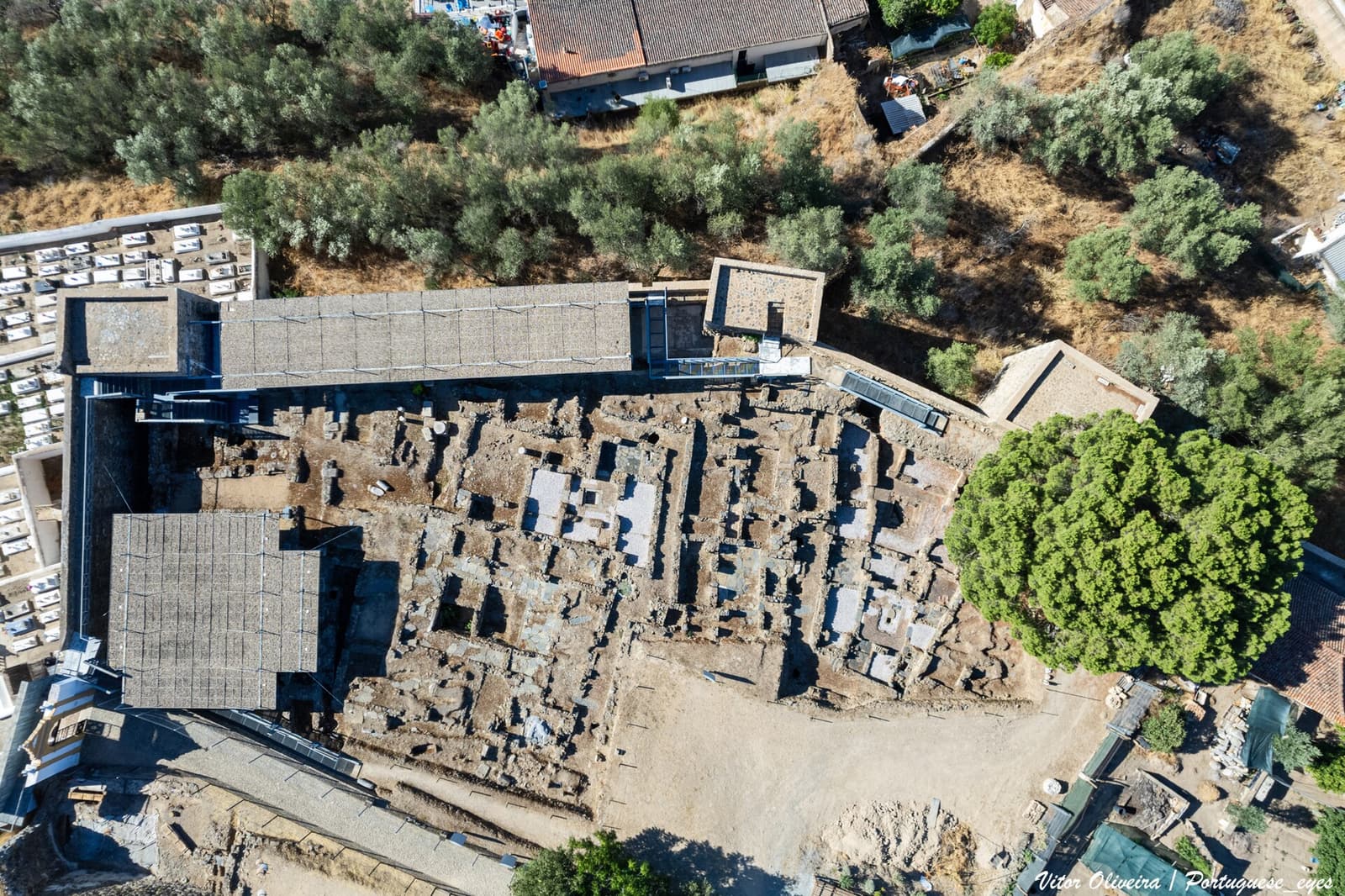
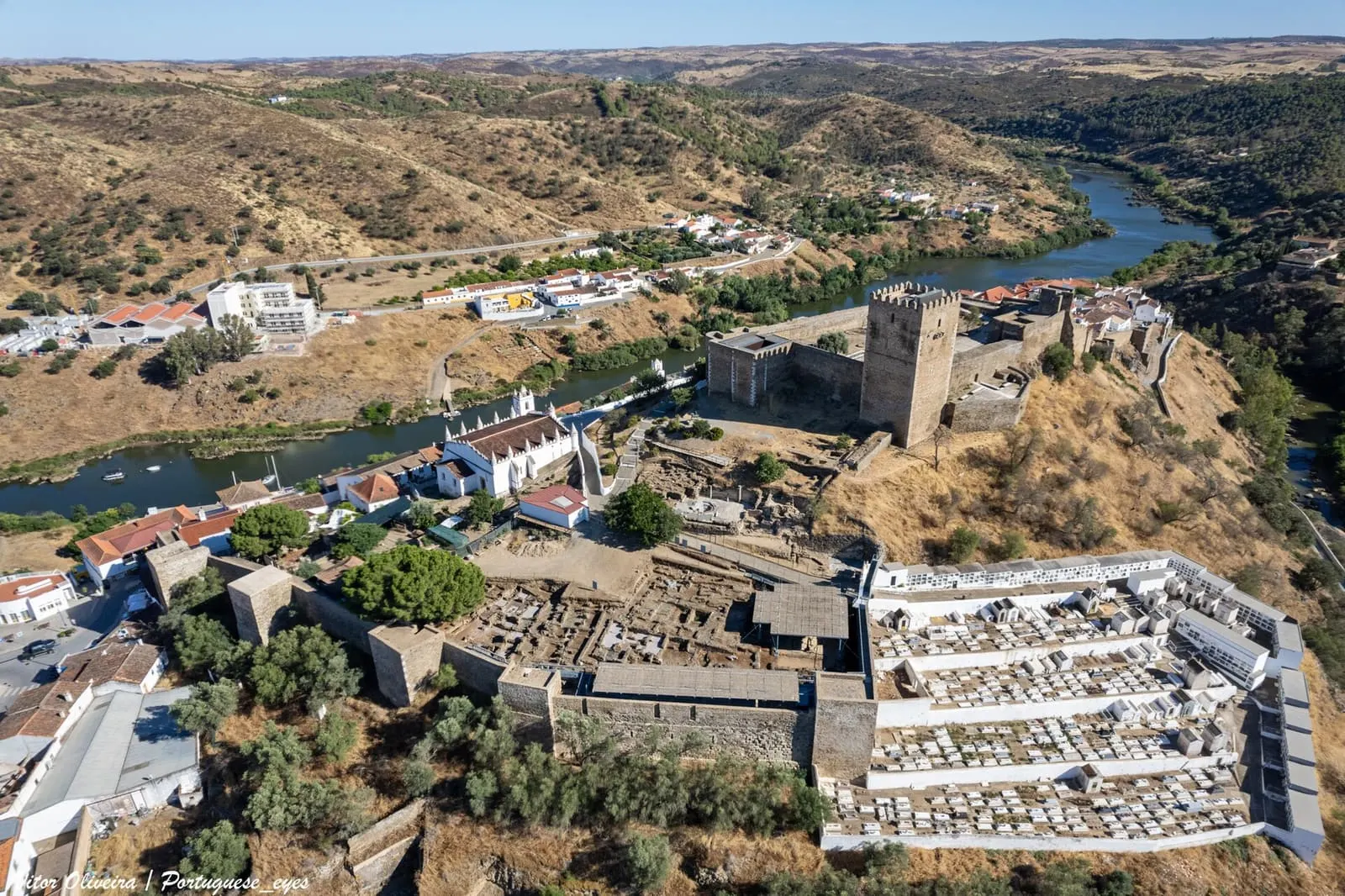
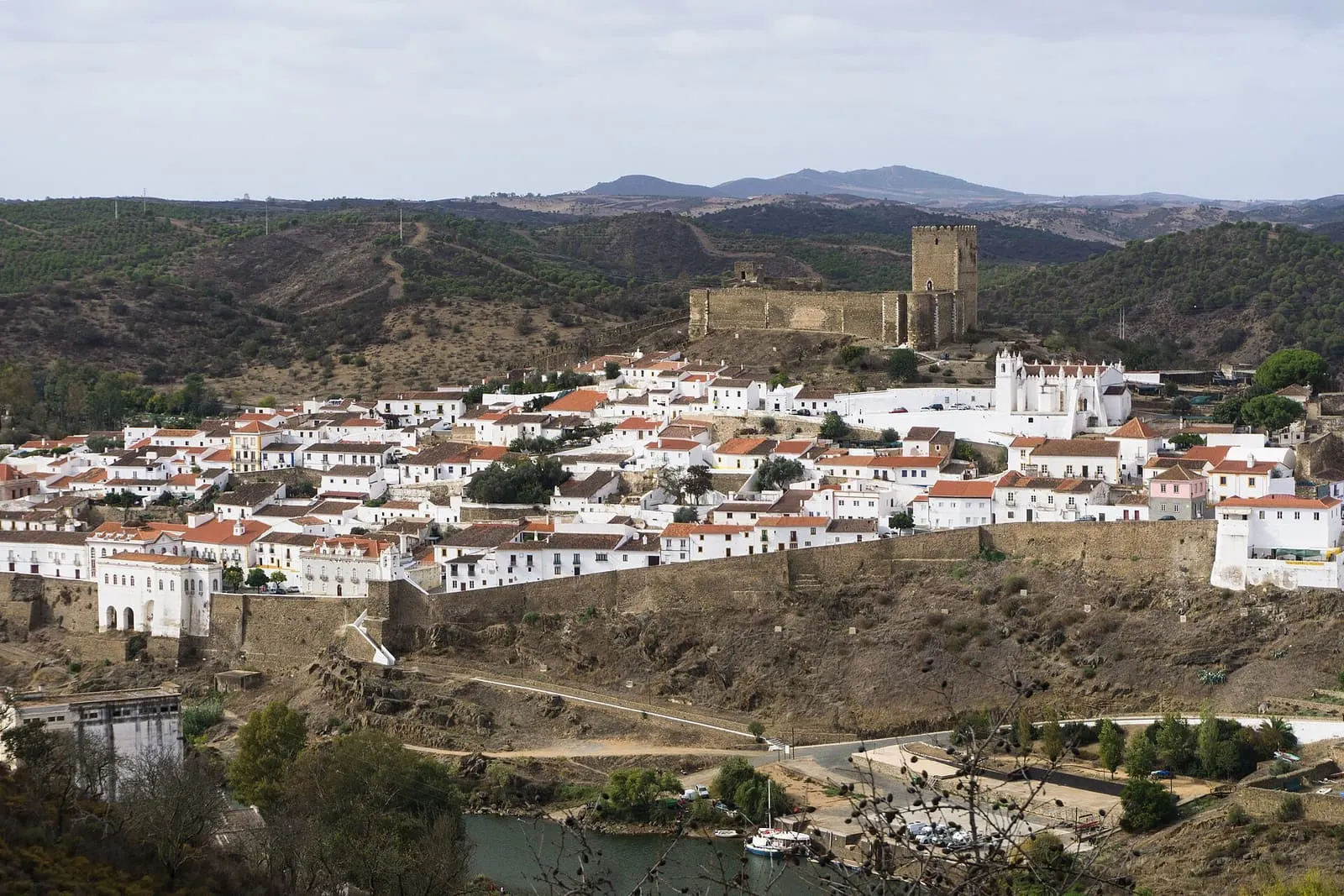
Perched on an escarpment on the right bank of the Guadiana, at the southern edge of the district of Beja, Mértola is one of the most densely layered settlements, in historical terms, in all of the Alentejo. Here, Phoenicians, Romans, Suebi, Visigoths, Muslims and Christians left successive strata that today can be read in the streets, the walls and the museums. The designation of “museum-town”, established through the work of the Mértola Archaeological Field, captures precisely this: a historic centre that functions as an open-air trail of discovery.
From Roman port to Islamic taifa
In Antiquity, Mértola was Myrtilis Iulia, a prosperous river port linking the mining hinterland of the south-western peninsula to the Mediterranean. Through the navigable Guadiana flowed grain, olive oil and, above all, the metals — copper, silver, gold and tin — extracted from the pyrite belt. Raised to municipium under Augustus, the city preserved from that period pavements, inscriptions and harbour structures that can still be identified beneath the houses today.
Conquered by the Muslims in 713, Martula became one of the most important urban centres of the Garb al-Andalus. During the period of the taifas (11th century) it even formed a small independent kingdom, and its Almohad heyday left the town’s most celebrated landmark. The Islamic archaeological wealth gathered here is among the most important in the Iberian Peninsula and can be explored in greater detail on the page devoted to archaeological Mértola, part of the broader Portuguese Moorish and Islamic heritage.
The mosque that became a church
Mértola’s most singular monument is its parish church, dedicated to Our Lady of the Annunciation. Beneath the Christian fabric survives the structure of an Almohad mosque of the 12th–13th centuries — the only medieval Islamic temple to have survived in Portugal to the present day.
After the Christian conquest of 1238, rather than demolishing the building, the town simply adapted it to Christian worship: this is why the mosque of Mértola is today a rare capsule of peninsular Islamic architecture.
Inside are preserved the mihrab, the niche that oriented prayer towards Mecca, and exterior portals with horseshoe arches, revealed during the restorations of the mid-twentieth century. The plan of halls separated by columns, typical of hypostyle mosques, remains legible despite later remodelling.
Castle, Reconquista and the contemporary town
Crowning the hill stands the castle of Mértola, rebuilt by the Order of Santiago after the settlement was definitively taken by King Sancho II in 1238. The imposing keep, some 30 metres high and with Gothic vaults inside, was completed in 1292 by order of João Fernandes, master of the Order. From the heights of the citadel one commands the whole valley of the Guadiana and its confluence with the Oeiras stream.
In the following centuries the town lost prominence, partly regained in the 19th century with the working of the São Domingos mine, within the municipality, which between around 1850 and 1965 drew population and industry before the deposit was exhausted. The heritage recognition of Mértola is today expressed in the Tentative List of Mértola for UNESCO World Heritage, a nomination that values precisely the continuous reading of nearly three millennia of occupation above the river.
Frequently asked questions
- Why is Mértola called a museum-town?
- Because its historic core is, in itself, a museum trail: Roman ruins, the mosque-church, the castle, the Early Christian basilica and the Islamic complex are linked across several visitor sites managed from the Mértola Archaeological Field.
- Does the mosque of Mértola still exist?
- Yes. The parish church of Mértola preserves the structure of the former Almohad mosque, being the only surviving medieval Islamic temple in Portugal, with a mihrab and horseshoe-arch portals.
- In which district is Mértola located?
- Mértola lies in the district of Beja, in the Baixo Alentejo, on an escarpment on the right bank of the river Guadiana.
Sources
Keep exploring
Heritage nearby
More places to discover from here. Approximate straight-line distances, within 50 km.