Themes
The rock art of the Côa
Thousands of open-air Palaeolithic engravings in the Côa valley: the most important assemblage of rock art of its kind and its rescue at the edge of a dam.
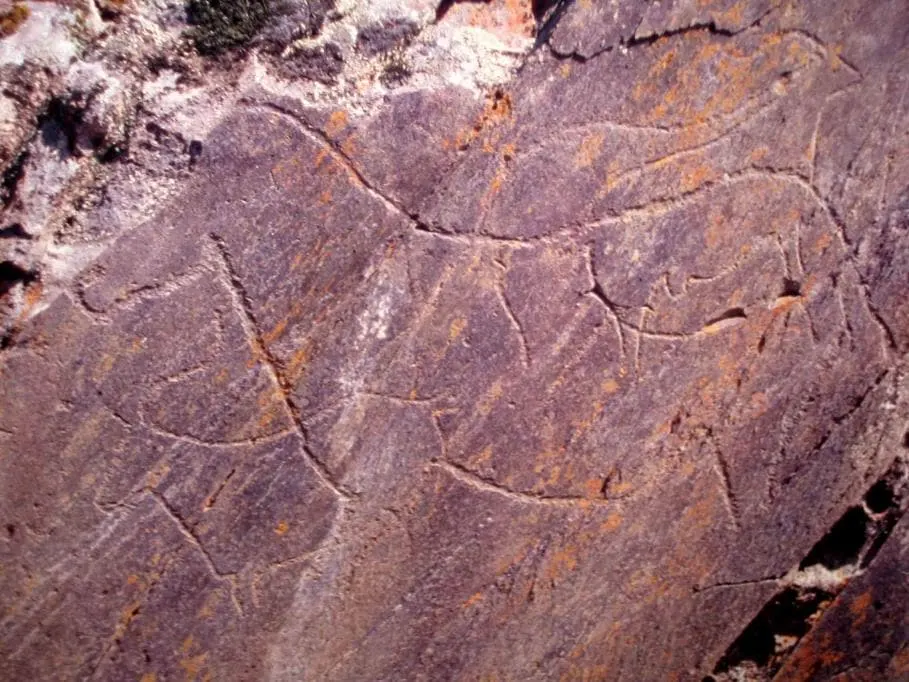
In the valley of the Côa river, in the northeast of Trás-os-Montes, there are horses, aurochs and wild goats engraved into the rock more than twenty thousand years ago. It is the most remarkable known assemblage of open-air Palaeolithic art — and, in the 1990s, it came within a few months of vanishing beneath the waters of a dam.
Art in the open air
Almost all the Upper Palaeolithic art we know lies inside caves — Altamira, Lascaux. The Côa is different: the engravings are out in the open, on schist outcrops along the valley, exposed for millennia to light and weather. This makes them rare and, for a long time, caused them to go unnoticed.
The techniques are chiefly pecking and incision. The subjects are the great animals of the last glaciation, sometimes overlaid by successive generations of engravers on a single panel worked over thousands of years.
The dam controversy
The discovery of the assemblage’s full extent, in 1994, coincided with the advanced construction of a dam that would have submerged it. An intense public debate followed, with strong scientific and civic mobilisation, under the rallying cry “the engravings cannot swim”. In 1995 the Government decided to halt the works and to protect the valley.
The Côa case is a landmark in the history of heritage in Portugal: the first time that the defence of an archaeological asset prevailed, in public opinion and in political decision, over a great work of engineering.
Park and recognition
From that decision was born the Côa Valley Archaeological Park and, later, a museum. In 1998 the assemblage was inscribed on UNESCO’s World Heritage List, extended in 2010 to the Spanish site of Siega Verde, within the same Douro system. Visiting the engravings today is done on guided tours at the end of the afternoon, when the raking light reveals the lines that at midday disappear into the rock — a lesson in how the very way of looking is itself part of the heritage.