Places
Braga
The heritage of Braga, the Roman Bracara Augusta and city of archbishops, with its Cathedral and the sanctuary of Bom Jesus do Monte, in northern Portugal.
- Location
- Braga, Braga
- Built
- 16 a.C. (fundação romana)
Few Portuguese cities carry a past as dense as Braga. The capital of a district in the heart of the Minho, it was founded by the Romans around 16 BC under the name of Bracara Augusta and, over two millennia, has never ceased to be a centre of power — first civil, then above all religious. It is one of the oldest Christian cities in the West and the seat of the most influential archbishopric on the Peninsula.
From Roman Bracara to the city of archbishops
Bracara Augusta arose as the capital of a vast territory in the north-west of the Peninsula and became the administrative seat of the province of Gallaecia. With the fall of Rome, it was chosen by the Suebi as the capital of their kingdom in the fifth century — one of the first Germanic kingdoms to convert to Christianity. From that continuity comes the antiquity of the Braga diocese, documented as early as the third century.
It was, however, the Middle Ages that fixed Braga’s identity. In 1112, Countess Teresa granted the city to its archbishop, Maurice Bourdin, handing temporal government over to the mitre. The archbishops of Braga claimed the title of Primate of the Spains, in a long dispute of precedence with Toledo, and shaped the city in their own image — which explains the density of churches, palaces and seminaries that still characterise it today.
A capital of the Portuguese Baroque
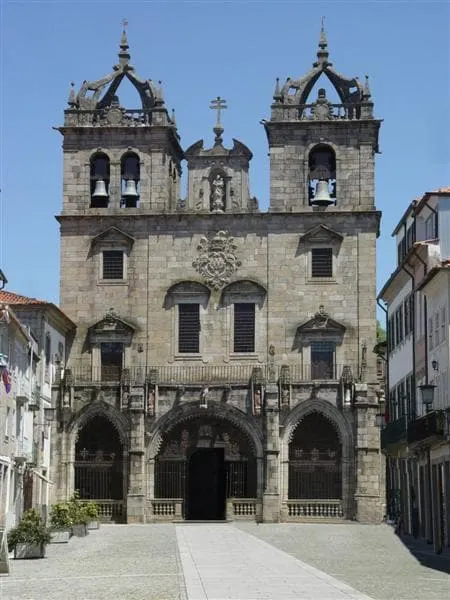
Braga’s monumental face is, to a large extent, Baroque. In the eighteenth century, under the impetus of enlightened archbishops and the genius of the architect André Soares, the city was renewed with undulating façades, fountains and gardens that earned it the epithet of “Portuguese Rome”. At its centre rises the Cathedral of Braga, the oldest cathedral in the country, begun in the eleventh century over earlier remains and marked by successive Romanesque, Manueline and Baroque campaigns — a true compendium of the history of Portuguese architecture in a single building.
To say Braga is to say worked stone: from the austere Romanesque of the Cathedral to the virtuosity of the Bom Jesus stairway, the city tells the story of Portuguese sacred art almost without interruption.
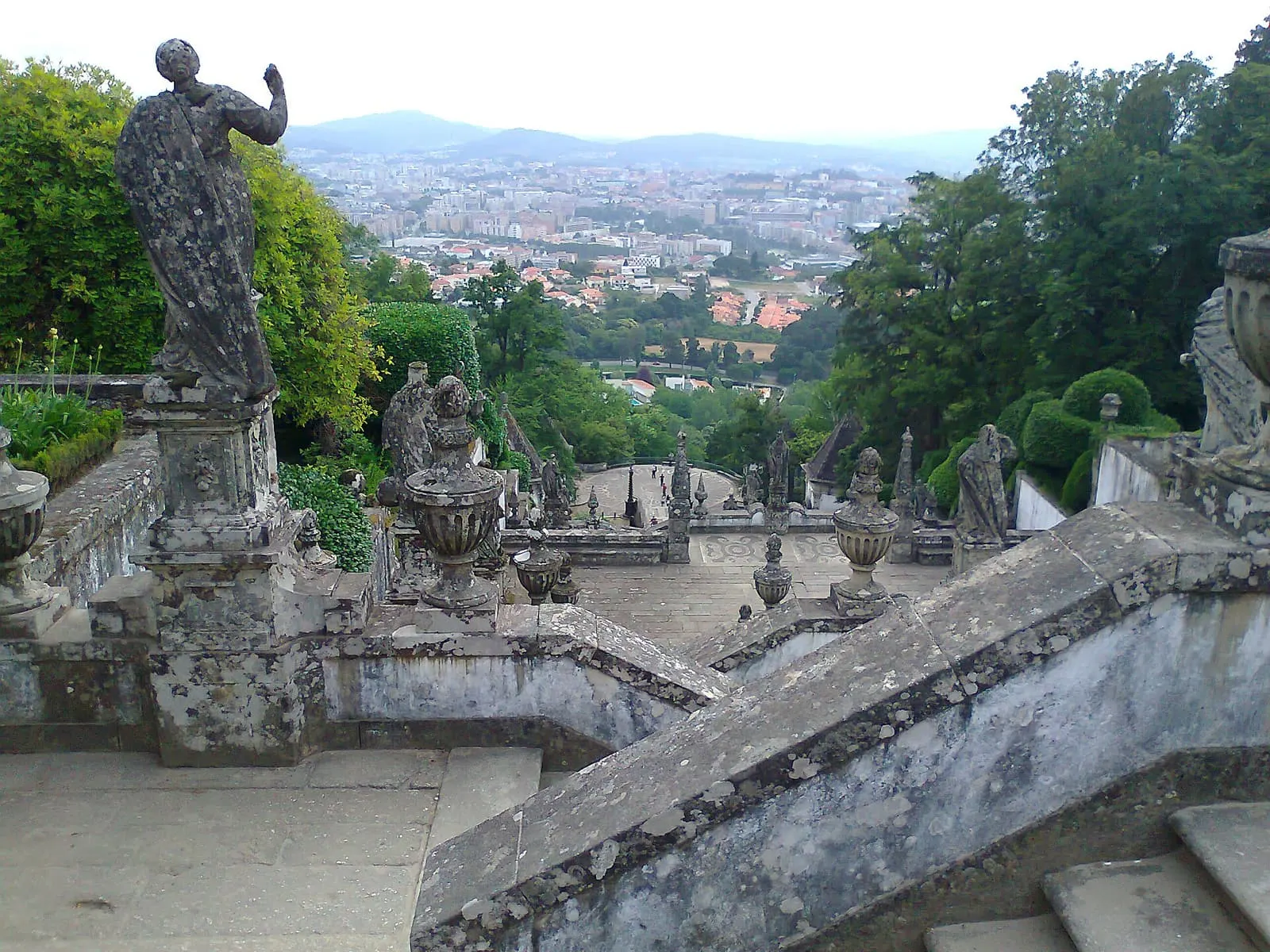
On the outskirts, on Mount Espinho, the sanctuary of Bom Jesus do Monte is the city’s emblem and its only property inscribed on the UNESCO World Heritage List, in 2019. Its monumental stairway of whitewashed granite, rising among chapels of the Via Sacra, fountains and allegorical sculptures, is one of the most perfect European examples of a Sacred Mount — a devotional staging that invites a penitential ascent to the church at the summit.
Devotion, monasteries and living tradition
Braga’s religiosity does not live in stone alone. The Holy Week processions of Braga are among the most solemn in the country, mobilising the entire city in a centuries-old ritual that combines liturgy, theatre and popular fervour. A few kilometres away, the Monastery of Tibães was the mother house of the Benedictine Congregation of Portugal and Brazil, and its monastic complex, cloisters and woodland are today one of the finest examples of the rural Baroque of the Minho.
Set within the Norte region, Braga is thus far more than a stopover: it is one of the keys to understanding the Roman, Christian and Baroque roots of Portugal — a young, university city that continues to inhabit its extraordinary legacy without ceremony.
Frequently asked questions
- Why is Braga called the «city of archbishops»?
- Because its diocese, attested since the third century, was raised to an archbishopric, and the archbishops of Braga bear the title of Primate of the Spains. From 1112 onwards, the city was even granted to the mitre, leaving its government in the hands of the prelates for centuries.
- Which monument in Braga is a UNESCO World Heritage Site?
- The Sanctuary of Bom Jesus do Monte, on the outskirts of the city, was inscribed on the World Heritage List in 2019 as a remarkable example of a Baroque Sacred Mount, with its celebrated stairway of bare and whitewashed granite.
- What was Braga's Roman name?
- Bracara Augusta, founded around 16 BC in honour of the emperor Augustus. It went on to become the capital of the province of Gallaecia and, later, the capital of the Suebic kingdom.
Sources
Keep exploring
Heritage nearby
More places to discover from here. Approximate straight-line distances, within 50 km.