Places
Cascais
The town of Cascais, in the district of Lisbon: a former fishing settlement that, from 1870 onwards, the royal court transformed into a seaside summer resort.
- Location
- Cascais, Lisboa
- Built
- Vila desde 1364
For centuries Cascais was a fishing town facing the mouth of the Tagus and the open Atlantic. Its history falls into two very distinct periods: that of the seafaring settlement, defended by forts and dependent on fishing, and that of the summer resort which the royal court invented in the last quarter of the nineteenth century. It is from the overlapping of these two Cascais that its heritage is born.
From seafaring settlement to town
Human occupation of the area is ancient, but the administrative establishment of Cascais dates from 7 June 1364, when King Pedro I separated it from the territory of Sintra and raised it to the status of town, with its own jurisdiction and judges. The leading men of Cascais committed to paying the Crown a substantial annual rent — a sign of the wealth that fishing brought to the land. In 1514, King Manuel I granted it its own charter, within the framework of the kingdom-wide reform of charters.
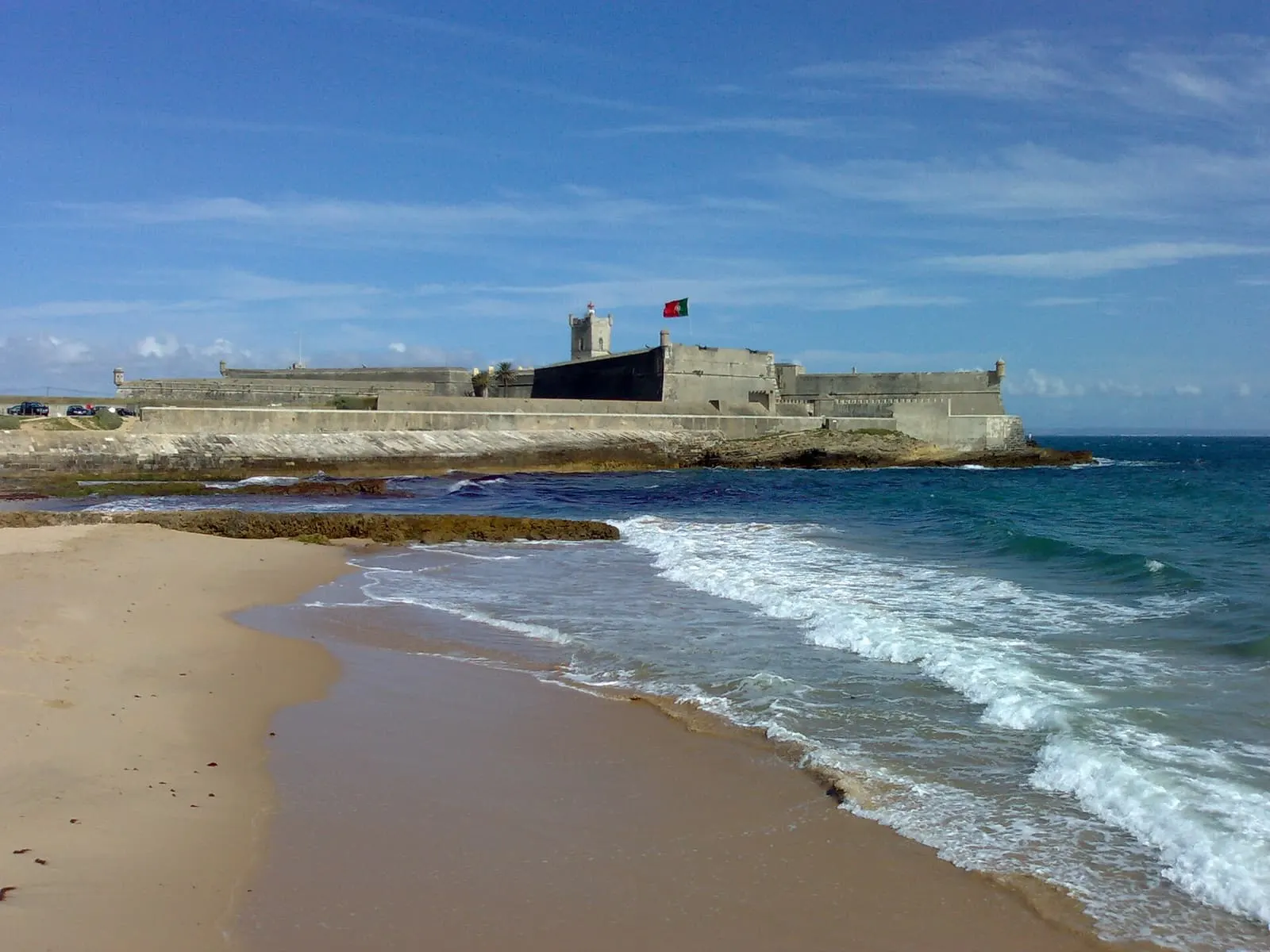
Cascais’s position, at the entrance to the Tagus bar, gave it an early military role. The town found itself in the path of attacks coming from the sea and, throughout the Early Modern period, filled with batteries and redoubts that watched over the coast. The Citadel, raised over an earlier fortification, and the array of small forts dotting the shoreline form part of the defensive line that protected the approach to Lisbon, of which the neighbouring Fort of São Julião da Barra was the largest element. Cascais is, in this sense, an excellent place to read on the ground the system of coastal forts that guarded the estuary.
The court by the sea
The great turning point comes in 1870, when King Luís I, with no further significant military function in the defence of the coast, ordered the governor’s house of the Citadel to be adapted into a royal summer residence. The decision changed the face of the town. Until the regicide of 1908 and the end of the Monarchy in 1910, the royal family spent the months of September and October in Cascais, and with them came the entire court.
The presence of the king made Cascais the country’s first great summering destination: where nets had once been dried, mansions, chalets and gardens now rose, designed by a society that came to bathe in the sea.
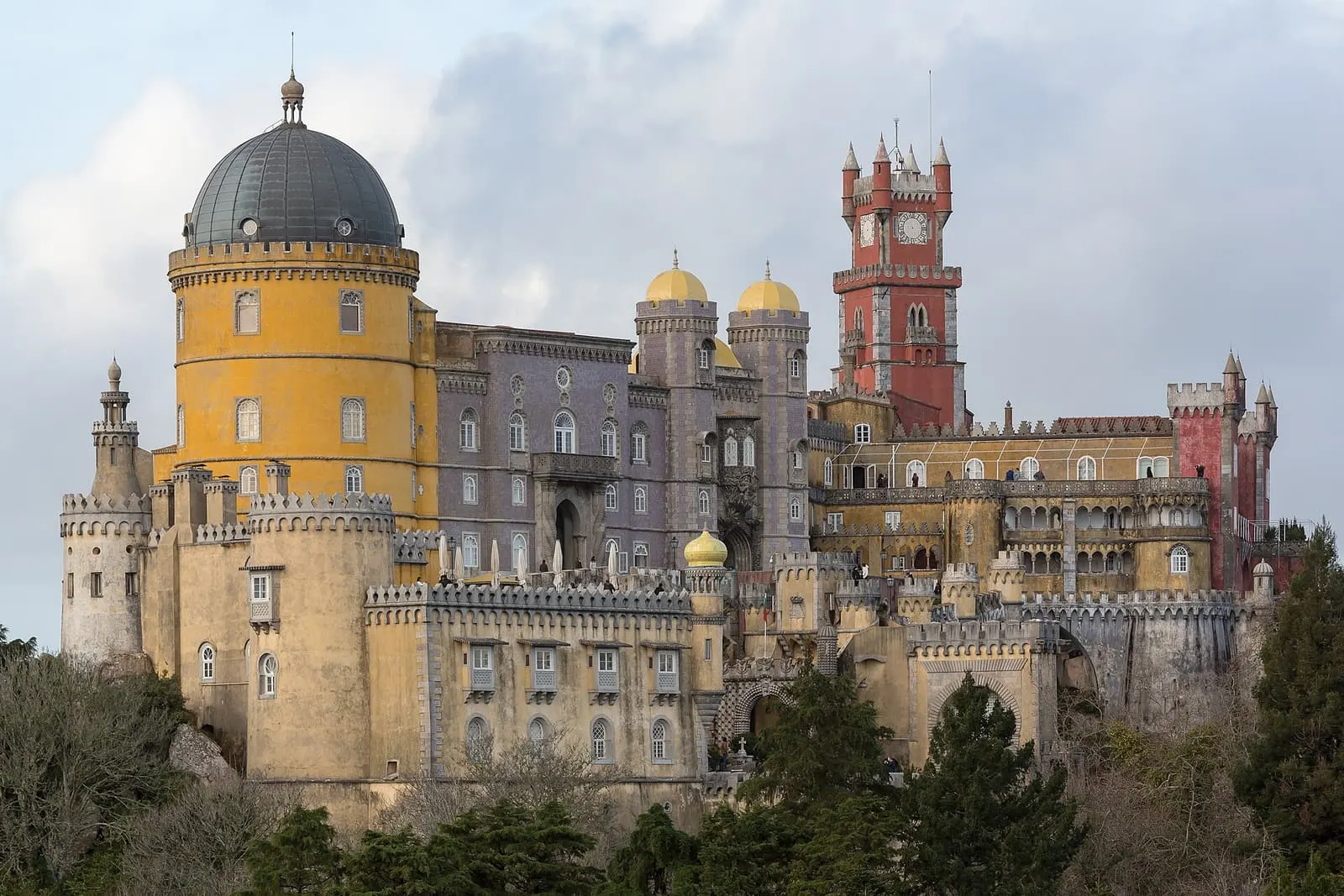
It was accompanied by the intellectual elite — the group known as the Vencidos da Vida (the Defeated of Life), with Eça de Queirós and Ramalho Ortigão among its members — and, above all, by a wave of residential building that transformed the Atlantic front. The pleasure estates and mansions that surrounded the town place it within the same tradition as the pleasure estates that aristocracy and bourgeoisie scattered across the outskirts of Lisbon and around the neighbouring hills of Sintra.
Heritage today
The Cascais one visits preserves the two layers in dialogue. The Boca do Inferno, west of the centre, is the most celebrated natural setting, where the sea works the cliff into a rugged chasm. Along the seafront come museums and repurposed forts one after another — testimonies to a time when defending the bar ceased to be urgent and leisure took its place. The arrival of the electric train, from 1930, consolidated the bathing vocation of the “Costa do Sol” and definitively linked the town to the capital.
Curiously, Cascais refused over time to be elevated to a city, preferring to keep its status as a town — a choice that says much about the identity it chose to project. A few kilometres away, Lisbon finds here its Atlantic balcony: the place where the court, and later the country, learned to see the sea as landscape, and not merely as a frontier to be defended.
Frequently asked questions
- Since when has Cascais been a town?
- Cascais was raised to the status of town on 7 June 1364, by charter of King Pedro I, who separated it from the territory of Sintra and granted it its own jurisdiction and judges.
- Why did Cascais become linked to the Portuguese royal family?
- In 1870, King Luís I adapted the former governor's house of the Citadel into a summer residence. Until the end of the Monarchy, the court spent the months of September and October in Cascais, drawing high society in its wake.
- What is the Boca do Inferno?
- It is a cavity carved by the sea into the cliffs west of the centre of Cascais, where the waves rush violently into a rocky chasm. It became one of the town's calling cards in the nineteenth century.
Sources
Keep exploring
Heritage nearby
More places to discover from here. Approximate straight-line distances, within 50 km.