Monuments
Castle of Mértola
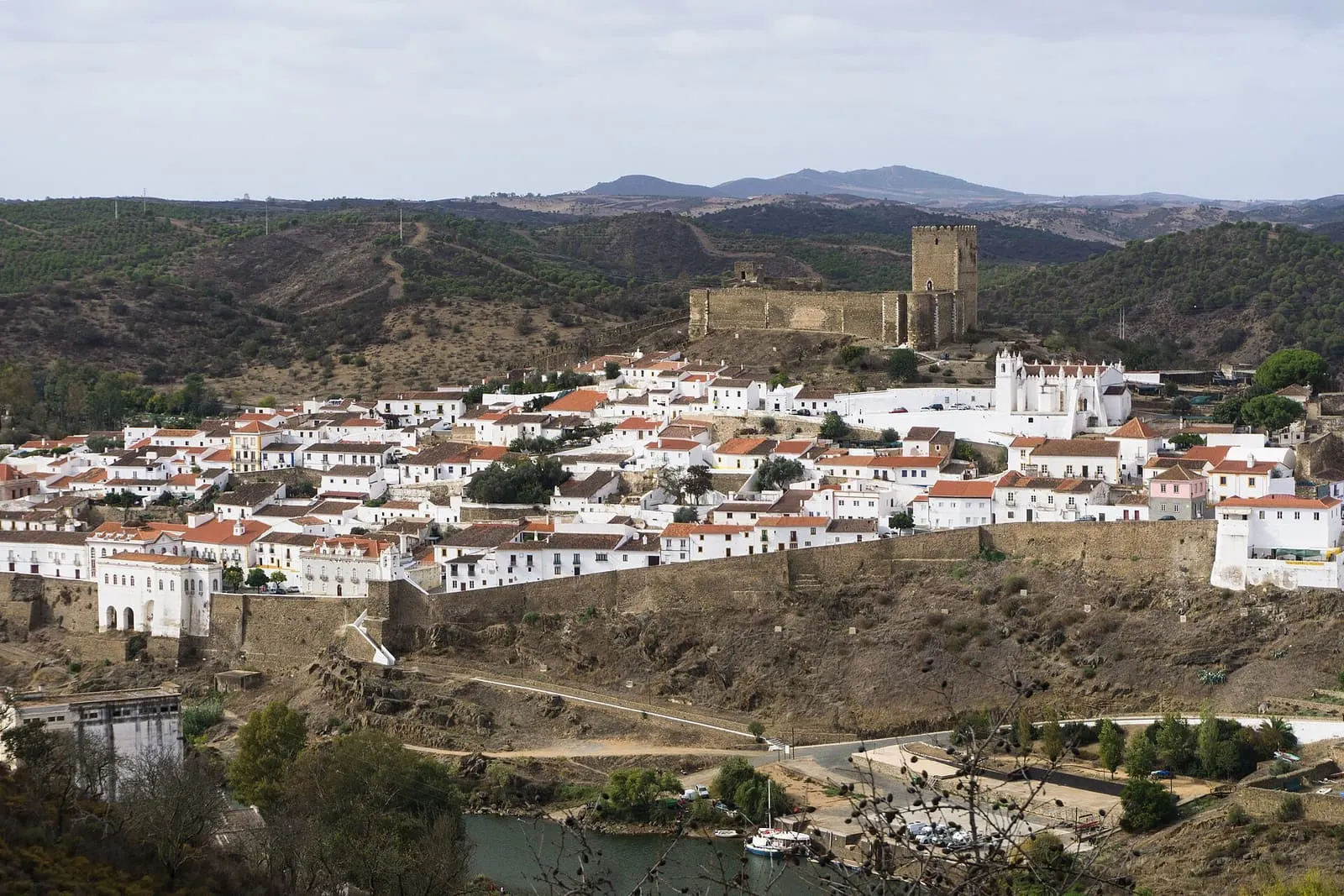
The Castle of Mértola, a medieval fortress raised over the Islamic citadel above the Guadiana, a National Monument in the museum-town of the Beja district.
- Location
- Mértola, Beja
- Built
- séc. XII–XIII (torre de menagem, 1292)
- Style
- Românico e gótico sobre alcáçova islâmica
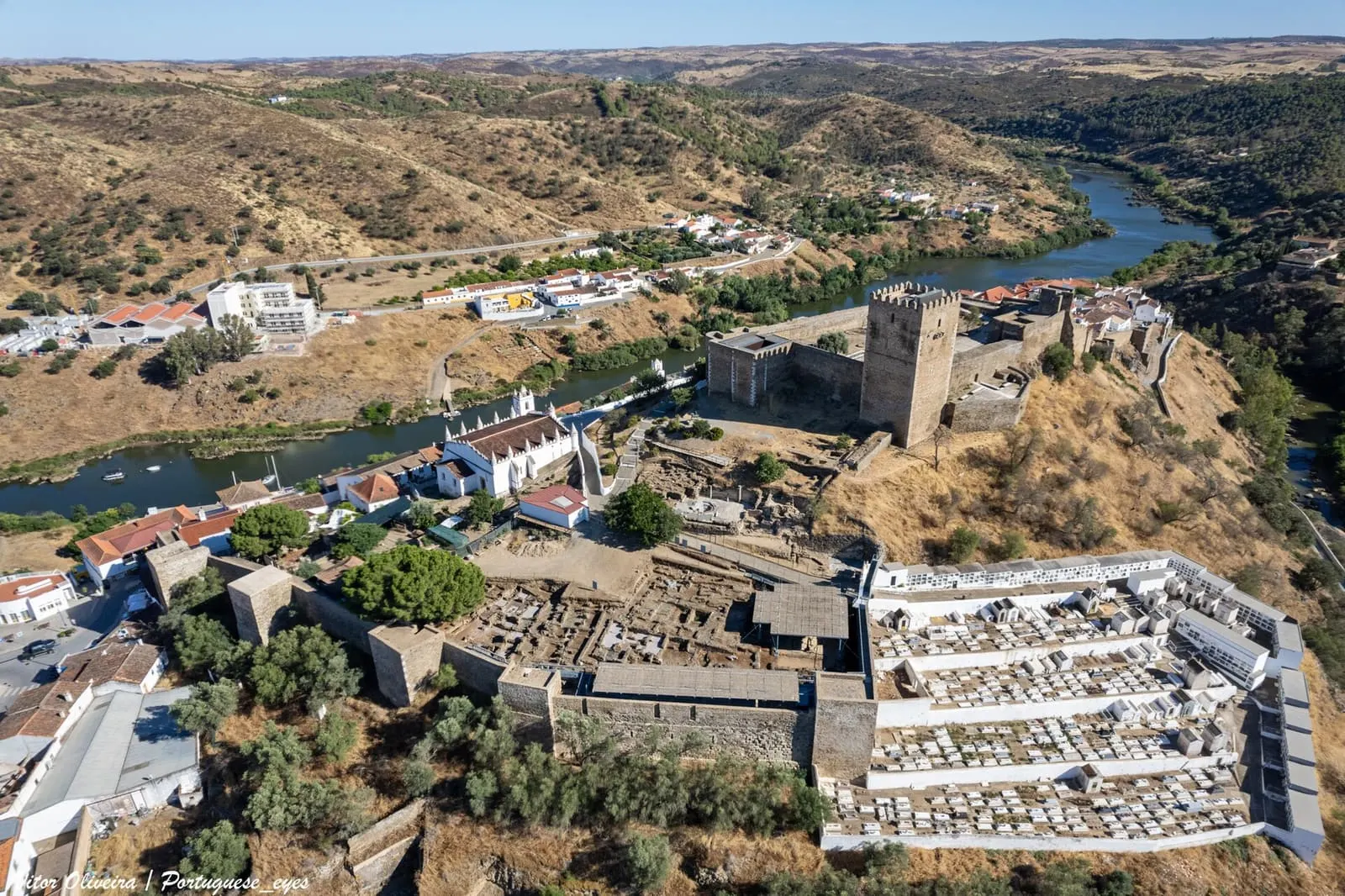
Suspended above the mouth of the Oeiras stream on the Guadiana, the Castle of Mértola crowns a rocky spur that commands the furthest point upstream where the river remained navigable. This position, more than any other factor, explains the site’s long strategic importance: it was here that Romans, Byzantines, Muslims and Christians settled in succession, leaving one of the densest urban stratigraphies in southern Portugal.
From Islamic citadel to Christian fortress
The present fortification rises over the Islamic citadel that, between the eighth and thirteenth centuries, formed the military and religious stronghold of Andalusian Martula. Benefiting from the mining deposits of the interior and from the river links to the Mediterranean, the settlement prospered to the point of becoming, in the eleventh century, the capital of an ephemeral independent emirate, the taifa of Mértola. From this prolonged presence survives a remarkable body of material, today studied and displayed within the field of Islamic archaeology in Portugal, of which Mértola is an essential reference.
The Christian conquest came late to this far edge of the Gharb. Only in 1238, already in the reign of Sancho II, did the forces of the Order of Santiago, commanded by Paio Peres Correia, take the town. Sancho granted it to the order, which established there its first Portuguese seat before transferring it to Palmela. Over the Muslim alcázar, the knights rebuilt the enclosure and the seigneurial stronghold, integrating them into the effort to fortify the southern frontier.
The stratigraphy of Mértola is a palimpsest: each conqueror built upon the foundations of the last, and the castle walls still hold Roman ashlars reused by Islamic and medieval builders.
The keep
The most imposing element of the complex is the keep, completed in 1292 by order of João Fernandes, master of Santiago, as recorded by an inscription on the structure itself. Quadrangular in plan and of considerable height, it rises at the north-eastern corner of the enclosure and served simultaneously as a watchtower over the river and as the fortified residence of the commander. Its silhouette, outlined against the white houses of the town, has become the most recognisable image of Mértola. Together with counterparts such as the Castle of Silves, it constitutes one of the most expressive testimonies of the Luso-Islamic military heritage of the south.
Listed heritage and museum-town
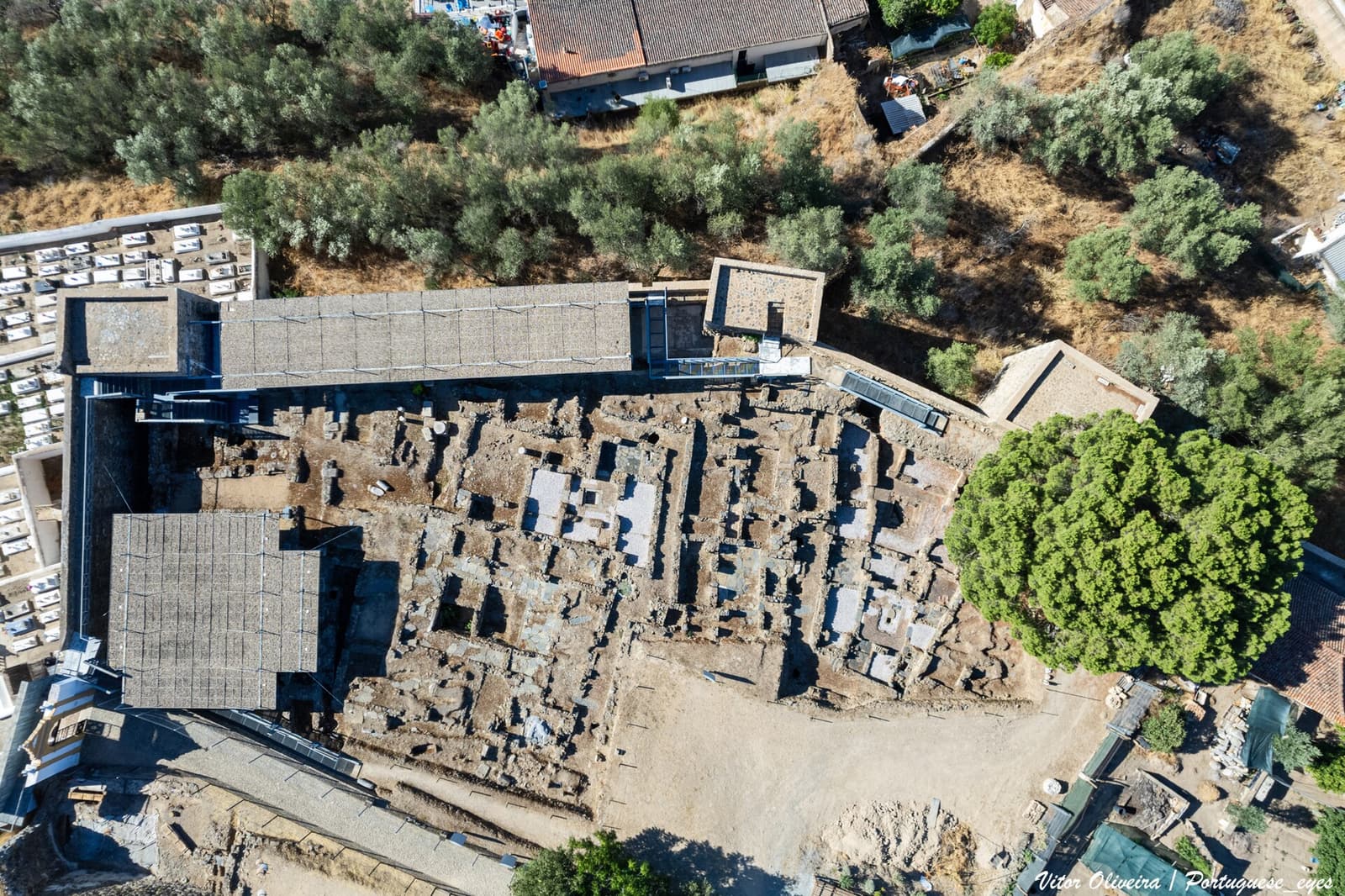
The castle was classified as a National Monument by Decree no. 38147 of 5 January 1951, taking its place in the network of castles of Portugal that mark out the territory. Since 1978, the campaigns of the Archaeological Field of Mértola have turned the precinct and the town into a laboratory of continuous research, bringing to light a late-medieval necropolis, an Islamic quarter and a Palaeochristian religious complex with cryptoporticus and baptistery.
Today the keep houses one of the units of the Museum of Mértola, and the ensemble lies at the heart of the project that makes the town of Mértola a singular case of integral musealisation. The site also features among the candidacies under study within the Tentative List of Mértola for World Heritage, recognition of the exceptional historical continuity that the castle, more than an isolated monument, helps to narrate.
Frequently asked questions
- When was the Castle of Mértola taken from the Muslims?
- Mértola was conquered in 1238, during the reign of Sancho II, by forces of the Order of Santiago commanded by Paio Peres Correia. The town then became the first Portuguese seat of that military order.
- From what date is the castle's keep?
- The imposing keep was completed in 1292, by order of João Fernandes, master of the Order of Santiago, as recorded by an inscription still visible on the structure.
- Can the castle be visited?
- Yes. The keep forms part of the circuit of the Museum of Mértola and brings together archaeological collections with Roman, Palaeochristian and Islamic finds gathered in the town.
Sources
Keep exploring
Heritage nearby
More places to discover from here. Approximate straight-line distances, within 50 km.