Archaeology
Archaeological Mértola
Archaeological Mértola: the museum-town of the Baixo Alentejo and its Archaeological Field Centre, a benchmark for Islamic and Late Antique archaeology in Portugal.
- Location
- Mértola, Beja
- Built
- ocupação contínua desde a Idade do Ferro
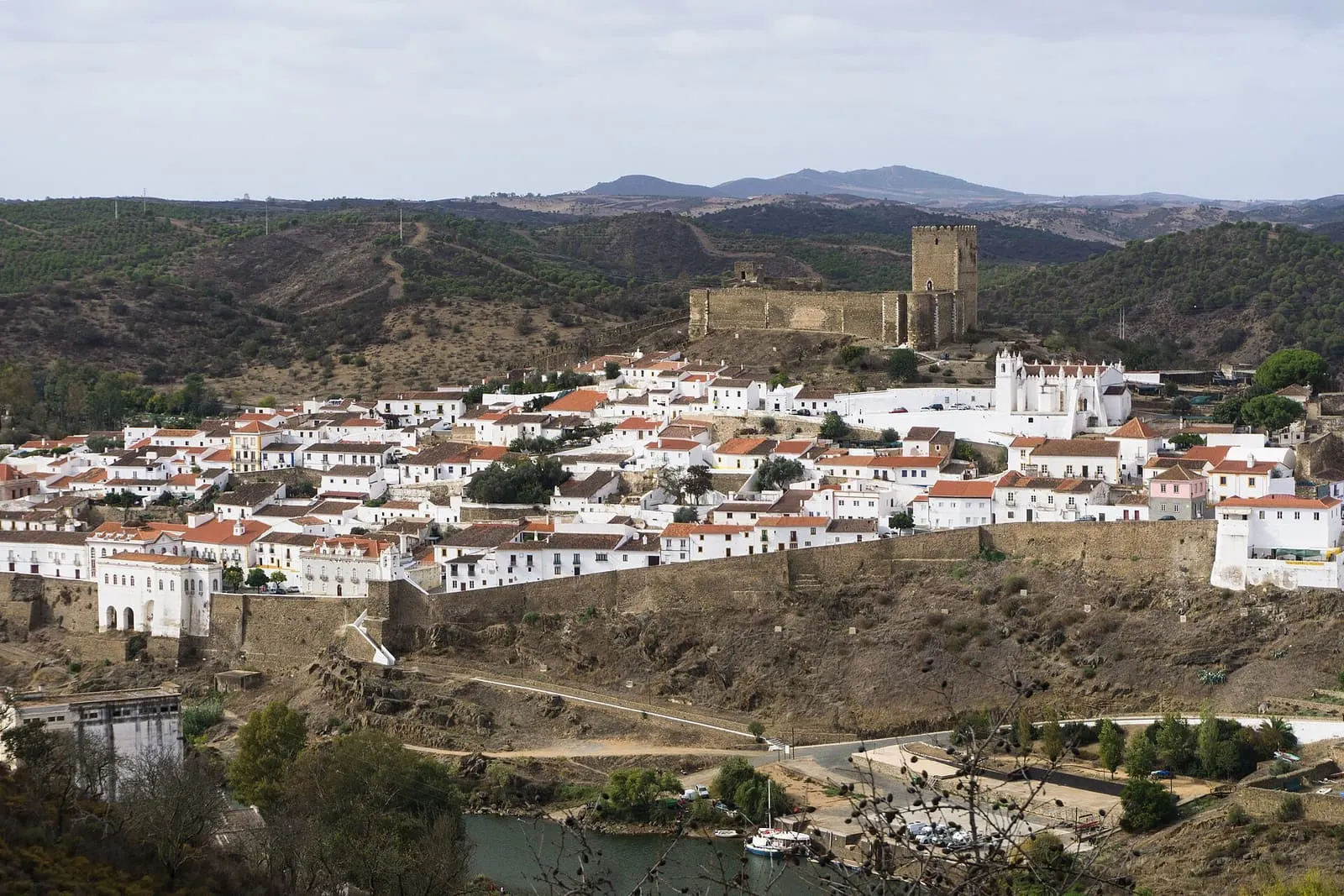
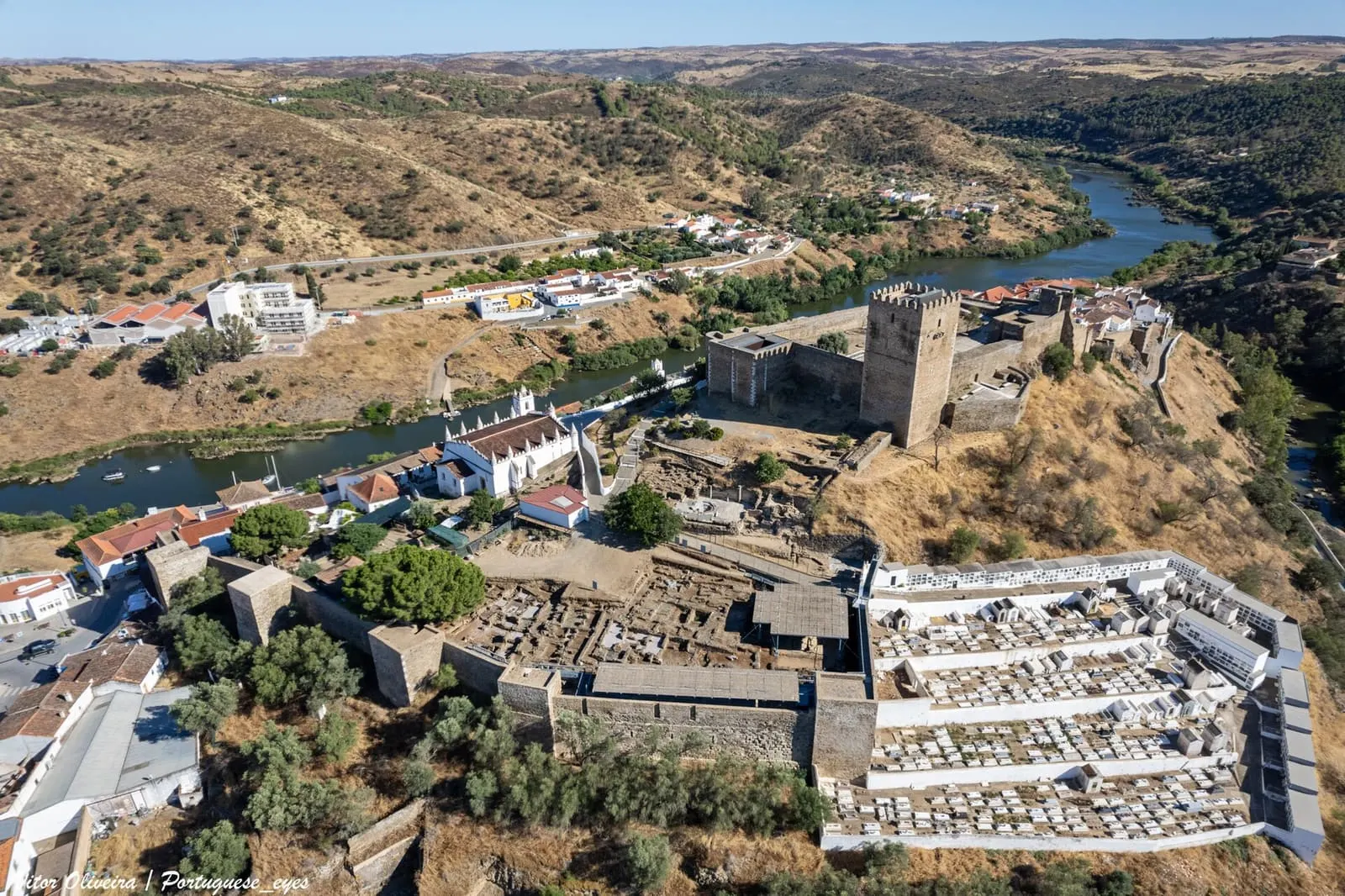
Perched upon a rocky spur at the confluence of the Guadiana with the Oeiras stream, Mértola is, in Portugal, the most complete example of a town where the stratigraphy of time remains legible at the surface. Phoenicians, Romans, Byzantines, Suevi, Muslims and Christians succeeded one another on the same promontory without ever abandoning it, making this place in the Baixo Alentejo a rare laboratory for the study of the Mediterranean longue durée. The whole town functions today as an archaeological site, a museum and a research centre.
From Roman Myrtilis to Islamic Martula
Mértola’s location explains its history: it was the furthest navigable point upstream on the Guadiana, the head of a river route linking the mining interior of the Alentejo and the pyrite belt to the Mediterranean. The Romans made it Myrtilis Iulia, a municipium that shipped copper and silver down the river and minted its own coinage. From that period survive the cryptoporticus, stretches of wall and a rich epigraphy, in dialogue with the broader panorama of Roman Portugal and its archaeology.
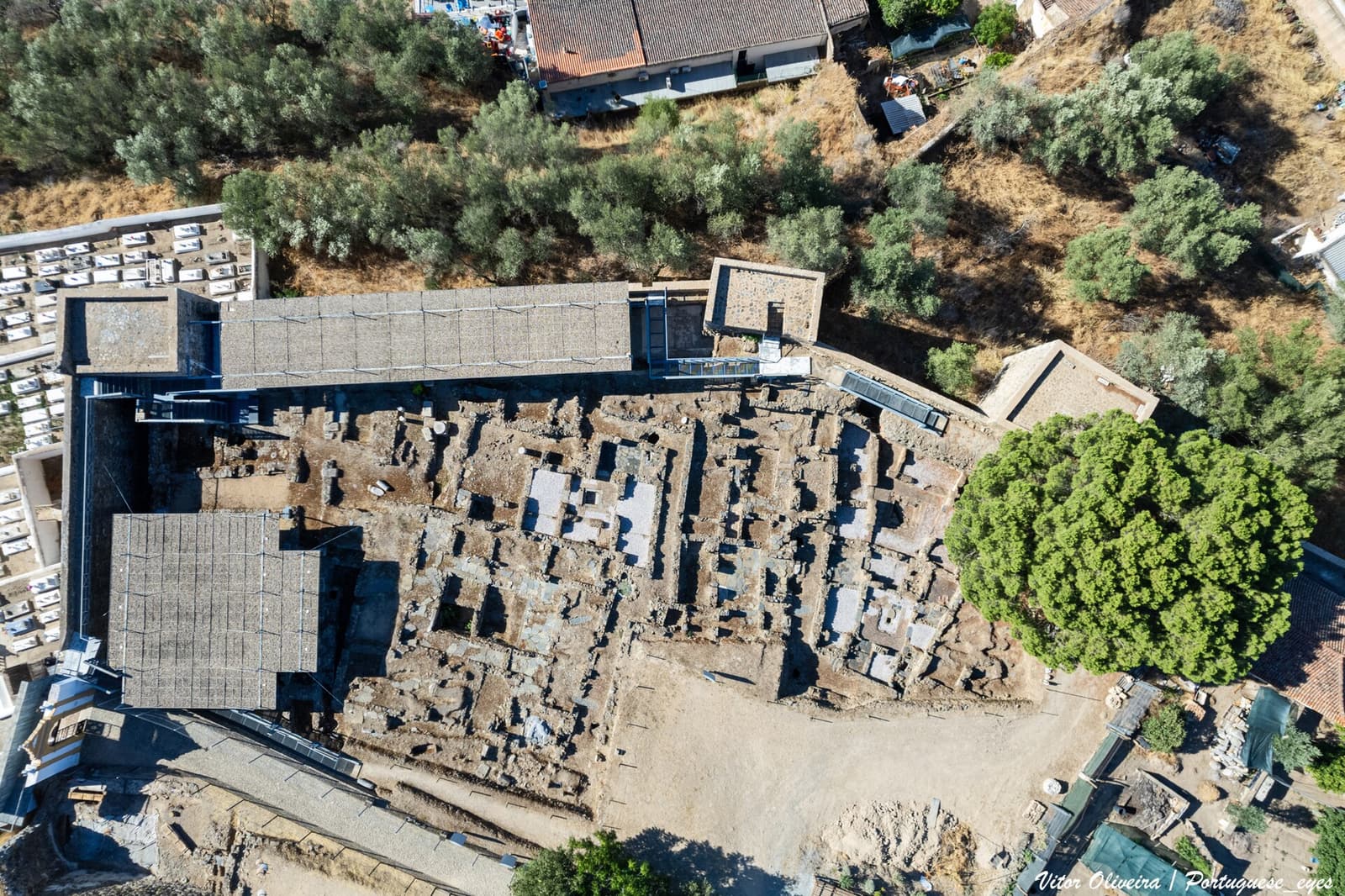
In Late Antiquity, Mértola was the seat of a bishopric and boasted a remarkable Palaeochristian basilica, whose collection of funerary inscriptions - the Rossio do Carmo - constitutes one of the largest Christian epigraphic complexes in the Peninsula. Conquered by the Muslims in 713, it became Martula, a prosperous port-city that even served as the capital of an ephemeral taifa in the mid-eleventh century. The alcáçova (citadel) quarter, excavated beside the castle, and the abundant al-Andalus ceramic assemblages make Mértola a central case study for Islamic archaeology in Portuguese territory.
The Archaeological Field Centre and the museum-town model
Contemporary Mértola as an archaeological reference was born in 1978, when the archaeologist Cláudio Torres, at the invitation of the municipality that emerged from the 25 April Revolution, began systematic work that would be formalised in 1988 as the Campo Arqueológico de Mértola association. More than excavating, the project set out to halt the depopulation of a declining border town, linking scientific research, training, job creation and local identity.
Excavation is not an end in itself: in Mértola, knowing the past has become a deliberate instrument for the development of a fragile interior territory.
This philosophy gave rise to the museum-town model, in which the collection is distributed across several centres scattered among the houses - Islamic art, the Palaeochristian basilica, the Roman house, sacred art, weaving, the forge - articulated with the monuments open to visitors, among them the castle of Mértola and the parish church, a former mosque still recognisable in its plan and its mihrab. The itinerary through the town of Mértola is thus at once urban and museological.
Recognition and the World Heritage bid
The Field Centre’s sustained work earned national and international recognition, including the Europa Nostra award. In 2016, Mértola was inscribed on the Portuguese Tentative List for UNESCO World Heritage, on the basis of the exceptional value of its urban ensemble and the continuity of occupation over nearly three millennia. The bid underlines not only the richness of the material remains, but also the pioneering character of the safeguarding project itself, today studied as a reference in Portuguese archaeology as a socially committed practice.
Frequently asked questions
- What is the museum-town of Mértola?
- It is a museological model that turns the town itself into a heritage itinerary, bringing together several thematic centres - the castle, the Palaeochristian basilica, Islamic art, the Roman house, among others - linked to the archaeological sites in situ.
- When was the Archaeological Field Centre of Mértola created?
- Systematic archaeological work began in 1978 under Cláudio Torres; the Campo Arqueológico de Mértola association was formally established in 1988.
- Why is Mértola important for Islamic archaeology?
- The alcáçova (citadel) quarters and the al-Andalus ceramic assemblage make Mértola one of Europe's principal references for the study of the Islamic period and of the transition between Late Antiquity and the Middle Ages.
Sources
Keep exploring
Heritage nearby
More places to discover from here. Approximate straight-line distances, within 50 km.