Monuments
Castle of Monsanto
The Castle of Monsanto, a Templar fortress wedged among the granite boulders of the most Portuguese village in Portugal, in Idanha-a-Nova, district of Castelo…
- Location
- Monsanto, Castelo Branco
- Built
- século XII
- Style
- Românico / Gótico militar
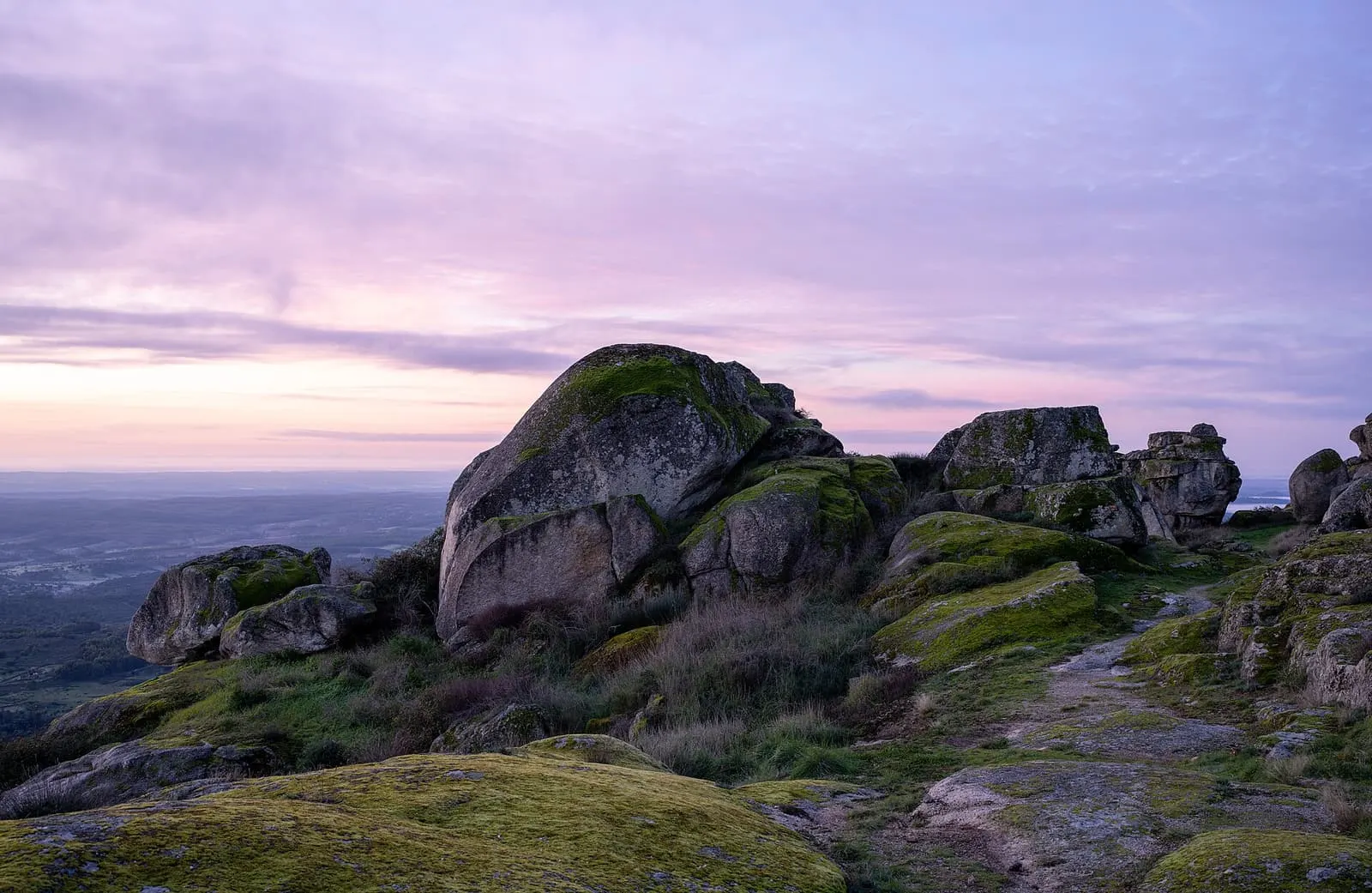
Crowning a granite hilltop that dominates the plain of the Beira Baixa, the Castle of Monsanto merges with the colossal boulders among which it was built. More than a fortification set upon rock, it seems carved from the mountain itself: walls and blocks of granite interlock so closely that, from a distance, it is hard to tell the work of man from the work of nature. This symbiosis between military architecture and landscape has made the ensemble one of the most recognisable images of the villages and castles of the Beira frontier.
Templar foundation and frontier role
The history of the castle begins in the context of the Reconquista and the consolidation of the eastern frontier of the young kingdom. In 1165, Afonso Henriques granted a charter to Monsanto and donated the domain to the Order of the Temple, charged with repopulating and defending the territory. It fell to Master Gualdim Pais — the same man who directed the building of Tomar and Almourol — to oversee the construction of the fortress, completed around 1171.
The choice of site was no accident: at more than 750 metres in altitude, Monsanto kept watch over the roads linking the Beira to the Castilian border and to the nearby ancient episcopal city, today attested by the remarkable ensemble of the Egitânia in Idanha-a-Velha. It thus formed part of the line of defence that, over the centuries, scattered this region with powerful military frontier structures.
In Monsanto, granite is at once the raw material of the castle and its greatest defensive ally: the boulders surrounding the enclosure are as impassable as any wall.
The fortress and its remains
The enclosure followed an irregular polygonal plan, adapted to the rocky outcrops, reinforced by quadrangular towers and crossed by crenellated wall-walks. Of the medieval ensemble, two landmarks above all survive: the Lucano Tower, a former bell tower that rises at the entrance to the village, and the Pião Tower, at the highest point. The remodellings of the fifteenth and sixteenth centuries, along with nineteenth-century interventions, altered the original appearance, but the impregnable character endured until the decline of the position as a stronghold of war.
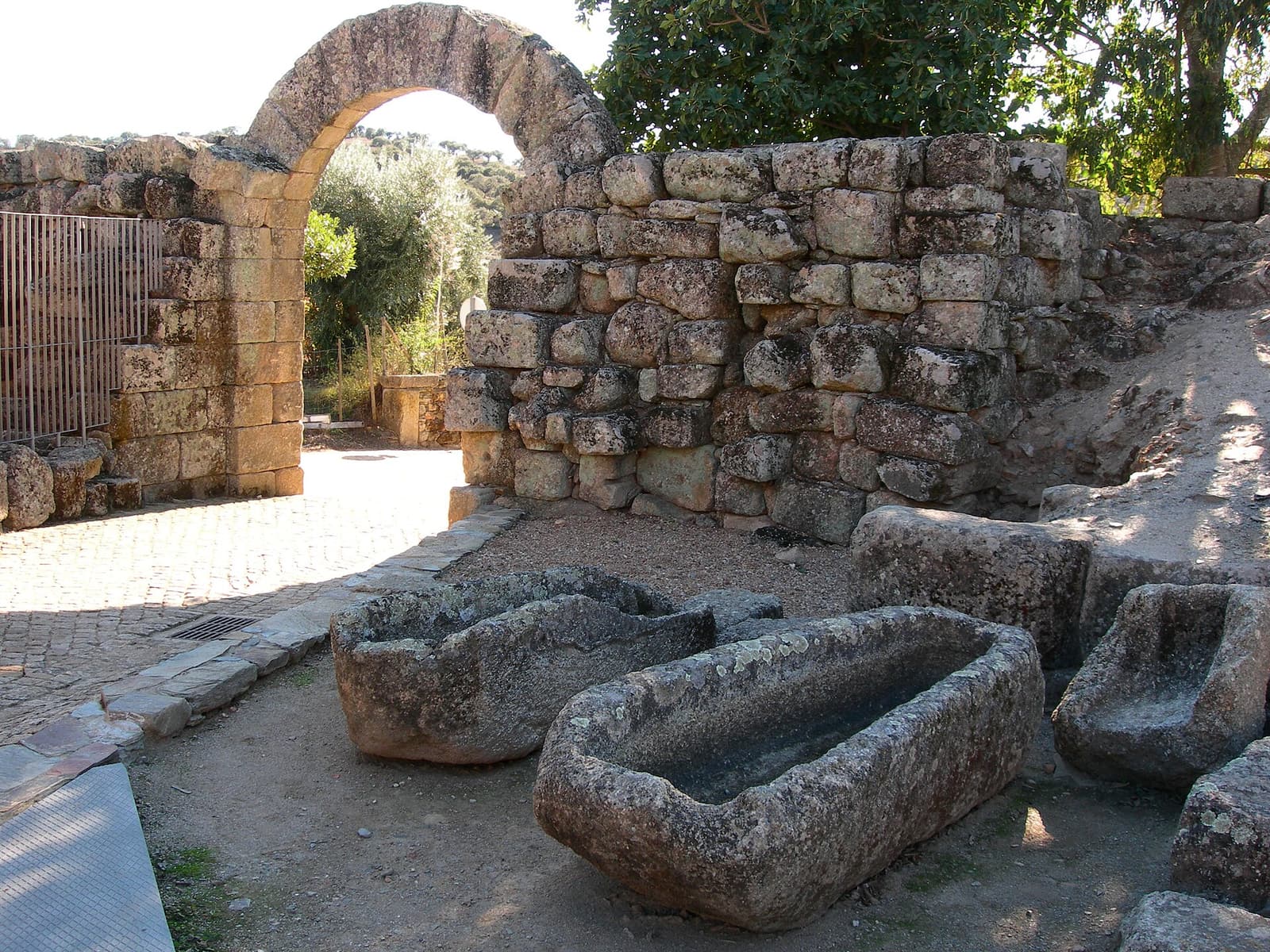
Within the enclosure there still survive ruins of chapels, graves hewn into the rock, and cisterns, vestiges of a settlement that extended from the Castro and Roman occupation to the modern era.
Legend, festival and identity
Monsanto is inseparable from the so-called Festa das Cruzes, or Festival of the Castle, celebrated on 3 May. The tradition recalls a legendary siege in which the besieged, their provisions exhausted, are said to have thrown the last calf, stuffed with wheat, over the walls — convincing the attackers that they had inexhaustible supplies and leading them to give up. In memory of the episode, the young women throw flower-filled pitchers from the top of the walls, a gesture that re-enacts the cunning that saved the settlement.
To this symbolic charge was added, in 1938, Monsanto’s victory in the Most Portuguese Village in Portugal competition, a distinction embodied in the famous Silver Cockerel, a replica of which crowns the Lucano Tower. Today one of the twelve Historical Villages of Portugal, Monsanto lives on its granite architecture and the castle that gave it both name and protection.
Listed as a National Monument since 1948, the Castle of Monsanto remains one of the most expressive examples of how Portuguese medieval fortification entered into dialogue with the terrain, a central theme in reading the great castles of the country’s central interior.
Frequently asked questions
- Where is the Castle of Monsanto?
- It rises atop the hill overlooking the village of Monsanto, in the civil parish of Monsanto and Idanha-a-Velha, municipality of Idanha-a-Nova, district of Castelo Branco, in the Beira Baixa region.
- Who ordered the Castle of Monsanto to be built?
- Following the donation by Afonso Henriques to the Templars in 1165, the fortress was raised under the direction of Master Gualdim Pais and was completed around 1171.
- Why is Monsanto the most Portuguese village in Portugal?
- In 1938, Monsanto won the Most Portuguese Village in Portugal competition, receiving the Silver Cockerel, a replica of which still stands atop the Lucano Tower.
Sources
Keep exploring
Heritage nearby
More places to discover from here. Approximate straight-line distances, within 50 km.