Monuments
Numão Castle
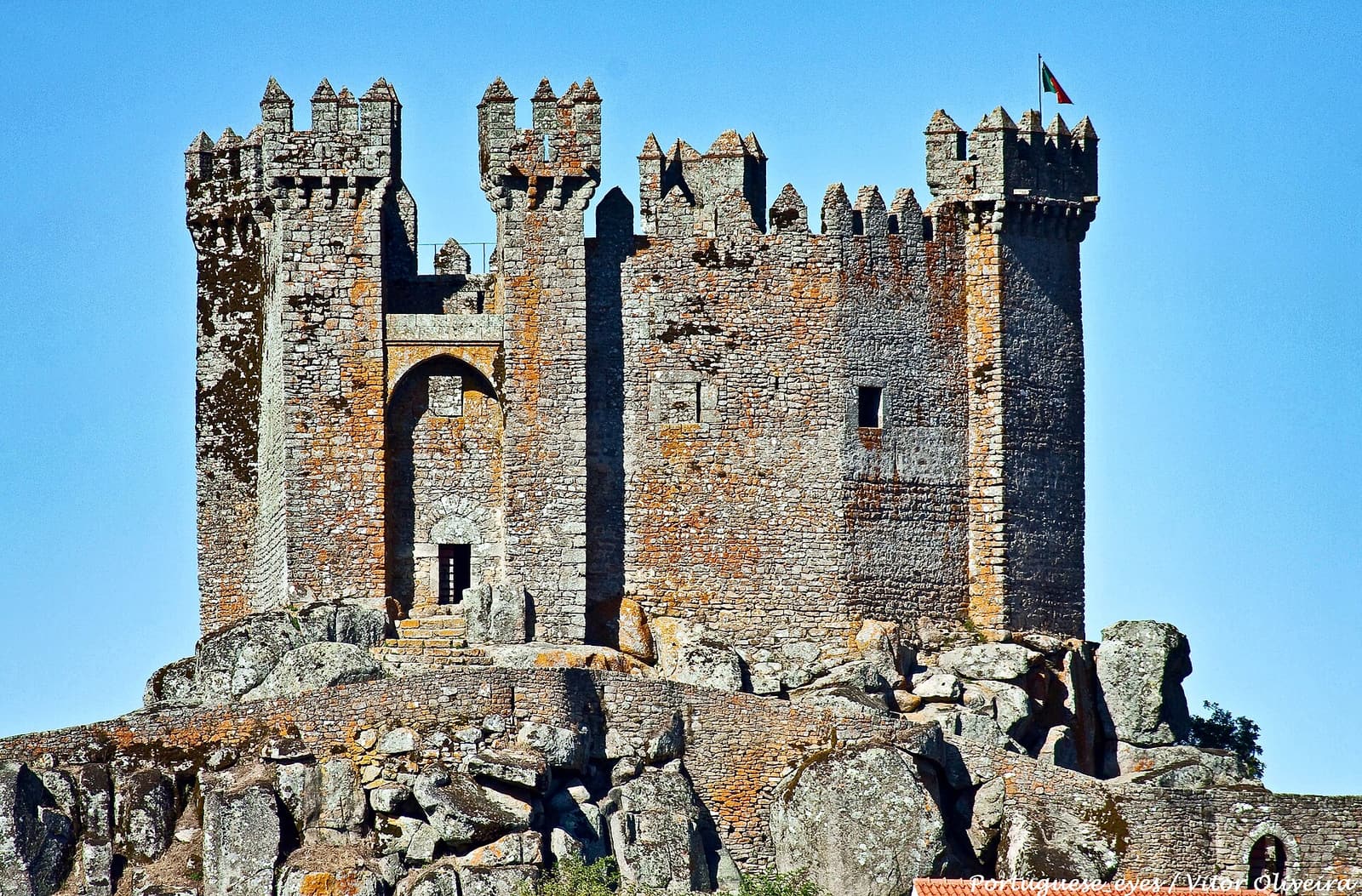
Numão Castle, a medieval fortress of the Upper Douro in Vila Nova de Foz Côa, district of Guarda, set within a vast walled town classified as a National Monument.
- Location
- Numão, Guarda
- Built
- origens medievais (referência a fortaleza em 960); obras sob D. Sancho I (1189) e reedificação por D. Dinis (1285)
- Style
- Românico e Gótico
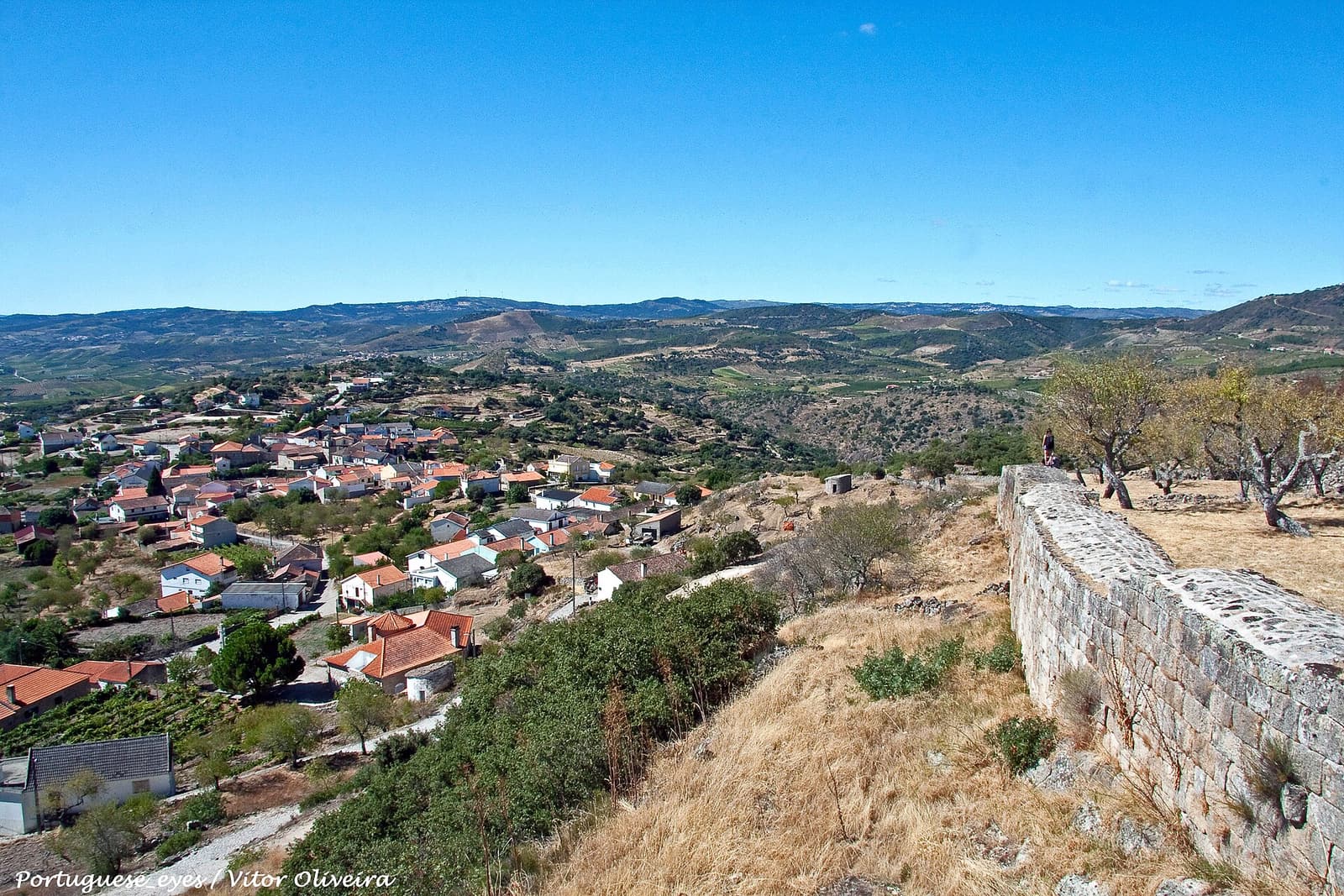
In the heart of the Upper Douro, on a rocky knoll some 677 metres above sea level, Numão Castle commands a horizon of plateaus and vine-clad slopes beside the village of Numão, in the municipality of Vila Nova de Foz Côa, district of Guarda. More than an isolated fortress, what survives here is a vast walled enclosure of irregular oval plan, around two hectares in extent, where garrison, church, cistern and houses once came together. For this reason the site is often referred to as the “Castle and Walled Town of Numão”.
From prehistoric origins to the medieval frontier
The choice of the site was no accident. Excavations have revealed an occupation reaching back to prehistory, with levels from the Chalcolithic and the Bronze Age, continuing afterwards into the Roman period. The first written mention of a fortress dates from 960, the year in which Numão appears in the list of strongholds donated by D. Flâmula to the Monastery of Guimarães — evidence that, even then, this point controlled the passes of the Upper Douro.
During the consolidation of the kingdom, the position gained military weight. The struggles of the Reconquest are thought to have damaged the original castle, followed by improvement works in 1189, in the reign of D. Sancho I, to which the keep is attributed. Later, at the end of the thirteenth century, in 1285, D. Dinis ordered the fortress rebuilt, fixing much of the character still recognisable today in the curtain walls and in the gates adapted to the terrain.
An enclosure between Romanesque and Gothic
The defensive perimeter, which combines Romanesque and Gothic elements, was reinforced by a large number of towers — tradition points to around fifteen at the outset, of which half a dozen survive today. Several gates gave access to the interior, among them the Main Gate, to the south. Beside it rise the ruins of the church of Santa Maria do Castelo, of Romanesque design, and the vestiges of a necropolis, with graves cut into the rock that popular memory christened the “cemetery of the Moors”. At the centre of the enclosure a cistern is still preserved, an essential feature for resistance in the event of a siege.
The town within the walls lost importance from the sixteenth century onwards, with the population moving outside the walls and the disappearance of the seigneurial functions that had sustained it. Progressive abandonment left the complex in ruins, a situation only reversed in the twentieth century, when restoration campaigns promoted by the heritage authorities consolidated walls and structures.
Visiting Numão
To walk through Numão Castle is to read, on the ground, several layers of superimposed history — from the prehistoric settlement to the medieval walled town. Classified as a National Monument since 1910, it forms part of the circuit of the great castles of the interior and of the fortified towns that dot the Portuguese north-east. A short distance away lie the Côa valley and its famous groups of rock art, making this knoll a privileged vantage point for those exploring the heritage of the Upper Douro, in the interior of the Centro region.
Frequently asked questions
- Where is Numão Castle located?
- It rises atop a rocky knoll beside the village of Numão, in the municipality of Vila Nova de Foz Côa, district of Guarda, in the Upper Douro region, deep in the north-eastern interior of Portugal.
- How old is the fortress of Numão?
- Occupation of the site goes back to prehistory, with levels from the Chalcolithic and the Bronze Age. The first written reference to a fortress dates from 960, when Numão appears among the strongholds donated by D. Flâmula to the Monastery of Guimarães.
- Why is it considered a walled town and not merely a castle?
- The fortified enclosure, with an irregular oval plan of about two hectares, did not house only a military garrison: within the walls stood a settlement with a church, cistern and necropolis, forming a true medieval walled town.
- Is Numão Castle a National Monument?
- Yes. It has been classified as a National Monument since 1910.
Sources
Keep exploring
Heritage nearby
More places to discover from here. Approximate straight-line distances, within 50 km.