Archaeology
Castro de Santa Luzia
Castro de Santa Luzia, a fortified Iron Age settlement above Viana do Castelo, commanding the estuary of the River Lima and the Atlantic coast.
- Location
- Viana do Castelo, Viana do Castelo
- Built
- séc. IV a.C. (ocupação até séc. III–V d.C.)
- Style
- Arquitetura castreja
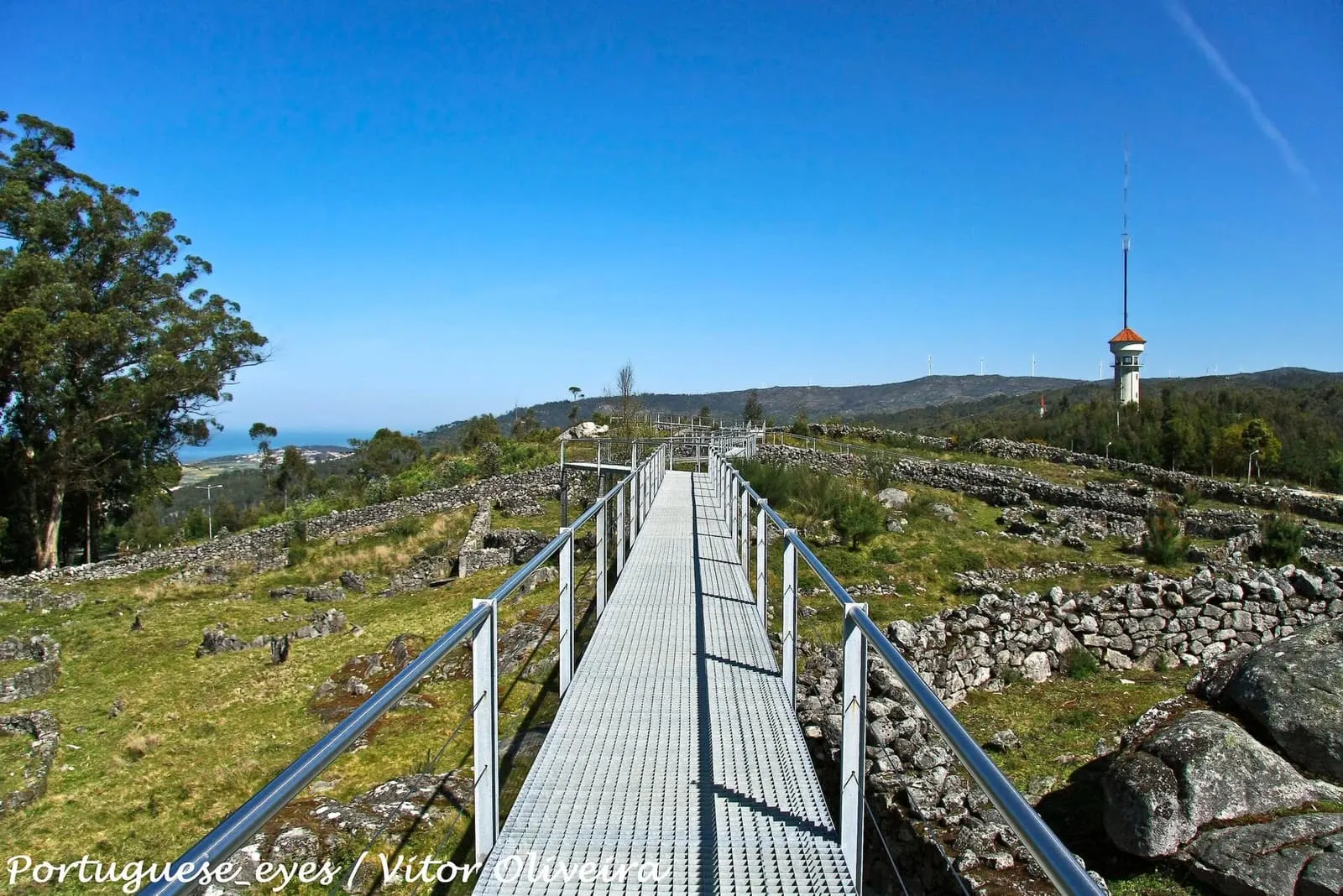
On the summit of Monte de Santa Luzia, at around 230 metres above the mouth of the River Lima, lies one of the most remarkable fortified settlements of the northwestern Iberian Peninsula. Known by local tradition as the “Old City of Santa Luzia” and in the archaeological literature as the Citânia de Santa Luzia, the site visually commands the entire Lima estuary and the Atlantic coastline, a strategic position that explains its importance and its longevity.
A Romanised Iron Age settlement
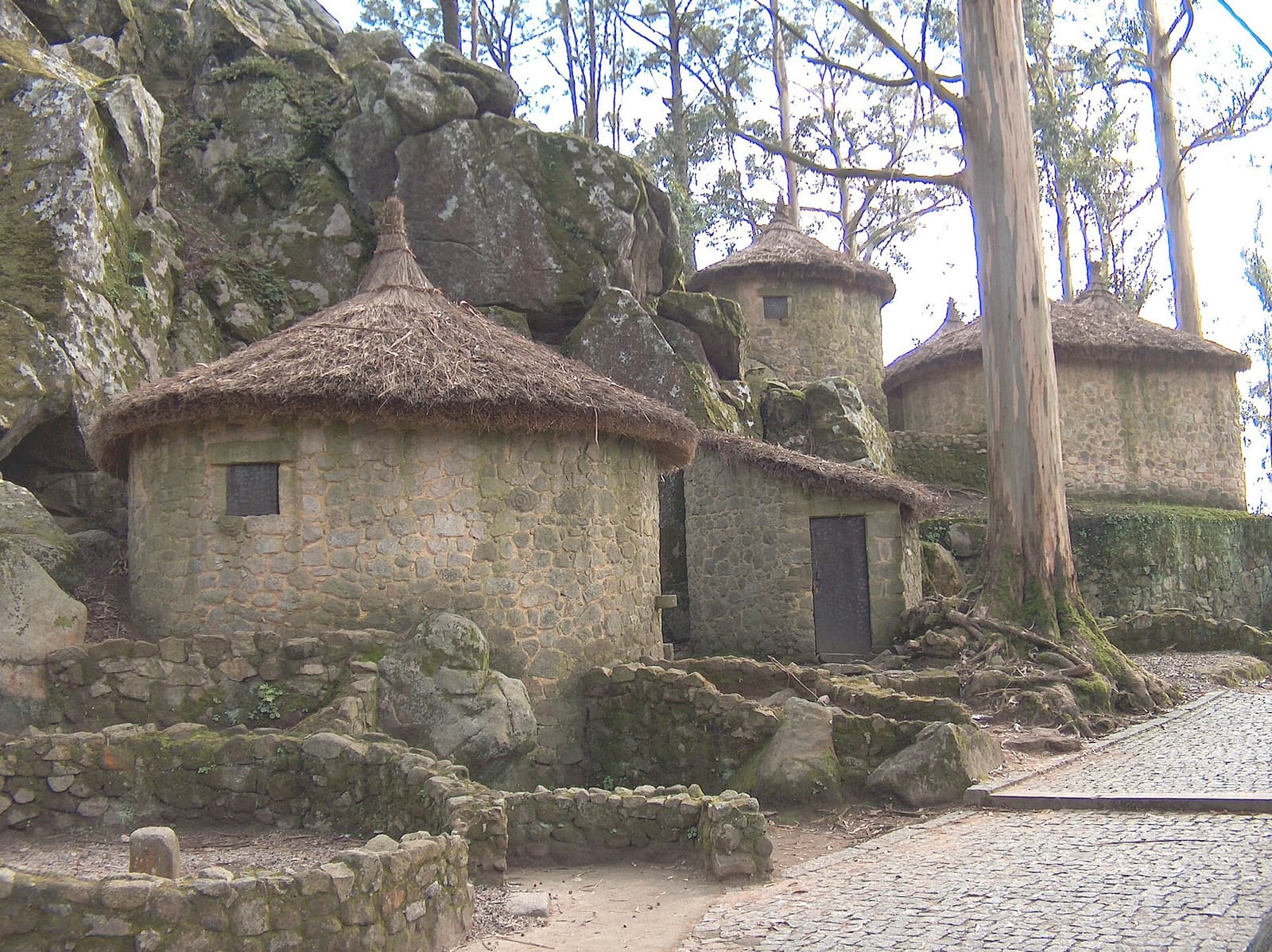
The hill fort belongs fully to the castro culture of the Northwest, sharing with sites such as the Citânia de Briteiros the layout of walled enclosures and the houses of circular, elliptical or rectangular plan grouped into blocks separated by streets. The occupation goes back to the Iron Age — with indications pointing to an earlier foundation — and continues significantly through the Roman period, the phase in which the settlement is thought to have reached its greatest development. The structures visible today reflect precisely that reorganisation of a Gallaeco-Roman character, in which the indigenous substratum intersects with imported urban techniques and models.
The defence of the complex rested on three lines of wall, formed by parallel stone faces with an inner fill of earth and gravel, reinforced by towers. This triple belt, combined with the natural slope of the hill, made the hill fort a position of difficult access and notable territorial control.
Only about a third of the settlement’s original area can be seen today — a substantial part of the ruins was destroyed by the construction of the Santa Luzia hotel and its access routes in the early twentieth century.
History of research
Scholarly knowledge of the ruins is old: there are documentary references dating back to the eighteenth century. The first excavations were carried out in 1876 by Joaquim Possidónio Narciso da Silva, but it is above all to the work undertaken in the early years of the twentieth century that we owe the urban and architectural configuration legible on the ground today. The finds from this and other settlements of the Alto Minho made the site an essential reference for the study of the protohistory and Romanisation of the region.
Classification and visiting
The ruins have been classified as a National Monument since 1926, by Decree no. 11454 of 19 February of that year. The site is now part of a visitor route on Monte de Santa Luzia, in Viana do Castelo, sharing the same hilltop with the sanctuary of the Sacred Heart of Jesus and its celebrated panorama over the Minho coast.
For its size, the organisation of its space and its defensive character, the Castro de Santa Luzia remains a privileged testimony to the fortified settlements that dotted the northwestern Iberian Peninsula, alongside other hill forts of the northern coast such as the Castro de Romariz. Read together, they make it possible to understand how these communities organised the territory on the eve of and throughout their encounter with Rome.
Frequently asked questions
- Where is the Castro de Santa Luzia?
- It stands on the summit of Monte de Santa Luzia, in the parish of Areosa, in Viana do Castelo, commanding the estuary of the River Lima and the Atlantic coast.
- From what period does the settlement date?
- It is a fortified Iron Age settlement, with an occupation that broadly extends from the 4th century BC into the Roman period, enduring through the first centuries of our era.
- Is it classified as a National Monument?
- Yes. The ruins have been classified as a National Monument since 1926, by Decree no. 11454 of 19 February 1926.
Sources
Keep exploring
Heritage nearby
More places to discover from here. Approximate straight-line distances, within 50 km.