Monuments
Church of Santa Engrácia / National Pantheon
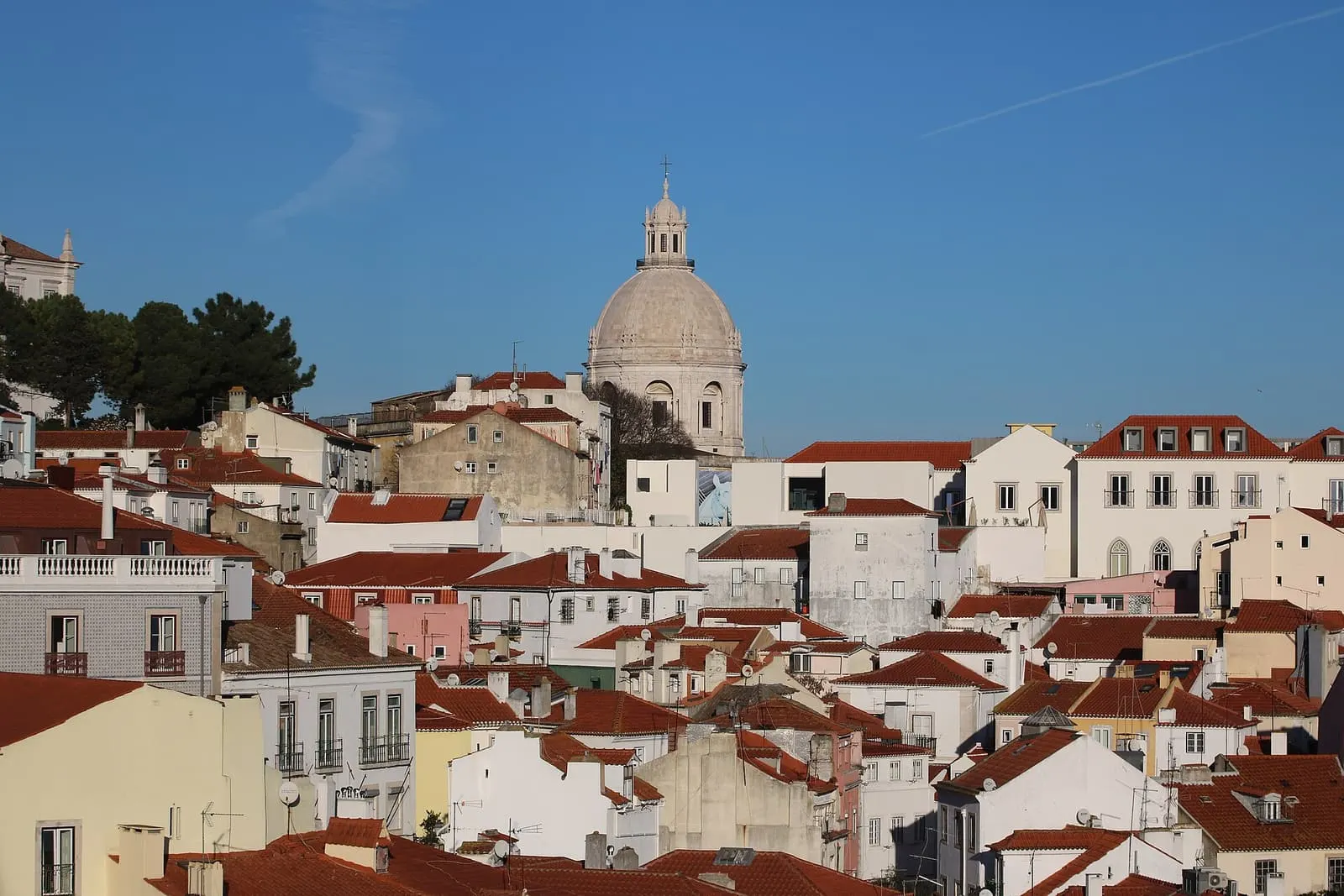
The Church of Santa Engrácia in Lisbon: a Baroque masterpiece of centralised plan and present-day National Pantheon, resting place of the nation's great figures.
- Location
- Lisboa, Lisboa
- Built
- 1682–1966
- Style
- Barroco
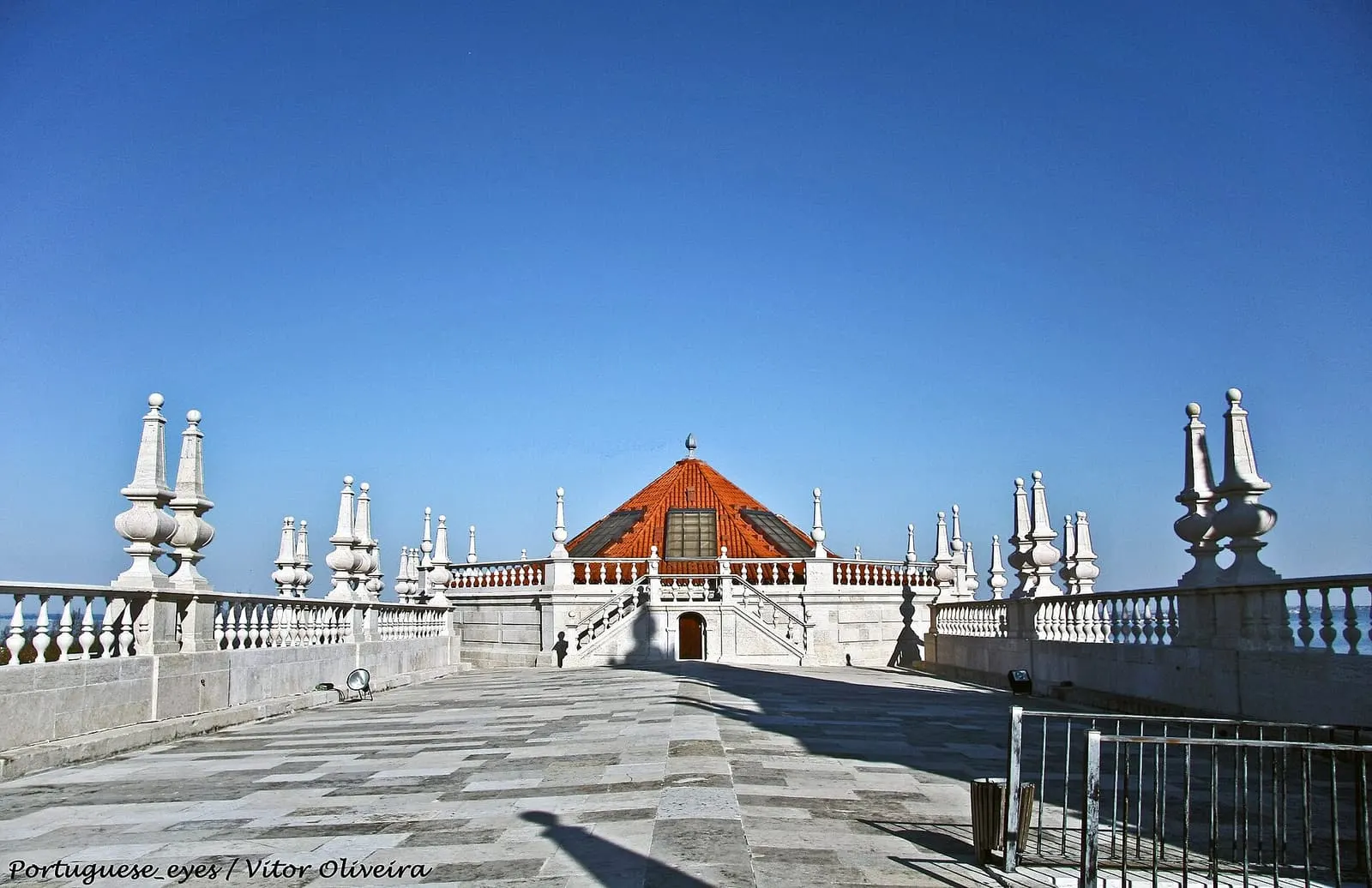
Raising its white dome over the hills of Alfama, facing the Tagus, the Church of Santa Engrácia is one of the most singular works of the Baroque in Portugal and, since the mid-twentieth century, the National Pantheon — a place of memory where the nation’s great figures rest. Its silhouette dominates the Campo de Santa Clara, beside the Monastery of São Vicente de Fora, and has become an unmistakable landmark of the city’s eastern skyline.
A work of three centuries
The history of the present building begins in 1682, when the royal architect João Antunes conceived a temple of remarkable boldness to replace an earlier church, founded in the early seventeenth century at the initiative of the Infanta D. Maria, daughter of D. Manuel I. Antunes died in 1712 with the work still far from finished, and the following decades accumulated interruptions, lack of funds and successive abandonments. The construction dragged on to such an extent that it gave rise to the popular saying “obras de Santa Engrácia” (“works of Santa Engrácia”), used to describe anything that never comes to an end.
Only in the twentieth century was the project resumed. The roofing of the nave with a great dome, the work of Luís Amoroso Lopes, finally closed the building, which was inaugurated in 1966 — almost 284 years after it was begun.
The interminable construction of Santa Engrácia entered the collective imagination so thoroughly that its name became synonymous with an eternal undertaking — a rare case of a monument that bequeathed an idiomatic expression to the Portuguese language.
The language of the Baroque
The church is distinguished by its centralised plan in the form of a Greek cross, with a square central space, three apsidal chapels and four towers at the corners. The exterior unfolds in a play of curves and counter-curves, with undulating elevations and an alternation of triangular and circular pediments, in an inventive and dynamic interpretation of the classical repertoire that makes it one of the most daring Baroque compositions of the Iberian Peninsula.
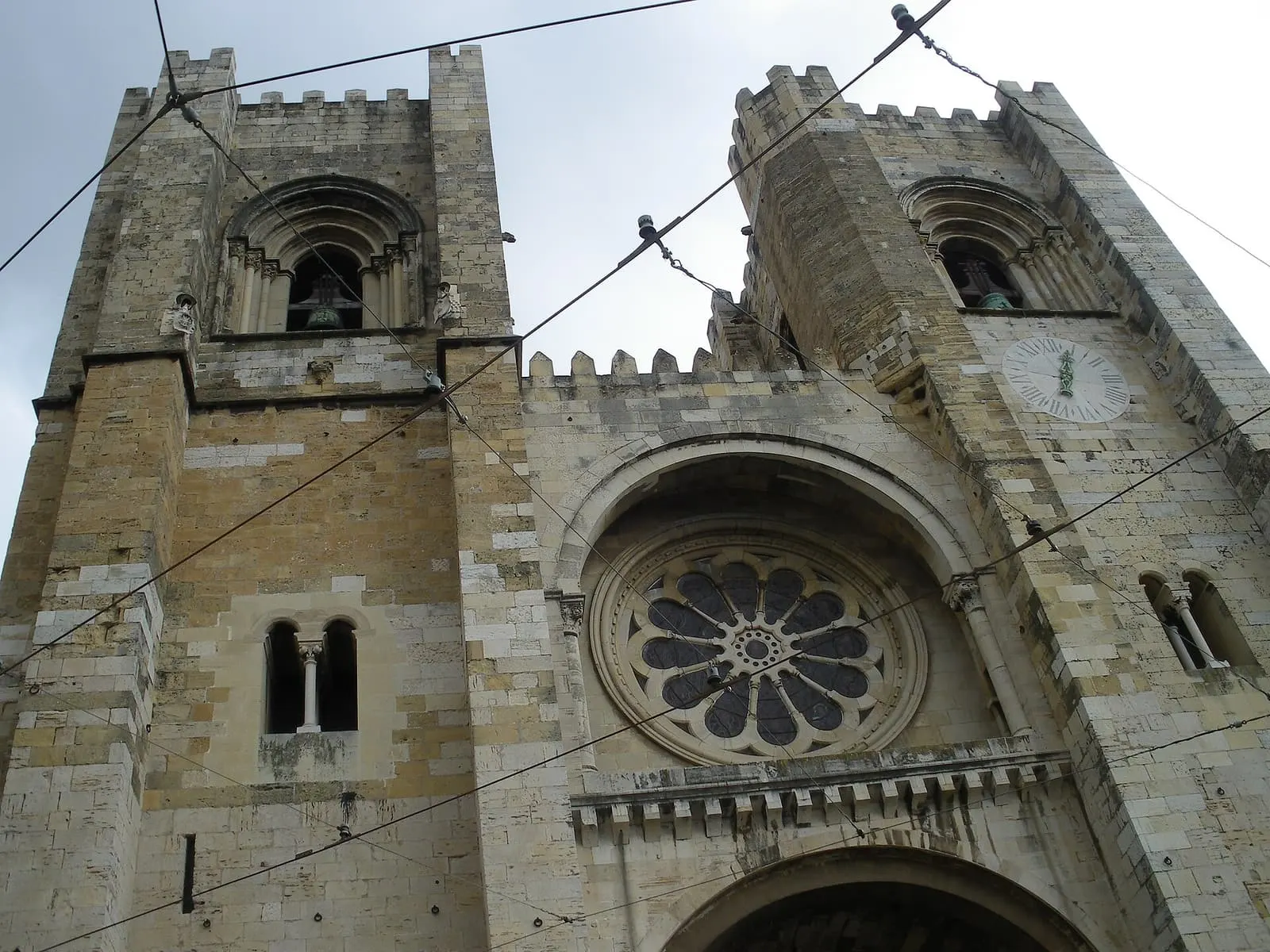
In the interior, the work of polychrome marble inlay — in shades of pink, black and white — covers walls and floors, creating chromatic contrasts and a subtle play of light beneath the dome. This language of inlaid marble brings Santa Engrácia close to the great tradition of Baroque sculpture and stonework that also runs through other churches of the capital, such as the Carmo Church and the neighbouring Lisbon Cathedral.
National Pantheon
The building’s memorial vocation was enshrined by Law no. 520 of 29 April 1916, which designated the Church of Santa Engrácia as the National Pantheon. With the completion of the work in 1966, the space effectively came to house the tombs of distinguished figures of Portuguese life.
Buried there are Presidents of the Republic, such as Manuel de Arriaga, Teófilo Braga, Sidónio Pais and Óscar Carmona, and major names of culture, among them the writers Almeida Garrett, João de Deus, Guerra Junqueiro, Aquilino Ribeiro and Sophia de Mello Breyner Andresen, the fado singer Amália Rodrigues and the footballer Eusébio. In January 2025 Eça de Queiroz was transferred there. Figures foundational to the national identity — such as Luís de Camões, Vasco da Gama, the Infante D. Henrique and Pedro Álvares Cabral — are evoked by cenotaphs, symbolic tombs that do not contain their mortal remains.
Classified as a National Monument, the ensemble forms part of the network of Portuguese religious heritage and constitutes, at once, a temple of the Baroque and a civic pantheon — a rare synthesis of faith, art and collective memory.
Frequently asked questions
- Why is something said to be an "obra de Santa Engrácia"?
- Because the construction of the church, begun in 1682, was only completed in 1966, after nearly three centuries. The popular expression came to denote any undertaking that never seems to end.
- Who is buried in the National Pantheon?
- Buried there are Presidents of the Republic, writers and artists, among them Almeida Garrett, Aquilino Ribeiro, Sophia de Mello Breyner Andresen, Amália Rodrigues, Eusébio and, since 2025, Eça de Queiroz. Figures such as Camões and Vasco da Gama have cenotaphs, that is, symbolic tombs.
- Does the Church of Santa Engrácia still function as a church?
- No. Since its designation as the National Pantheon, the space has ceased to hold regular worship and serves as a national monument and civic memorial, open to public visits.
Sources
Keep exploring
Heritage nearby
More places to discover from here. Approximate straight-line distances, within 50 km.