Typologies
Historic gardens
Historic gardens of Portugal: monastic enclosures, royal hunting grounds, baroque gardens and romantic parks as living heritage, from their origins to their…
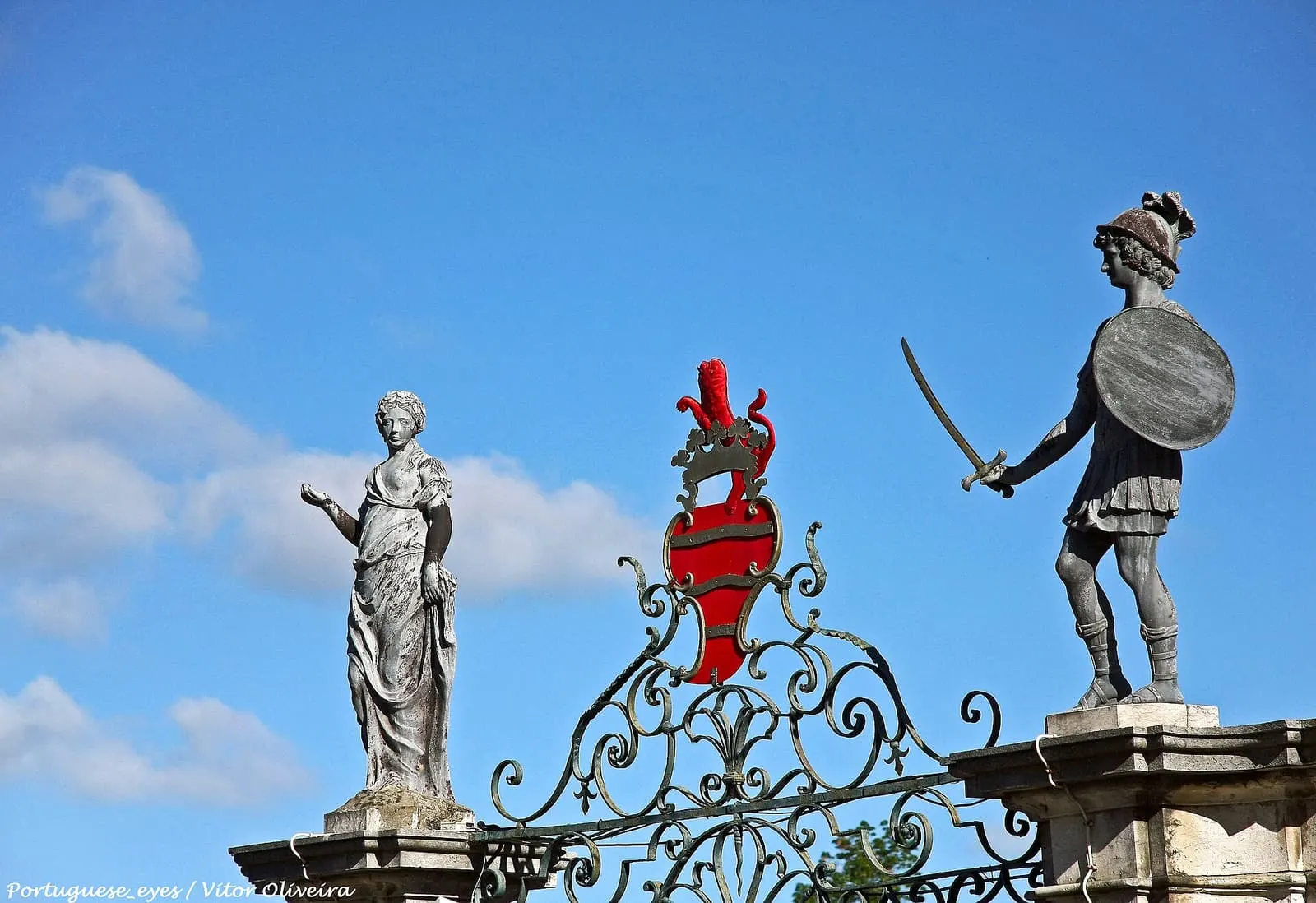
Among the typologies of built heritage, the historic garden occupies a singular place: it is the only one whose living material grows, flowers and dies. A hedge or a box shrub is not conserved as a piece of dressed stone is conserved — it is replaced, pruned, replanted. For this reason the Florence Charter, adopted by ICOMOS in 1981, defines the historic garden as an “architectural and horticultural composition” of public interest, regarded as a living monument whose survival demands continuous care by qualified hands.
In Portugal, the category embraces very diverse realities: the monastic enclosures with their orchards and plots of medicinal plants; the royal and seigneurial tapadas, vast walled grounds for hunting and recreation; the formal gardens of geometric design; and the romantic parks of the nineteenth century, conceived to simulate nature itself.
From monastic enclosures to botanical gardens
The oldest gardens of the territory have a utilitarian and contemplative origin. Within the walls of the convents and monasteries, the enclosure produced food and herbs for the apothecary, while at the same time offering a vegetal cloister for meditation. From this enclosed universe there descends, centuries later, a new idea of garden: the scientific garden. The Jardim Botânico da Ajuda, founded in 1768 under the direction of the Paduan naturalist Domingos Vandelli at the request of King José I, was the first in Portugal; four years later, the Pombaline reform endowed the University of Coimbra with an analogous garden, intended for the teaching of botany and agriculture.
In a historic garden, authenticity lies not in the permanence of each plant, but in the continuity of the design, the intention and the knowledge that keep it alive generation after generation.
The garden as a stage set: from baroque to romanticism
From the sixteenth century onwards, the Portuguese aristocracy made the garden into a theatre of prestige. The garden of the Palácio dos Marqueses de Fronteira, in Lisbon, is the supreme example of the Portuguese baroque garden, where blue-and-white tiles unite with water and statuary to celebrate the lineage of the house. The same culture of the landscaped retreat continued in the suburban pleasure estates, with their terraces, lakes and clipped box hedges.
In the nineteenth century, sensibility shifts direction. Nature is no longer domesticated into symmetrical parterres: the aim is to evoke it in its exuberance and mystery. In Sintra, the gardens of the Parque da Pena, laid out by King Fernando II around his romantic palace, gather collections of species brought from the four corners of the world along winding, shaded paths. In the same hills, the gardens of the Quinta da Regaleira, from the early twentieth century, carry that initiatory aesthetic to the extreme, with grottoes, wells and esoteric symbolism inscribed in the terrain.
A fragile and demanding heritage
More than any other typology, the historic garden depends on uninterrupted management. A campaign of works can save a church in ruins; an abandoned garden, however, disappears within a few years beneath the advance of spontaneous vegetation. Its conservation entails knowing the original layout, the chosen species and the gardening techniques of each period — a task that crosses the history of art, botany and the gardener’s craft. Recognising these spaces as monuments was the decisive step towards protecting them: they ceased to be mere accessories of the buildings they serve in order to become, in their own right, cultural assets in full.
Frequently asked questions
- What distinguishes a historic garden from an ordinary garden?
- A historic garden is an architectural and horticultural composition of public interest from the point of view of history or art, recognised as a monument. The ICOMOS Florence Charter (1981) defines it as a living monument, whose principal material is perishable and renewable and which requires continuous conservation.
- Which is the oldest botanical garden in Portugal?
- The Jardim Botânico da Ajuda in Lisbon, founded in 1768 under the direction of the naturalist Domingos Vandelli, is the oldest in the country. The Botanical Garden of the University of Coimbra followed in 1772, as part of the Pombaline reform of university studies.
- Are monastic enclosures considered historic gardens?
- Yes. The enclosures and landscaped grounds of monasteries and convents, with their orchards, plots of medicinal plants, tanks and groves, fall within the category of historic garden whenever they retain value as historical, artistic or landscape evidence.