Monuments
Pena Park
Pena Park in Sintra: the romantic garden of King Ferdinand II surrounding Pena Palace, spanning 85 hectares with lakes, camellias, and Portugal's richest arboretum.
- Location
- Sintra, Lisboa
- Built
- 1846–1885 (plantações iniciadas na década de 1840)
- Style
- Jardim paisagista romântico
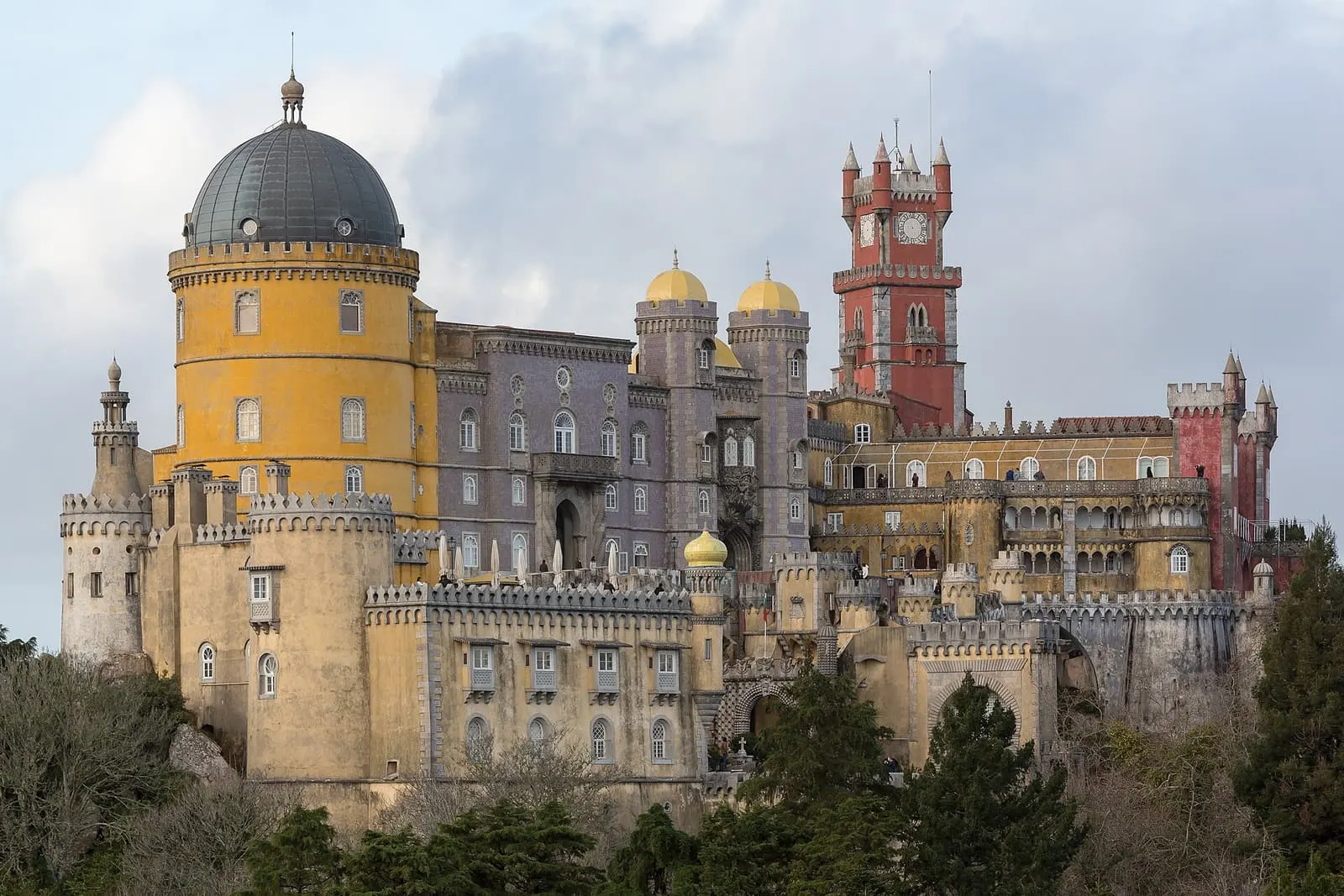
Pena Park is the vast landscaped garden surrounding and framing the Pena National Palace in the Sintra mountains. Designed alongside the palace by King Ferdinand II of Saxe-Coburg-Gotha, it covers approximately 85 hectares of steep slopes and is now considered Portugal’s most important arboretum and one of the finest examples of romantic gardens in the country.
A Romantic Garden with Scenic Roots
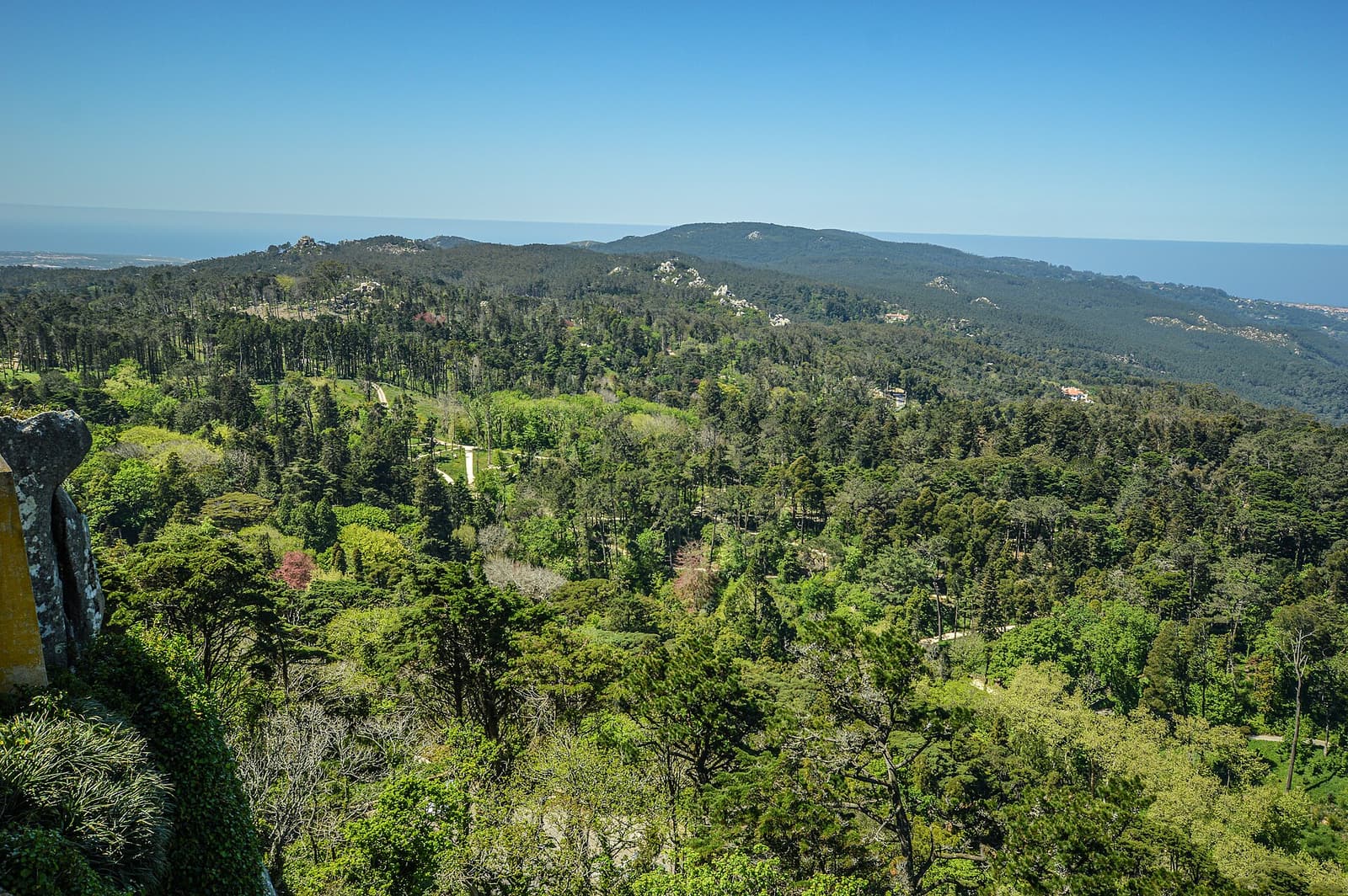
When in 1838 Ferdinand II acquired the former Hieronymite monastery and surrounding lands, the slopes were largely bare. The artist-king then designed a park that follows not the geometry of formal gardens but the romantic aesthetics of the jardin paysager: winding paths, clearings, viewpoints, and sudden scenic surprises that guide visitors through dense vegetation to dramatic vantage points overlooking the mountains and ocean.
Along the routes are carefully composed points of interest — Cruz Alta, the highest point in the Sintra mountains; the Temple of the Columns; Alto de Santa Catarina; and the fern groves of the Queen and the Countess. The ensemble reflects the 19th-century ideal of blending nature and architecture into an evocative setting, in line with the same romantic taste seen in the nearby Monserrate Palace and the rest of Sintra’s cultural landscape.
Arboretum and Camellia Garden
Ferdinand II’s great passion was botany. Over decades, the king had thousands of trees planted from various continents — Japanese cryptomerias, New Zealand tree ferns, Lebanese cedars, Brazilian araucarias, North American sequoias and thujas — making Pena Park an arboretum with over two thousand species. Many of these plantings relied on an extensive international network; the Countess of Edla, Elise Hensler, whom the king married in his second union, contributed by importing numerous American species.
Among the most celebrated spots is the Camellia Garden, where Asian camellias, introduced in the 1840s, became emblems of Sintra’s winter and motifs for parties and balls. This garden was recognized in 2014 by the International Camellia Society as a Garden of Excellence for Camellias.
Valley of the Lakes and Countess of Edla’s Chalet
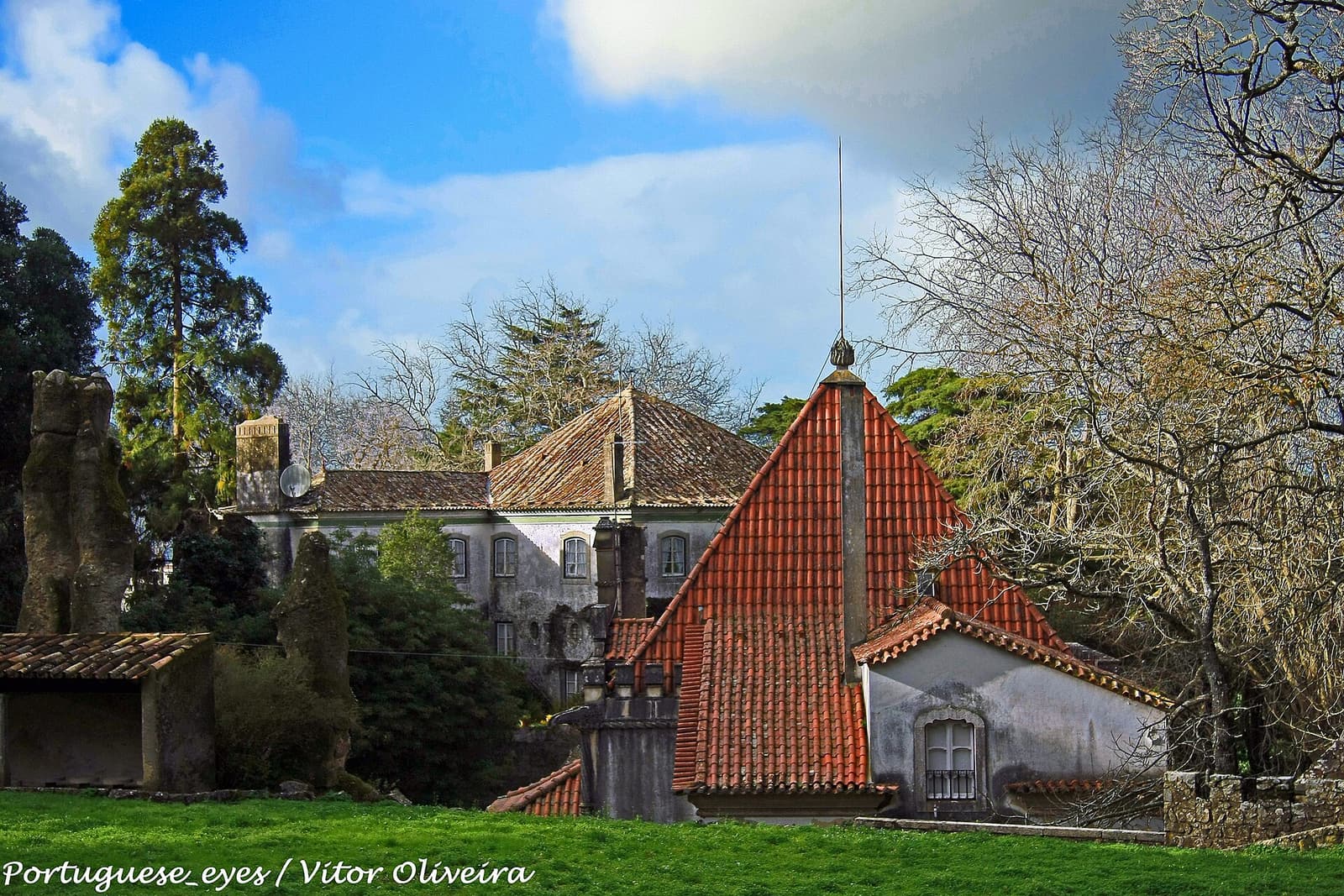
On the park’s flank unfolds the Valley of the Lakes, a series of organically shaped successive lakes fed by a spring and connected by a stepped cascade, with small castle-like structures interspersed. In the western area stands the Countess of Edla’s Chalet, an Alpine-inspired residence where the royal couple spent long periods, surrounded by a grove of exotic fern species.
Part of Sintra’s Cultural Landscape, designated by UNESCO in 1995, Pena Park is now managed by Parques de Sintra – Monte da Lua and remains one of Portugal’s most remarkable historic gardens and a living testament to the Romanticism and revivalist movements that shaped the country’s 19th-century culture.
Frequently asked questions
- Who created Pena Park?
- King consort Ferdinand II of Saxe-Coburg-Gotha, who from the 1840s transformed the slopes around Pena Palace into an extensive landscaped park, planting thousands of species from around the world. His second wife, Elise Hensler, Countess of Edla, played a key role in introducing American species.
- How large is Pena Park?
- The park covers approximately 85 hectares in the Sintra mountains and is considered Portugal's most important arboretum, with over two thousand native and exotic tree and shrub species.
- What can visitors see in the park?
- Highlights include the Valley of the Lakes, the Camellia Garden, Cruz Alta (the highest point in the mountains), the Temple of the Columns, fern groves, and the Countess of Edla's Chalet, an Alpine-inspired residence built in the park's western area.
Sources
Keep exploring
Heritage nearby
More places to discover from here. Approximate straight-line distances, within 50 km.