Archaeology
Perdigões Archaeological Complex
Perdigões, in Reguengos de Monsaraz, is a complex of Late Neolithic/Chalcolithic ditch enclosures in Alentejo, serving as both sanctuary and necropolis between…
- Location
- Reguengos de Monsaraz, Évora
- Built
- c. 3400–2000 a.C.
- Style
- Recintos de fossos pré-históricos
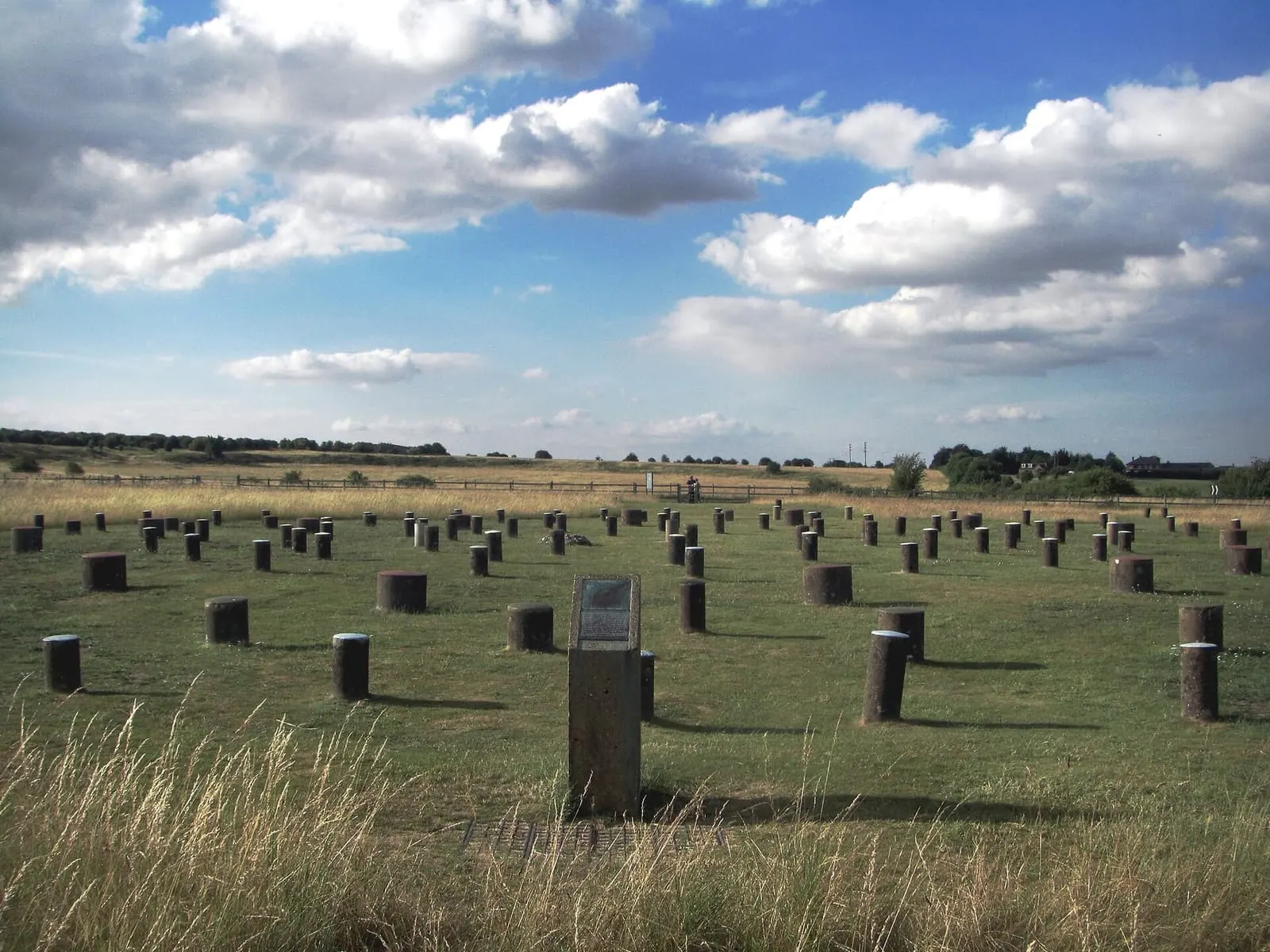
The Perdigões Archaeological Complex is one of the most remarkable sites of recent Iberian prehistory. Situated in a natural amphitheatre — a slightly inclined circular basin open to the east — at Herdade dos Perdigões, about 1 km north of Reguengos de Monsaraz, it covers over 16 hectares defined by successive ditch enclosures. Unlike the dolmens and menhirs that punctuate Alentejo’s landscape, Perdigões consists not of stone monuments but vast earthworks whose full layout was only revealed through geophysical survey and aerial photography.
Architecture and chronology
The site is organised around a set of roughly circular concentric ditches (more than a dozen identified), associated with palisade structures and multiple access points. Its construction and remodelling spanned over a thousand years, from the late Middle Neolithic (around 3400 BC) to the Early Bronze Age (c. 2000 BC), encompassing the entire Chalcolithic period of the southwestern peninsula. This long diachronic sequence makes Perdigões an exceptional archive for understanding the transformation of agro-pastoral communities throughout the 3rd millennium BC.
The arrangement of enclosures appears deliberate. Some access points and a wooden circular structure (a timber circle identified within the complex) show solar alignments corresponding to solstices and equinoxes. Thus, Perdigões’ monumentality lies less in the height of its structures than in the scale and intentionality of its design.
Ditch enclosures like Perdigões forced archaeology to abandon rigid distinctions between “settlement” and “necropolis”: here, spaces for gathering, ritual, and death coexisted in a single place charged with meaning.
Sanctuary and necropolis
Excavations revealed an exceptional density of funerary and ritual contexts at Perdigões. Collective burials, deposits of cremated and manipulated human bones, faunal concentrations, and abundant exotic materials — ivory, amber, variscite, flint blades, and idols — demonstrate the site’s role as a hub for dispersed communities and a centre for supraregional prestige goods circulation. This accumulation of objects and ceremonial gestures aligns Perdigões with major sanctuaries, integrated into the dense megalithic landscape near the Monsaraz megalithic complex and its menhirs and cromlechs.
Research and protection
Perdigões was identified in the 1980s by Mário Varela Gomes following the discovery of a menhir cluster on the estate, but systematic work only began in the 1990s after damage from deep ploughing. Since the early 2000s, the site has been studied through a continuous research programme coordinated by António Valera (ERA Arqueologia and Núcleo de Investigação Arqueológica), combining excavation, geophysical survey, and laboratory analysis. Recognising its value, the complex was declared a National Monument by Decree No. 2/2019 of 28 January.
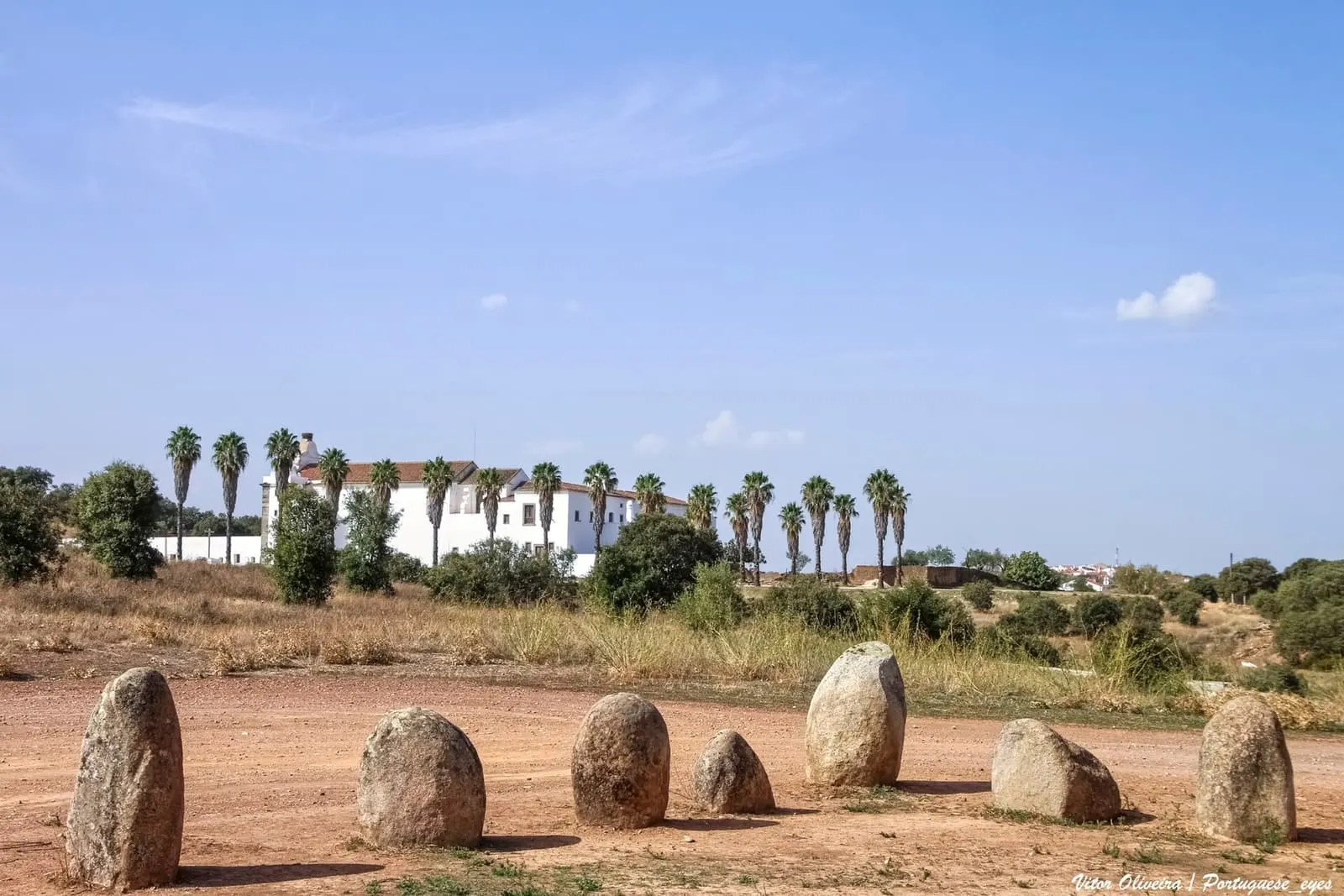
As a paramount expression of megalithism and ditch architecture in central Alentejo, Perdigões dialogues with other regional prehistoric landmarks — from the Almendres Cromlech near Évora to the ancestral landscape surrounding the medieval village of Monsaraz — offering one of the most comprehensive narratives of southern Portugal’s deep prehistory.
Frequently asked questions
- What is the Perdigões Archaeological Complex?
- It is a large complex of ditch enclosures from the Late Neolithic and Chalcolithic periods, located in Reguengos de Monsaraz, which functioned simultaneously as a gathering space, sanctuary, and necropolis between approximately 3400 and 2000 BC.
- Where is Perdigões located?
- It is situated at Herdade dos Perdigões, about 1 km north of the town of Reguengos de Monsaraz, in the Évora district of central Alentejo's interior.
- Is Perdigões a protected site?
- Yes. The complex was classified as a National Monument by Decree No. 2/2019 of 28 January, recognising its exceptional value for Iberian prehistory.
Sources
Keep exploring
Heritage nearby
More places to discover from here. Approximate straight-line distances, within 50 km.