Archaeology
Almendres Cromlech
The Almendres Cromlech, near Évora, is the largest assemblage of menhirs on the Iberian Peninsula, raised from the 6th millennium BC, during the Neolithic.
- Location
- Guadalupe, Évora
- Built
- VI–III milénio a.C.
- Style
- Megalitismo
The Almendres Cromlech is the most extensive assemblage of menhirs on the Iberian Peninsula and one of the most remarkable megalithic monuments in Europe. Raised on a gentle east-facing slope overlooking the Alentejo plain, it brings together 95 granite monoliths set out in enclosures of circular and oval plan. Its size, its state of preservation and its antiquity grant it a central place in the study of megalithism in the Atlantic West.
Chronology and construction
The monument did not result from a single moment, but from a long process of building and remodelling throughout the Neolithic. The oldest phases, associated with the smaller circular enclosures, date back to the end of the 6th millennium BC; the great oval enclosure was formed at a later moment, in the 5th millennium BC, and the complex remained in use until the beginning of the 3rd millennium BC. This succession of building campaigns reflects the permanence, over millennia, of the agro-pastoral communities that occupied the territory of Évora and that also erected the great dolmens of the Alentejo.
Some of the menhirs bear carved reliefs — croziers, concentric circles, serpentiform motifs and small cup-marks — that may have held symbolic and, possibly, calendrical meaning. The orientation of the enclosure and its visual relationship with the sunrise on specific dates have fuelled interpretations of an astronomical nature, although these should be read with caution.
More than a “Portuguese Stonehenge”, the Almendres are a testimony to the capacity for social organisation and the symbolic thought of Neolithic communities that, more than seven thousand years ago, marked the landscape with stone.
Discovery and classification
The cromlech remained practically unknown until 1964, when it was identified by the geologist Henrique Leonor Pina in the course of surveying work for the Geological Map of Portugal. Many of the menhirs were fallen or partially buried, and were re-erected and repositioned in later archaeological campaigns, coordinated, among others, by Mário Varela Gomes.
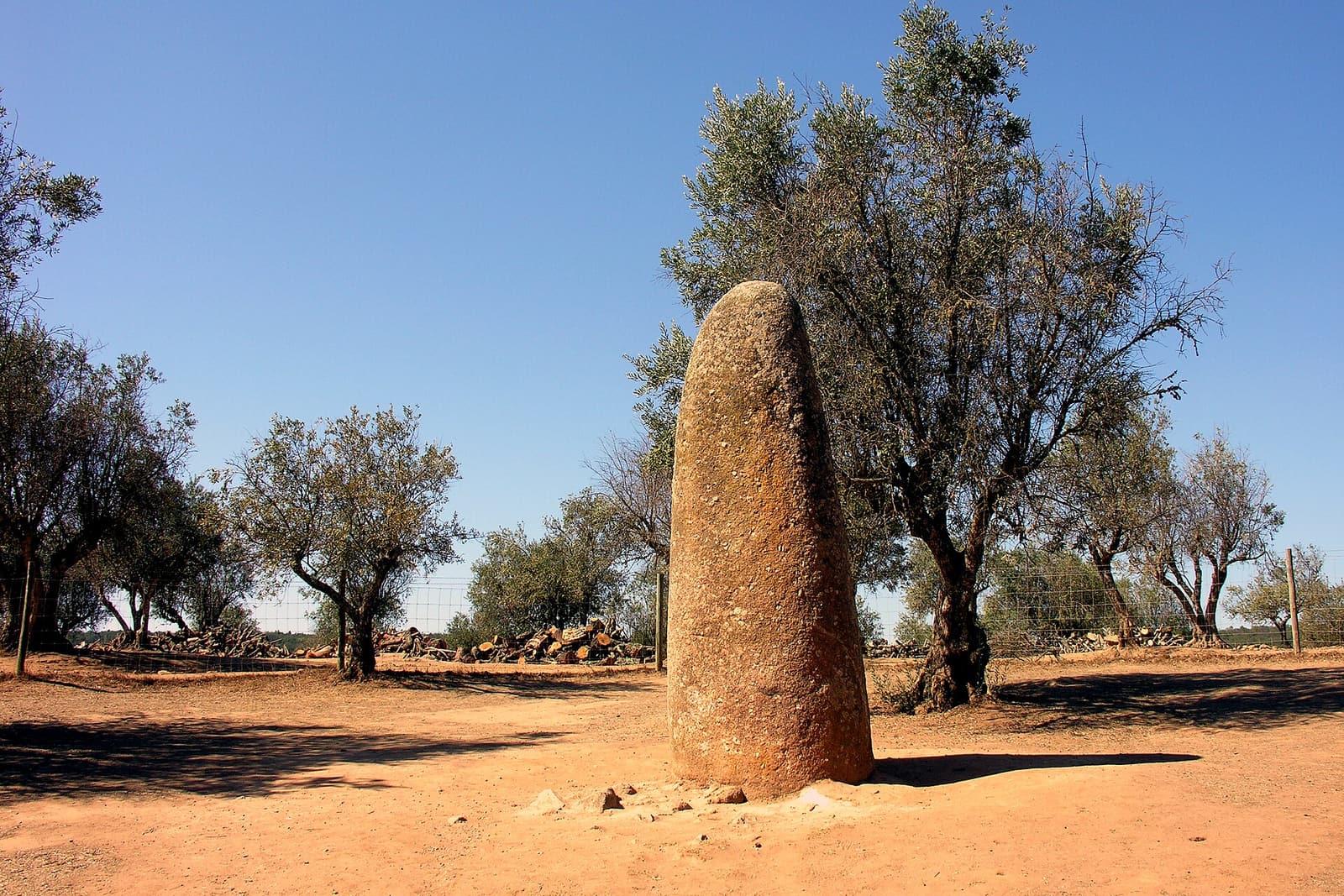
The site was classified as a Property of Public Interest in 1974 and, with its exceptional importance recognised, elevated to National Monument in 2015. A scant hundred metres away, standing alone, rises the Almendres Menhir, a single monolith over two metres tall that relates, visually and symbolically, to the main enclosure.
Visiting and context
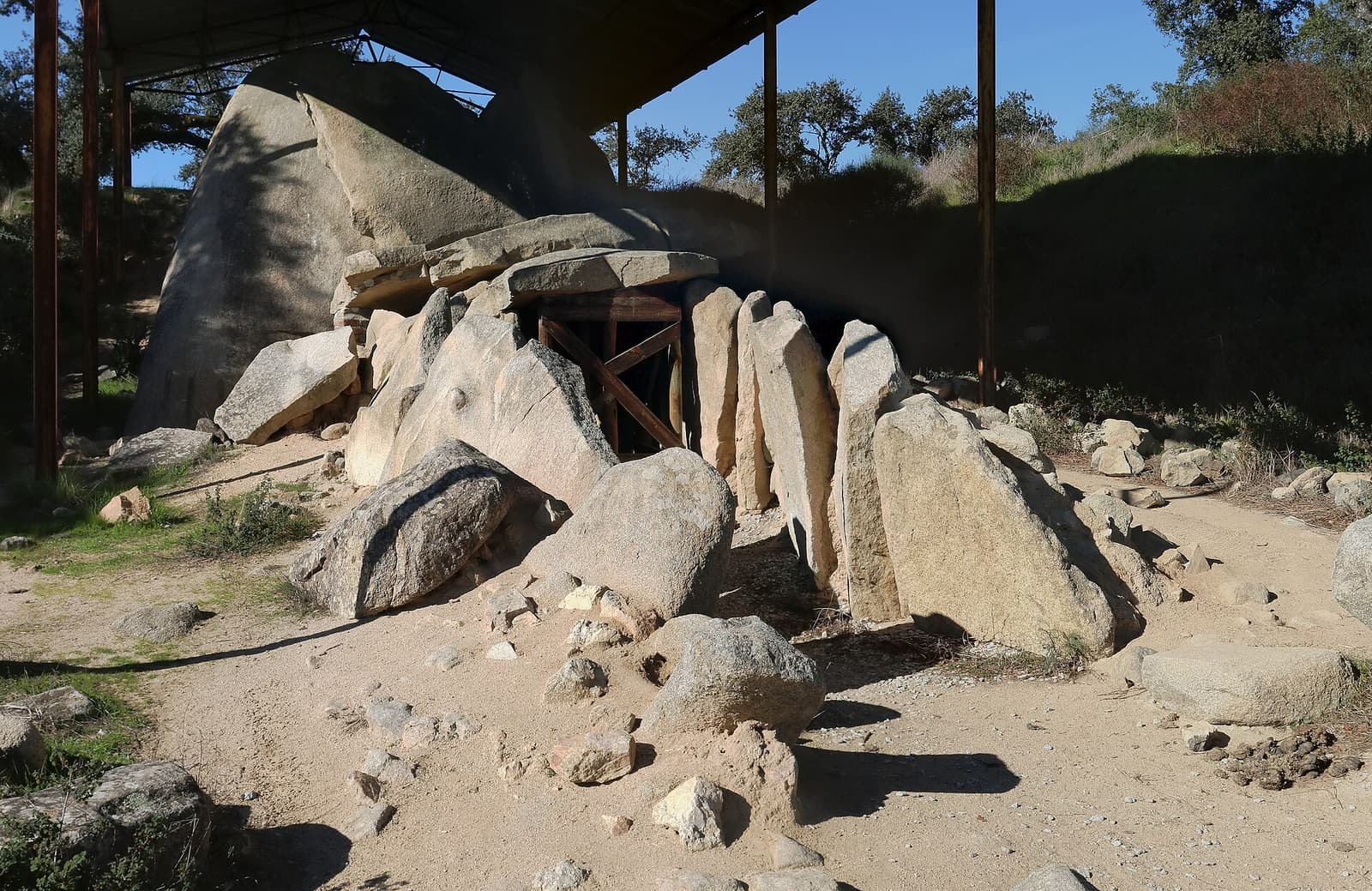
The Almendres Cromlech belongs to one of the richest megalithic complexes in Europe, concentrated around Évora — dolmens, isolated menhirs and enclosures that, together, document the long prehistory of central Alentejo. The reading of the monument gains depth when set against the wider panorama of Portuguese megalithism, which sees in this territory one of its founding centres.
The city of Évora, classified by UNESCO, offers the ideal historical counterpoint: from the Neolithic enclosure to the Roman Temple, the same territory condenses millennia of human occupation and monumental building.
Frequently asked questions
- Where is the Almendres Cromlech?
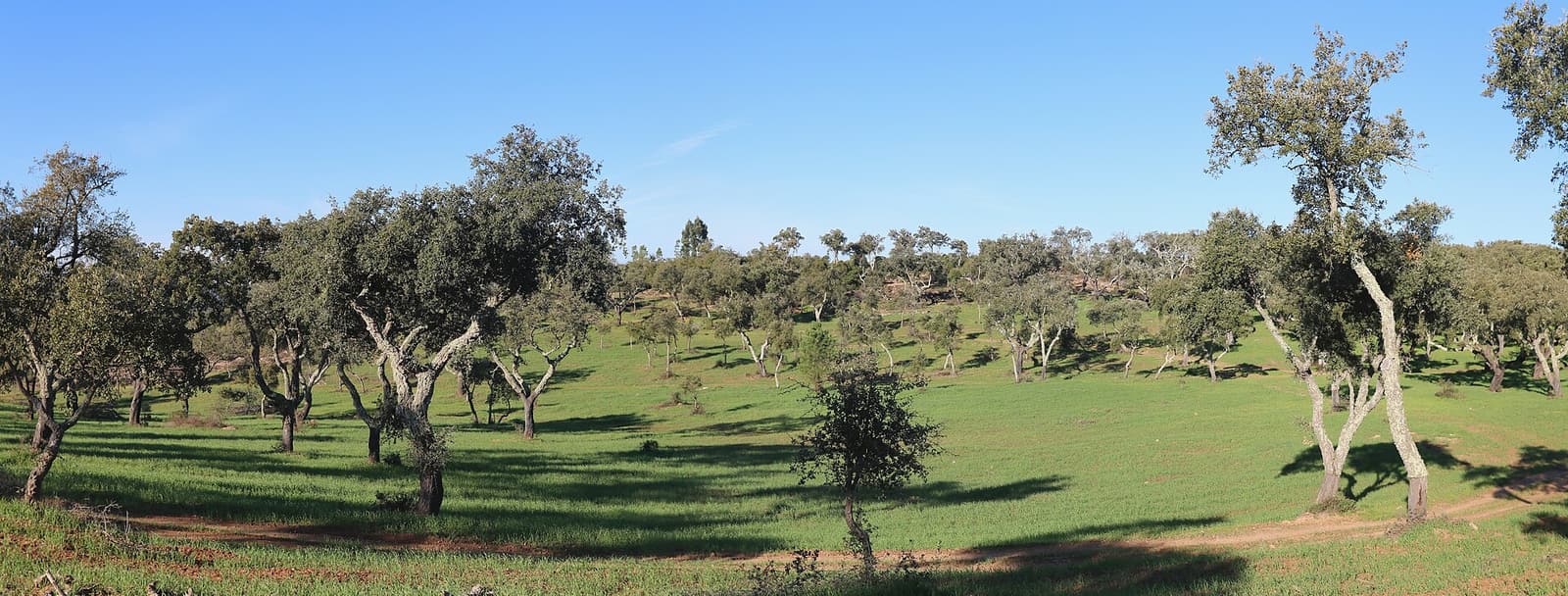
- It lies near the village of Guadalupe, in the municipality of Évora, about 15 km west of the city, in the midst of a montado of holm oaks and cork oaks.
- How many menhirs does the Almendres Cromlech have?
- The complex brings together 95 granite menhirs, arranged in circular and oval enclosures, which makes it the largest megalithic grouping on the Iberian Peninsula.
- When was it built?
- It was raised in several phases, between the end of the 6th millennium BC and the beginning of the 3rd millennium BC, throughout the Neolithic, making it one of the oldest megalithic monuments in Europe.
Sources
Keep exploring
Heritage nearby
More places to discover from here. Approximate straight-line distances, within 50 km.